

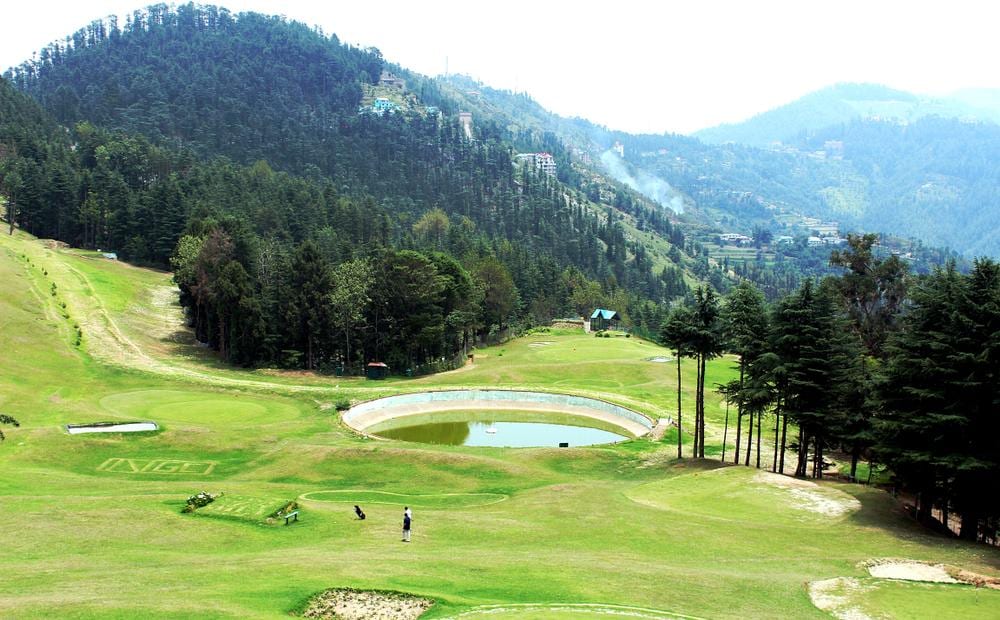
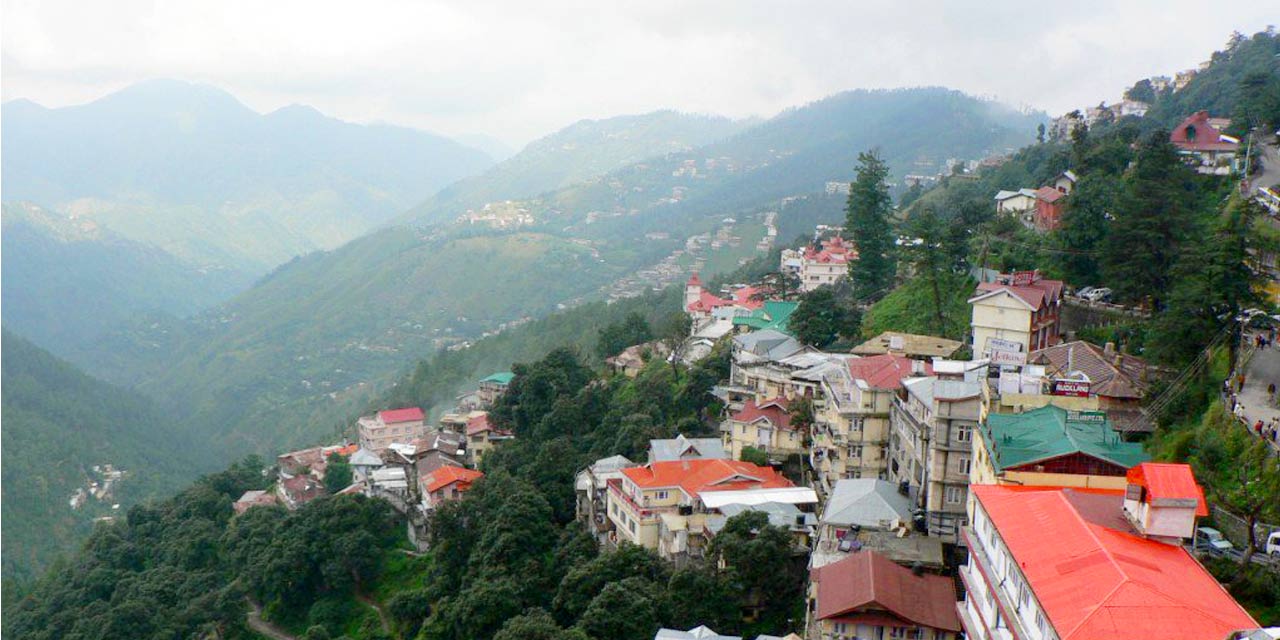
Nestled high in the majestic Himalayan mountains, Shimla is one of India’s most enchanting hill destinations—where colonial charm meets breathtaking natural beauty. Once the summer capital of British India, Shimla still carries an old-world elegance, wrapped in misty hills, pine forests, and panoramic mountain views.
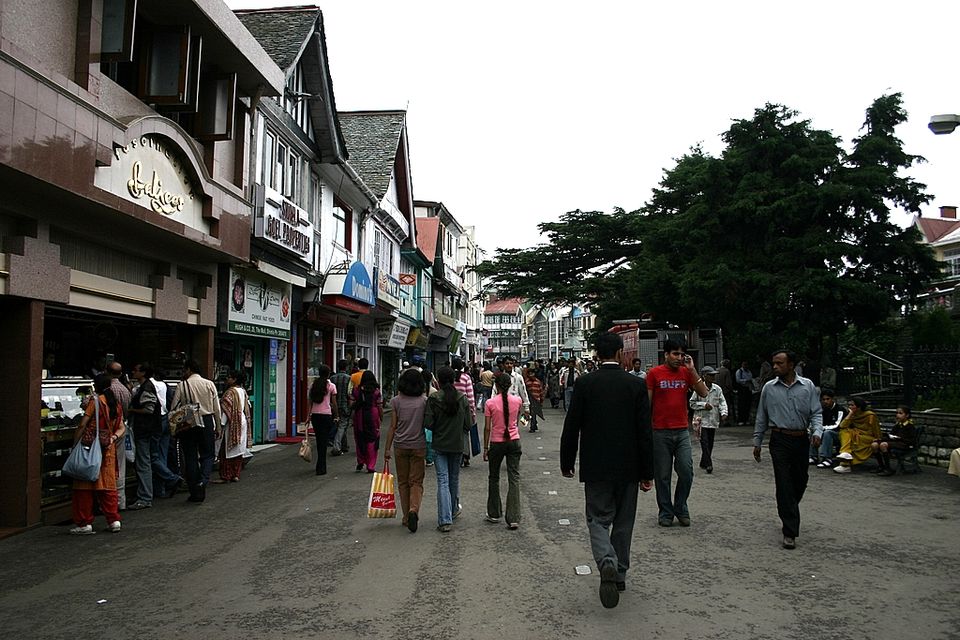
Wander through heritage streets lined with Victorian architecture, charming cafés, and bustling local markets. The famous Mall Road and The Ridge offer unforgettable sunset views, lively culture, and a chance to experience the heart of Shimla’s social life. Every corner tells a story—of history, romance, and mountain magic.
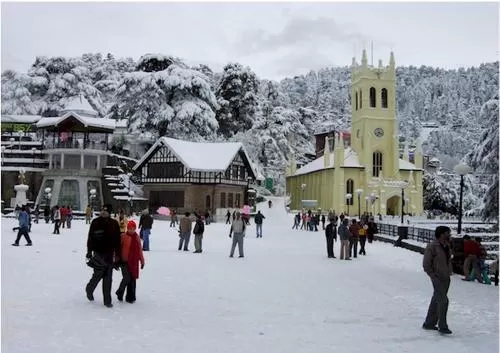
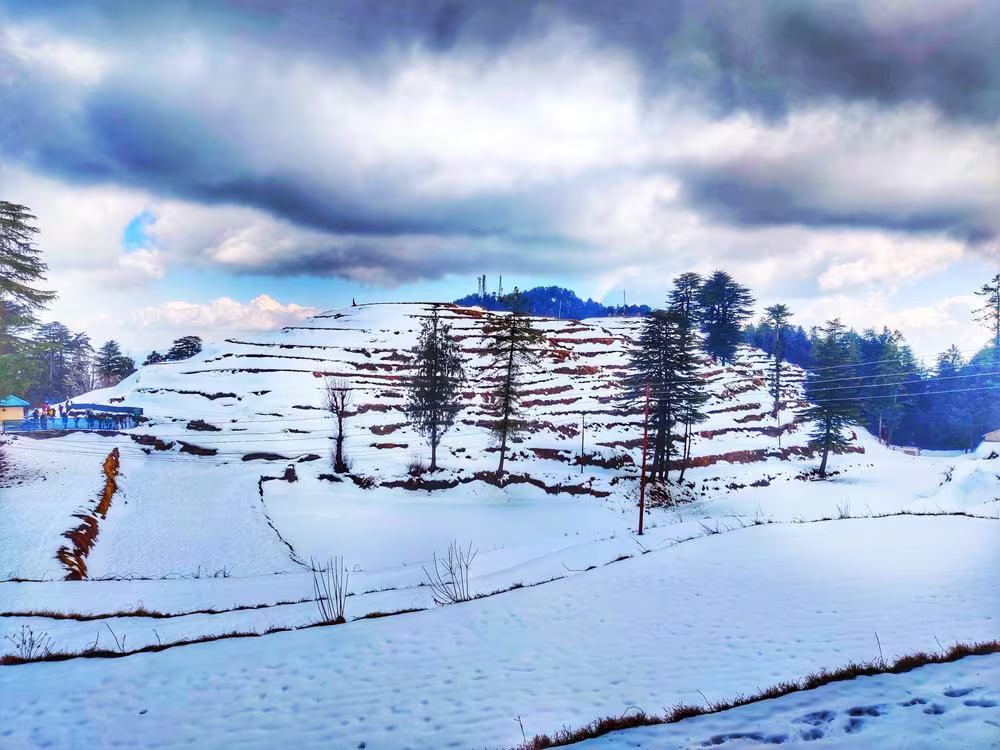
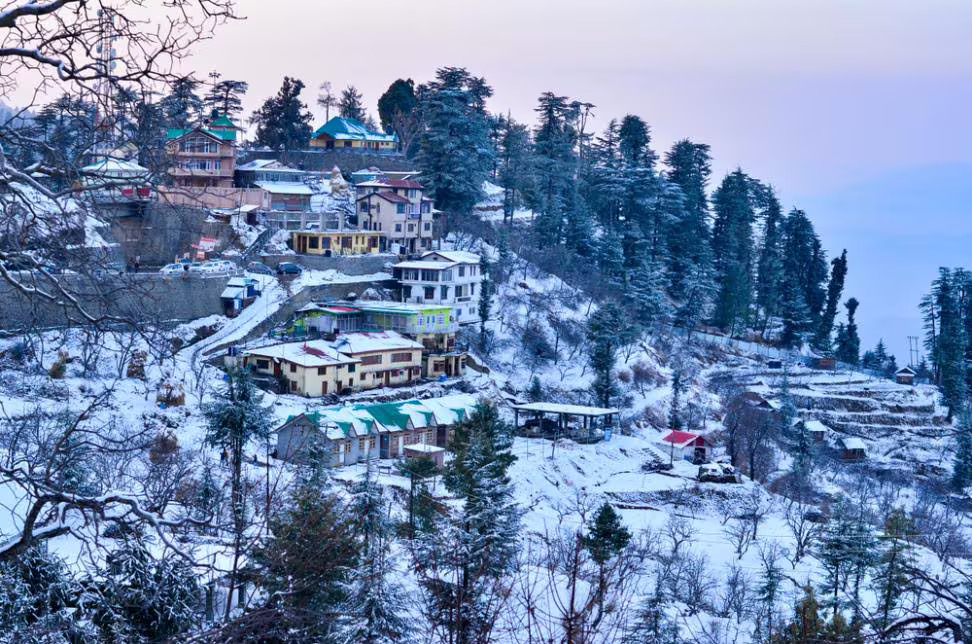
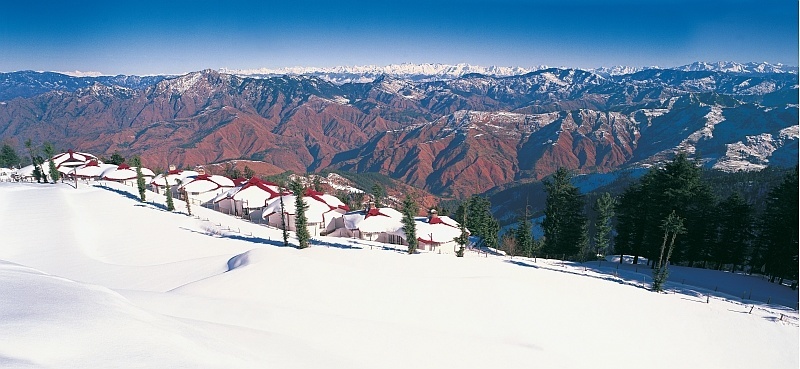
Nature lovers will fall in love with Shimla’s snow-covered winters, cool summers, and scenic walking trails. From peaceful forests and apple orchards to thrilling mountain adventures, Shimla offers the perfect blend of relaxation and excitement. In winter, the town transforms into a snowy wonderland, ideal for skiing, photography, and cozy mountain stays.
For travelers seeking authenticity, Shimla opens the door to Himachal’s rich culture, warm hospitality, traditional cuisine, and colorful festivals. Just a short journey away are pristine villages, ancient temples, and stunning viewpoints that showcase the untouched beauty of the Himalayas.
Whether you are a romantic traveler, a nature explorer, a solo wanderer, or a family seeking serenity, Shimla promises a magical escape—where time slows down and every moment feels unforgettable.
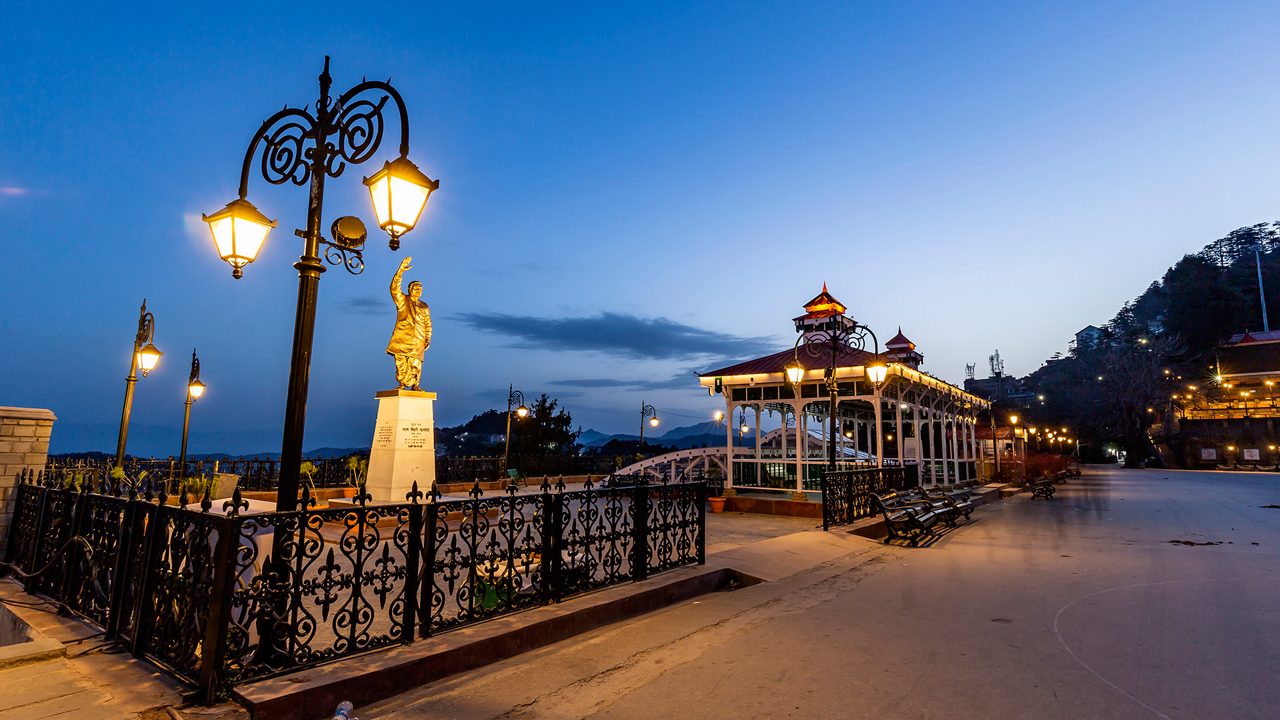
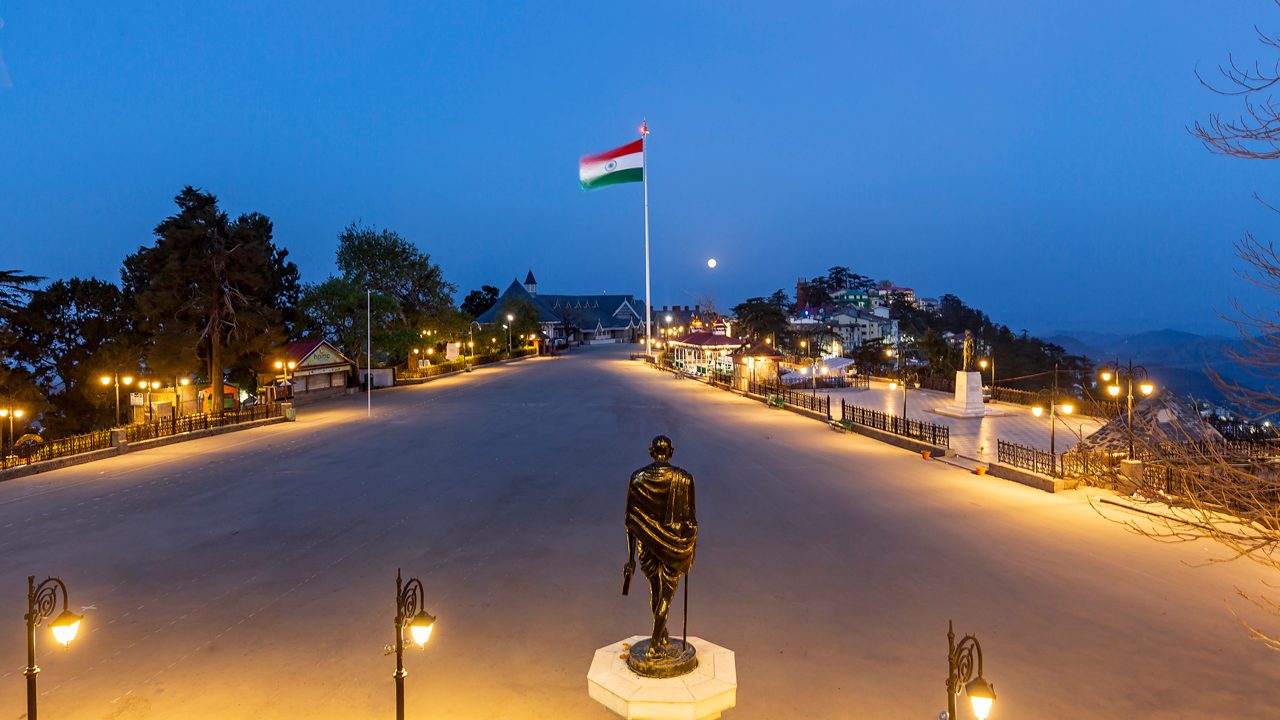
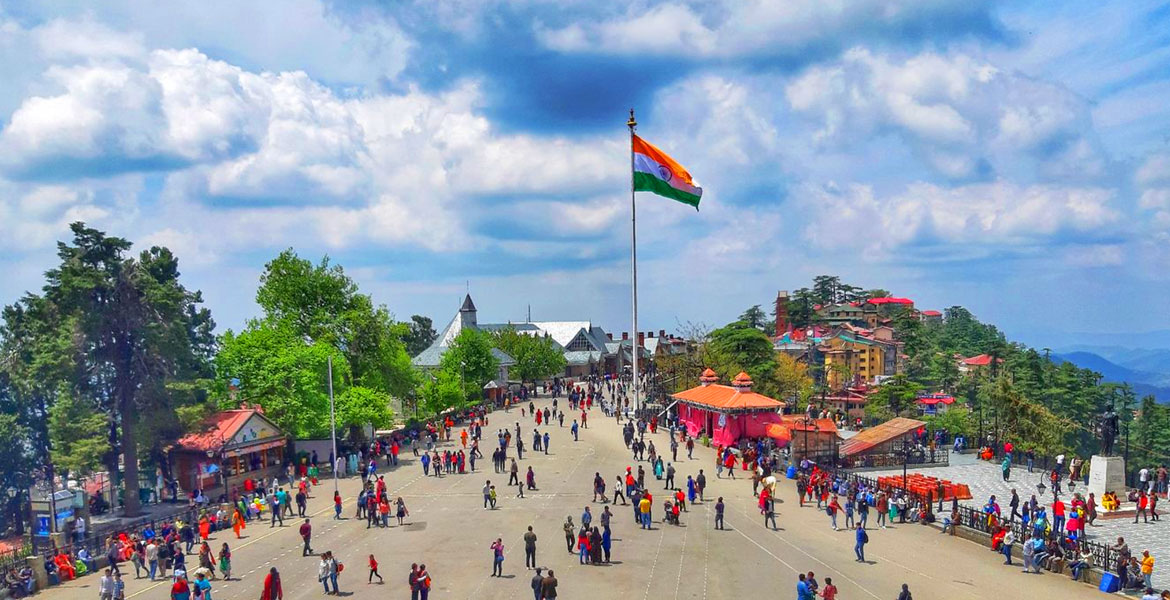
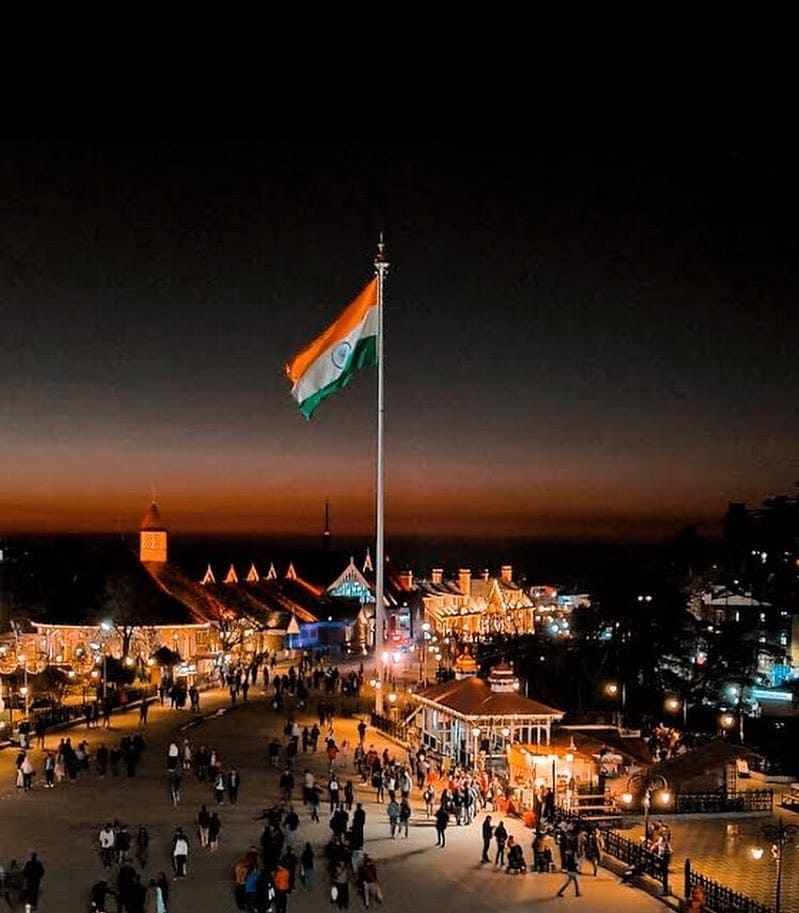
The heart of Shimla, offering breathtaking panoramic views of snow-capped Himalayan peaks, vibrant sunsets, and colonial-era architecture. A perfect place to feel the soul of the mountains.
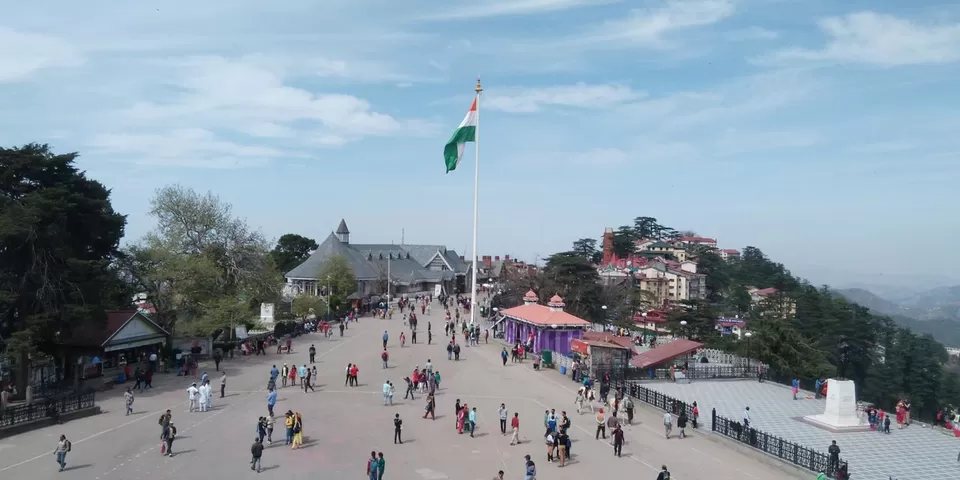
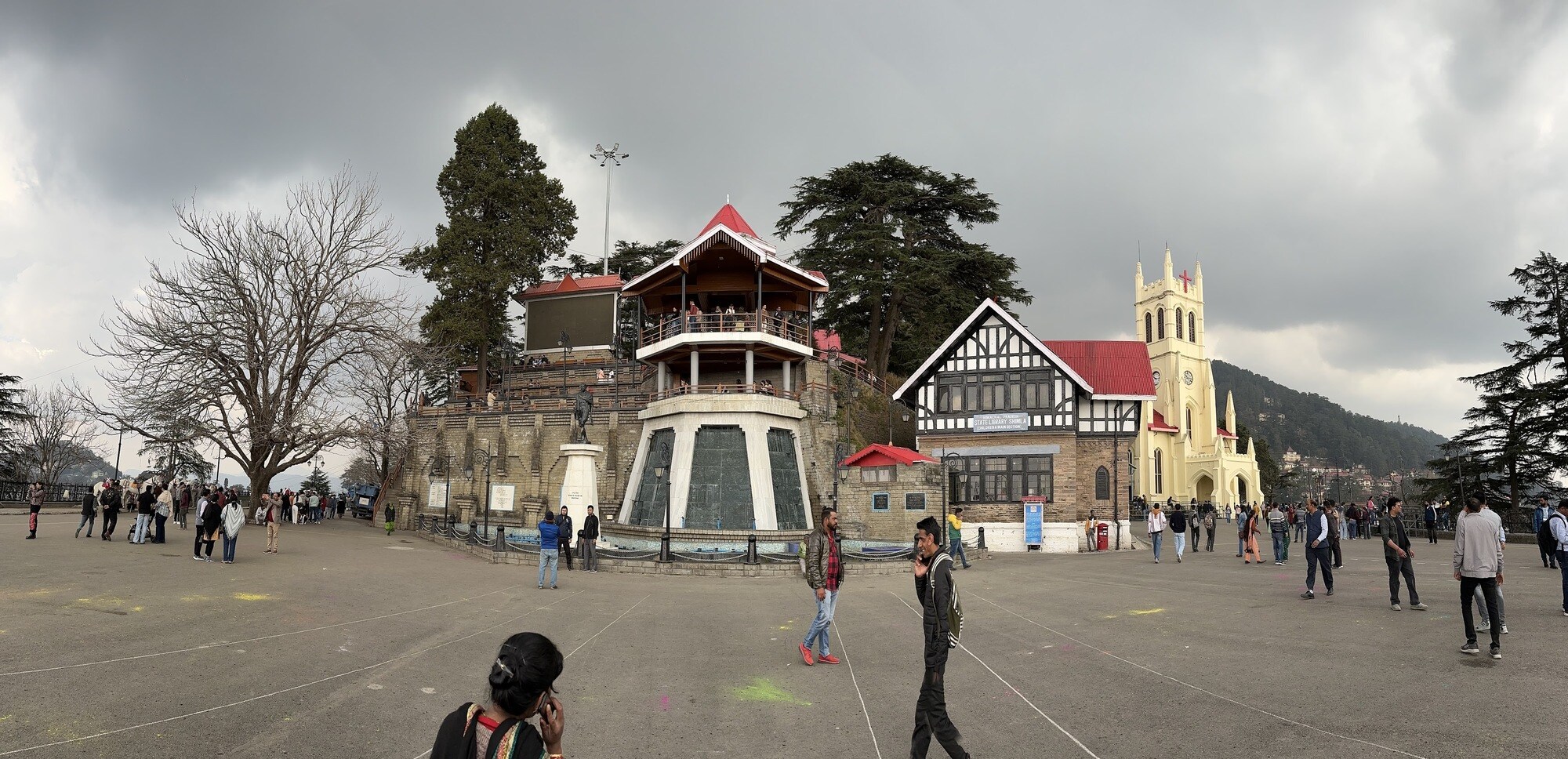
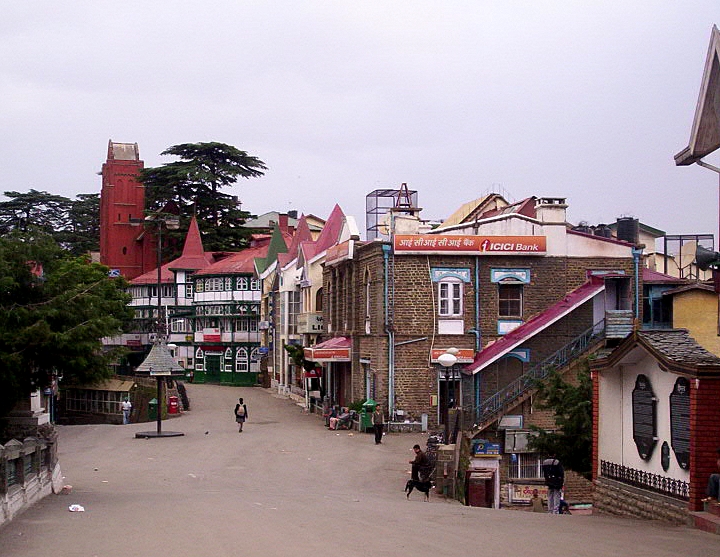
The Ridge road is a large open space, located in the center of Shimla, the capital city of Himachal Pradesh, India. The Ridge is the hub of all cultural activities of Shimla. It is situated along the Mall Road, the shopping center of Shimla. Most major places of Shimla like Sanjauli Snowdown (IGMC), Mall Road, Jakhu Temple, Oakover, Kali Bari, and Annadale are connected through the Ridge.
It runs east to west alongside the Mall Road, and joins it at the Scandal Point on the west side. On the east side, the Ridge road leads to Lakkar Bazaar, a wooden crafts market.
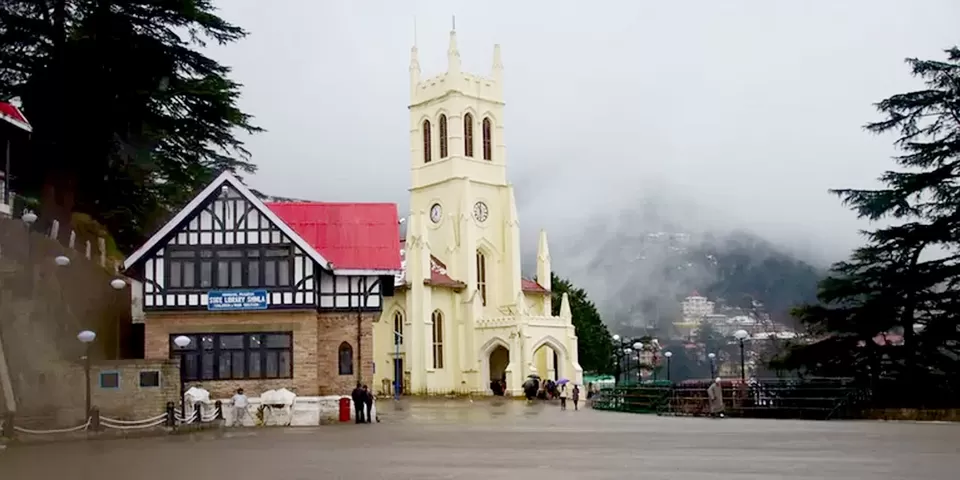
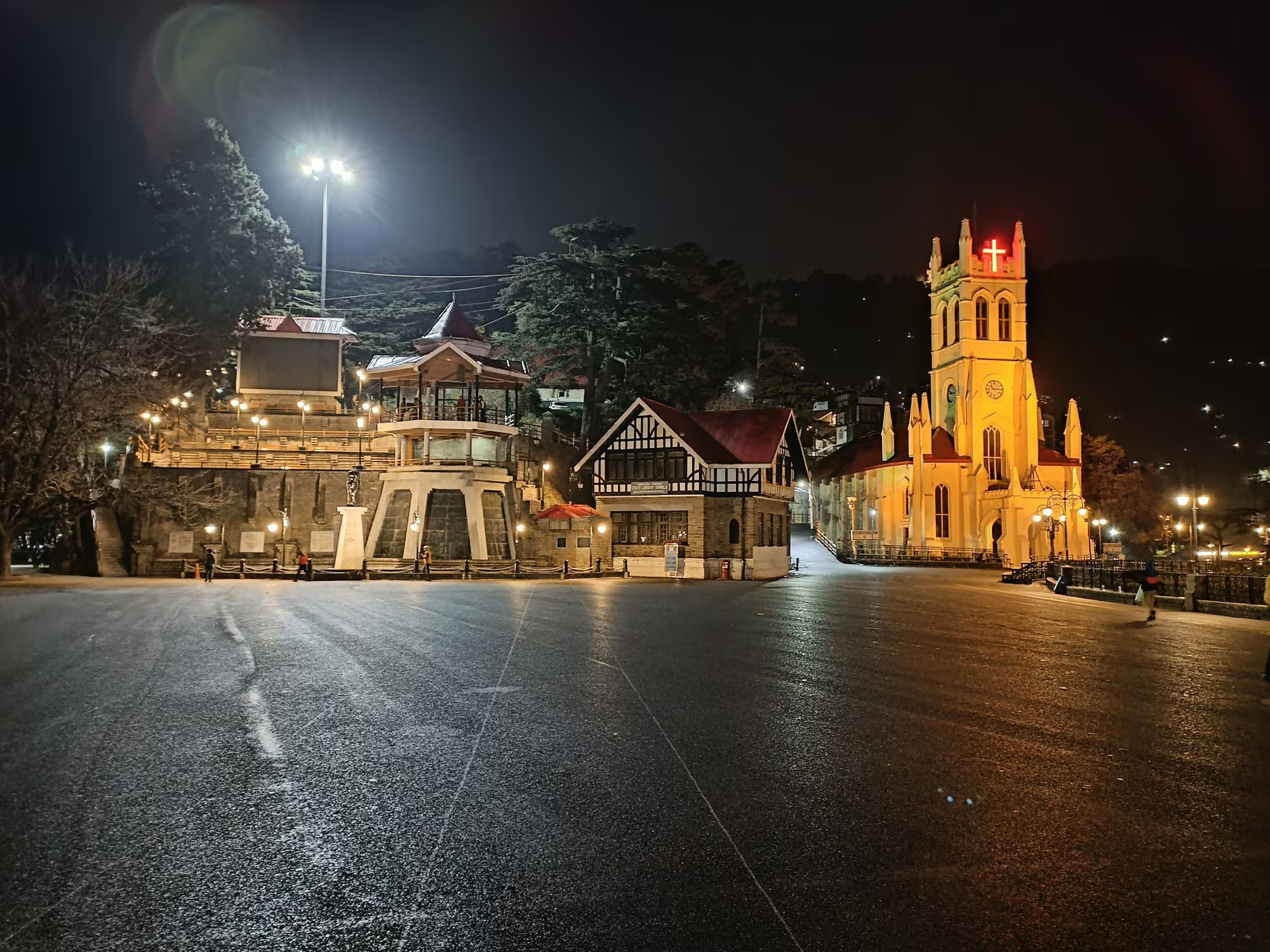
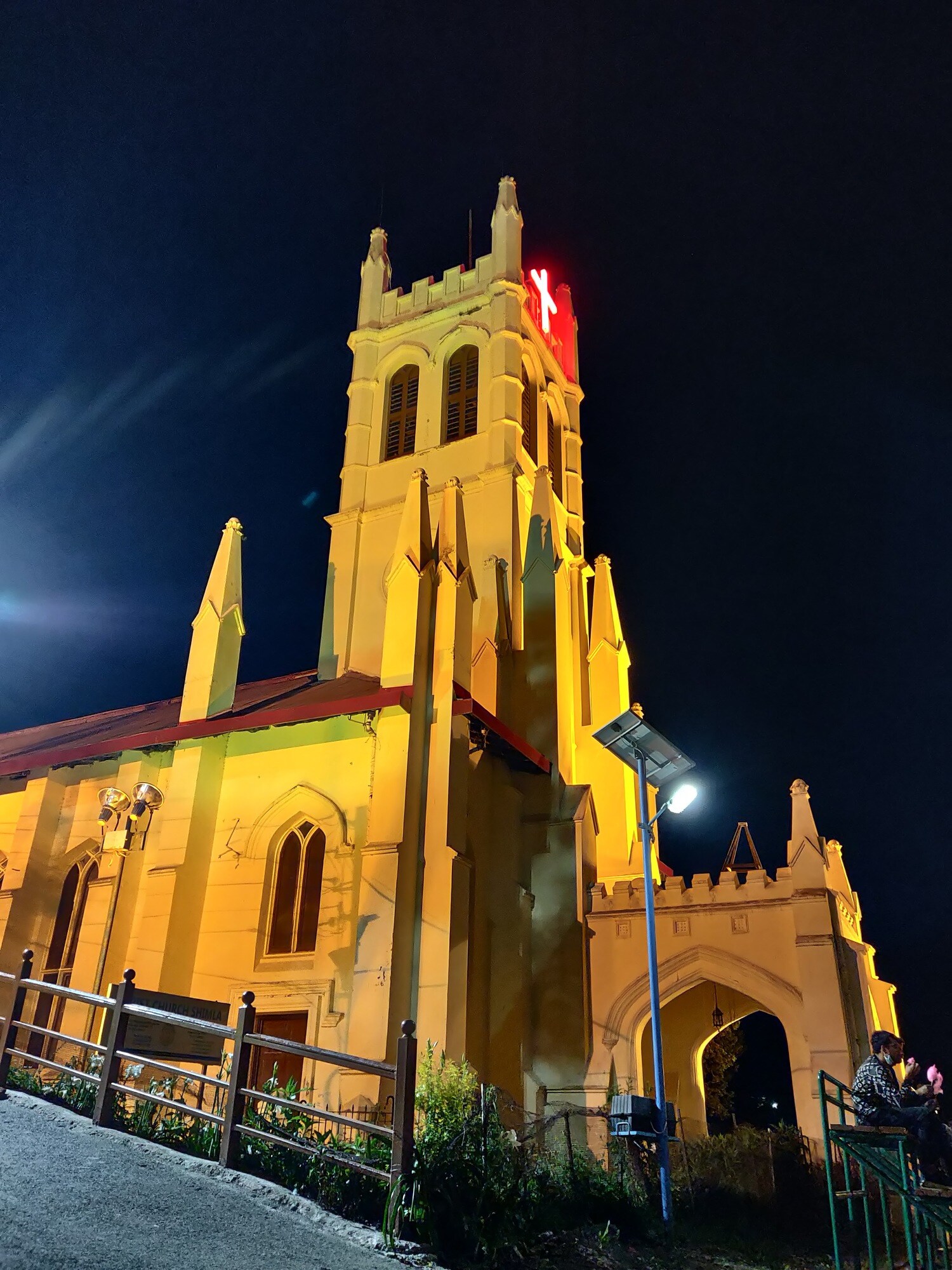
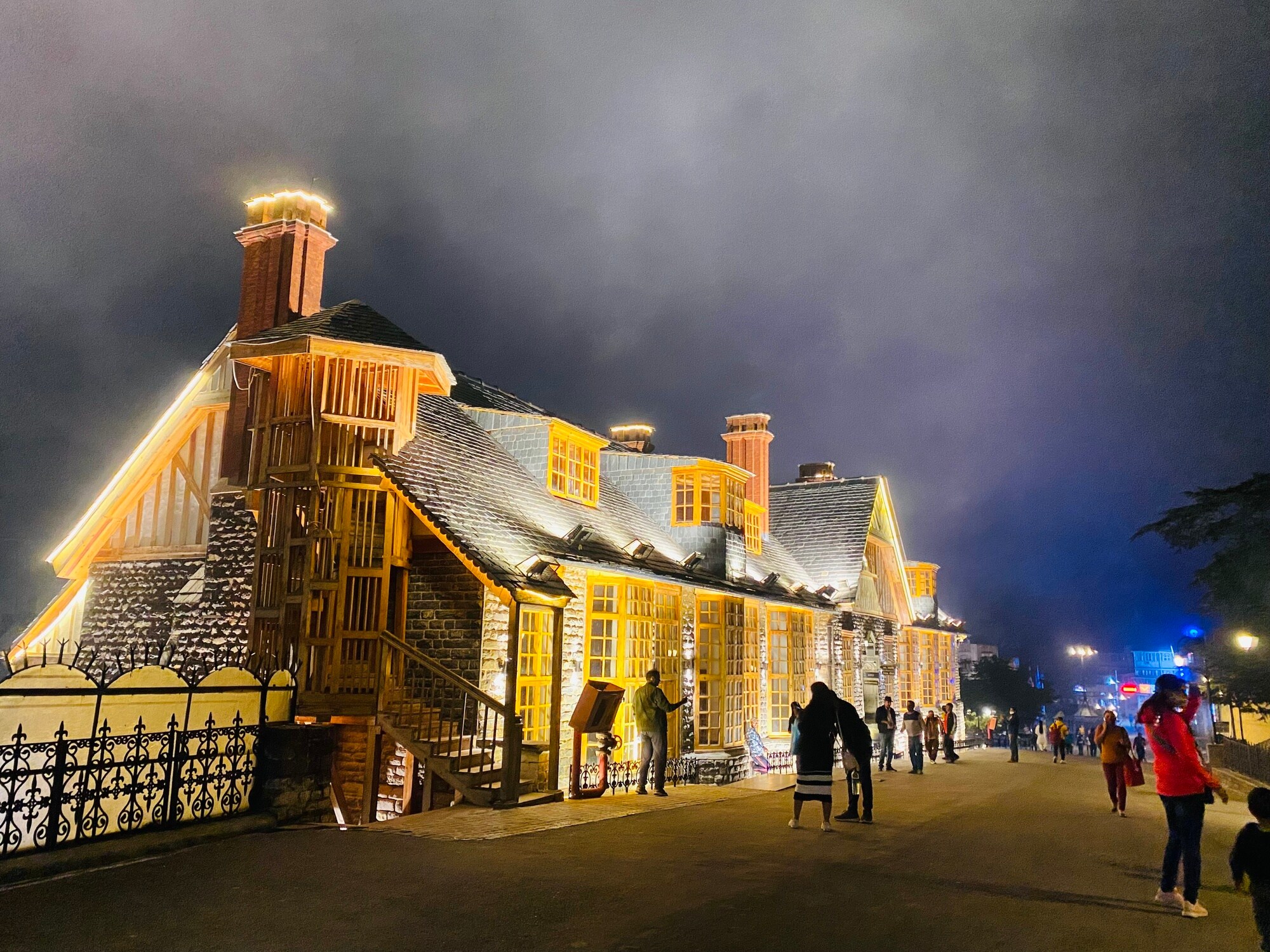
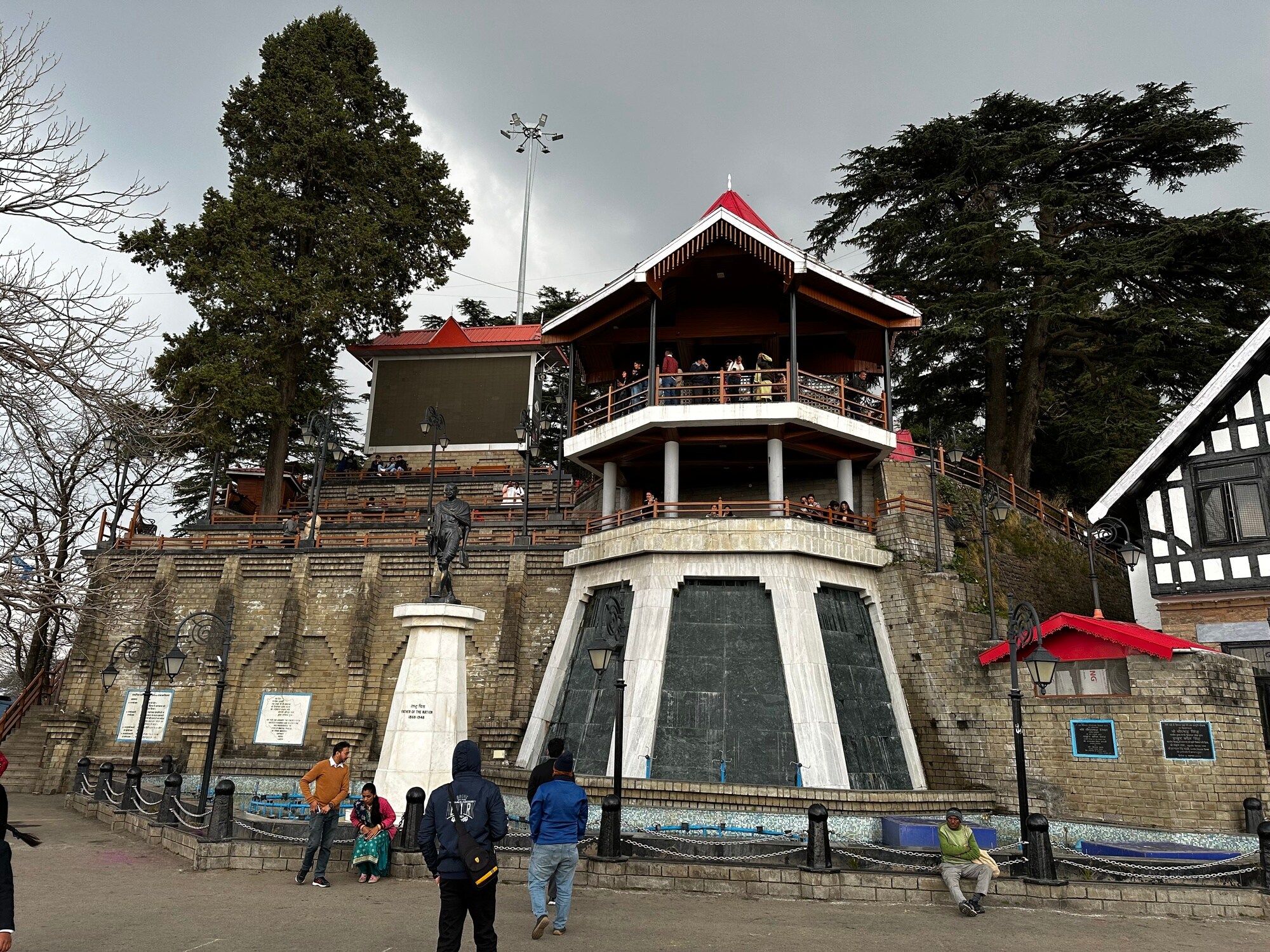
Prominent landmarks on the Ridge area is Christ Church, a neo-Gothic structure built in 1844 and a Tudorbethan styled library building built in 1910. There are four statues on the ridge; that of Mahatma Gandhi, Indira Gandhi, Dr. Y.S. Parmar the first chief minister of Himachal Pradesh and the recently established statue of Atal Bihari Vajpayee.
Underneath the Ridge, large water tanks are placed from which water is supplied to the British era tourist town. The Ridge houses the city's lifeline in terms of the water reservoir, with a capacity of 1,000,000 imp gal (4,500,000 L; 1,200,000 US gal) of water, beneath it. Because these tanks are significantly large in size, they have been used as the main water supply for Shimla. The reservoir is stated to have been constructed in the 1880s, without using any cement and only lime mortar was used.
The Ridge is famous for the various government functions and fairs that are held here. It is usually the venue for all such celebrations and events. The most famous festival that is held at the Ridge is the Summer Festival. This famous festival is held during the months of April or May and the whole of Shimla comes alive with colors and a riot of activities. Prominent landmarks on The Ridge include Christ Church, a neo-Gothic structure built in the 1850s, and a Tudorbethan-styled library building.

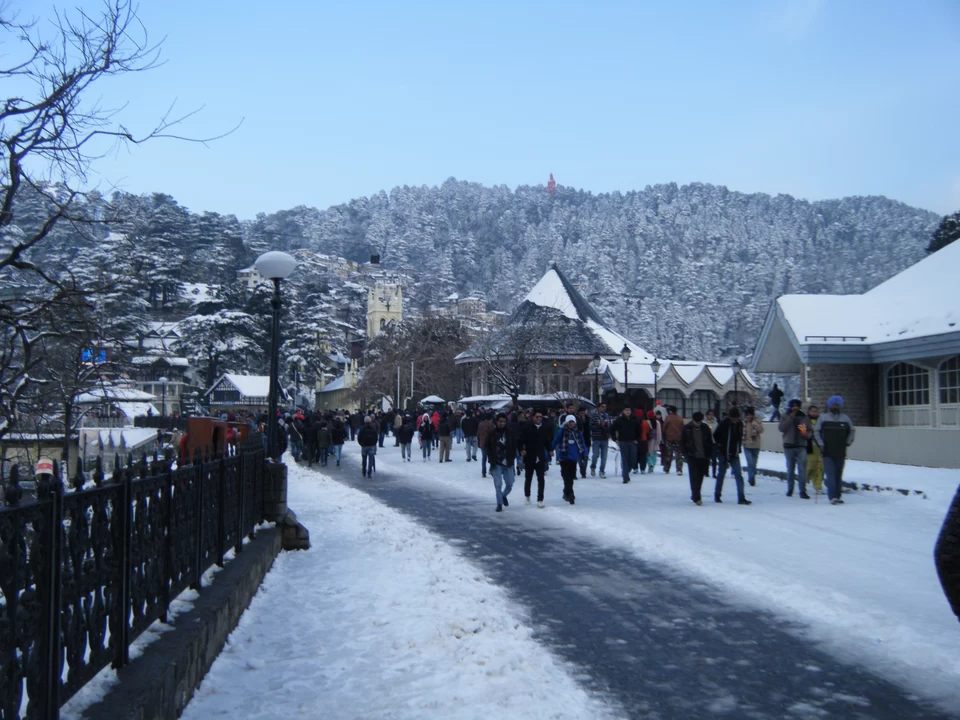

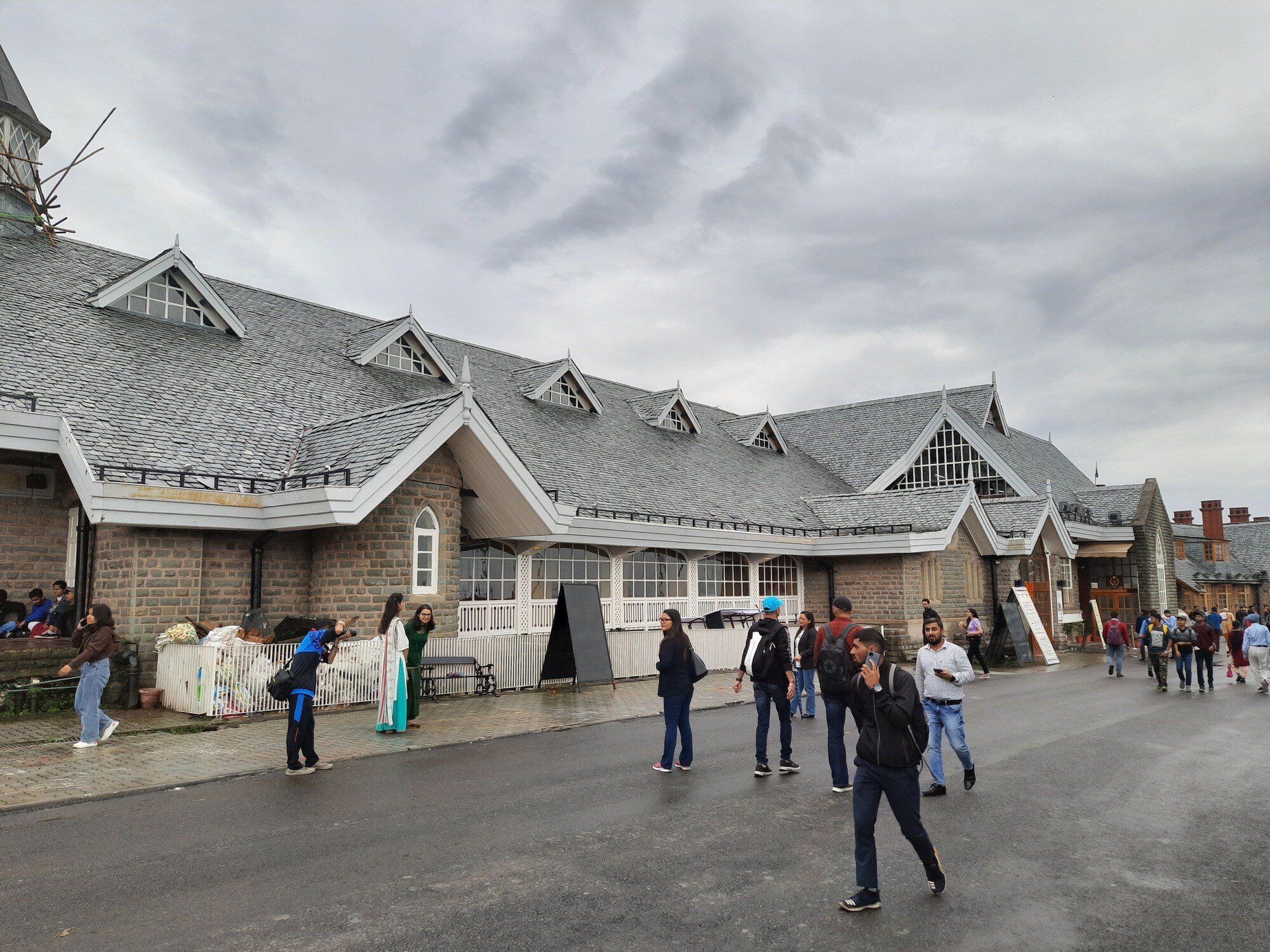
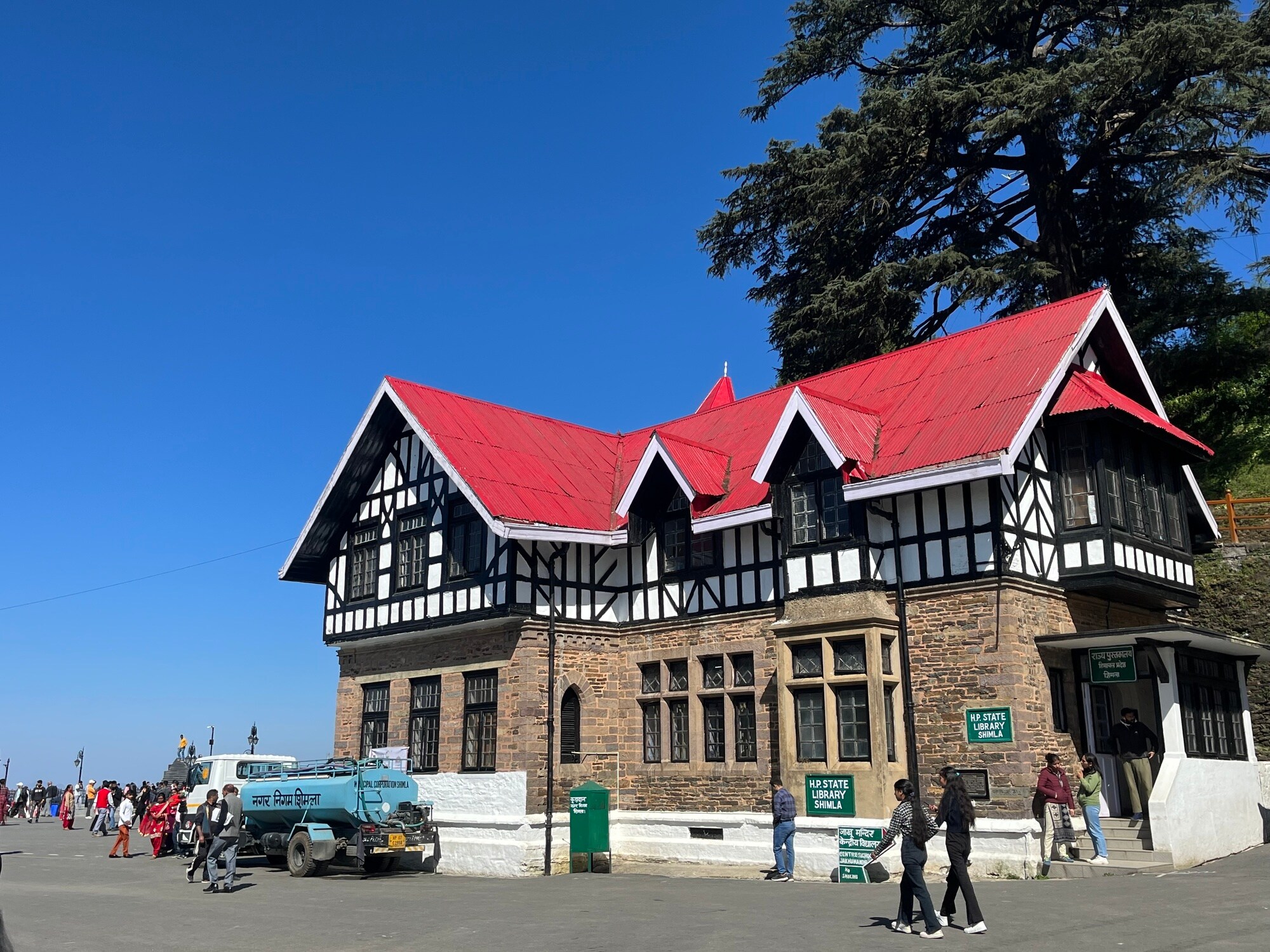

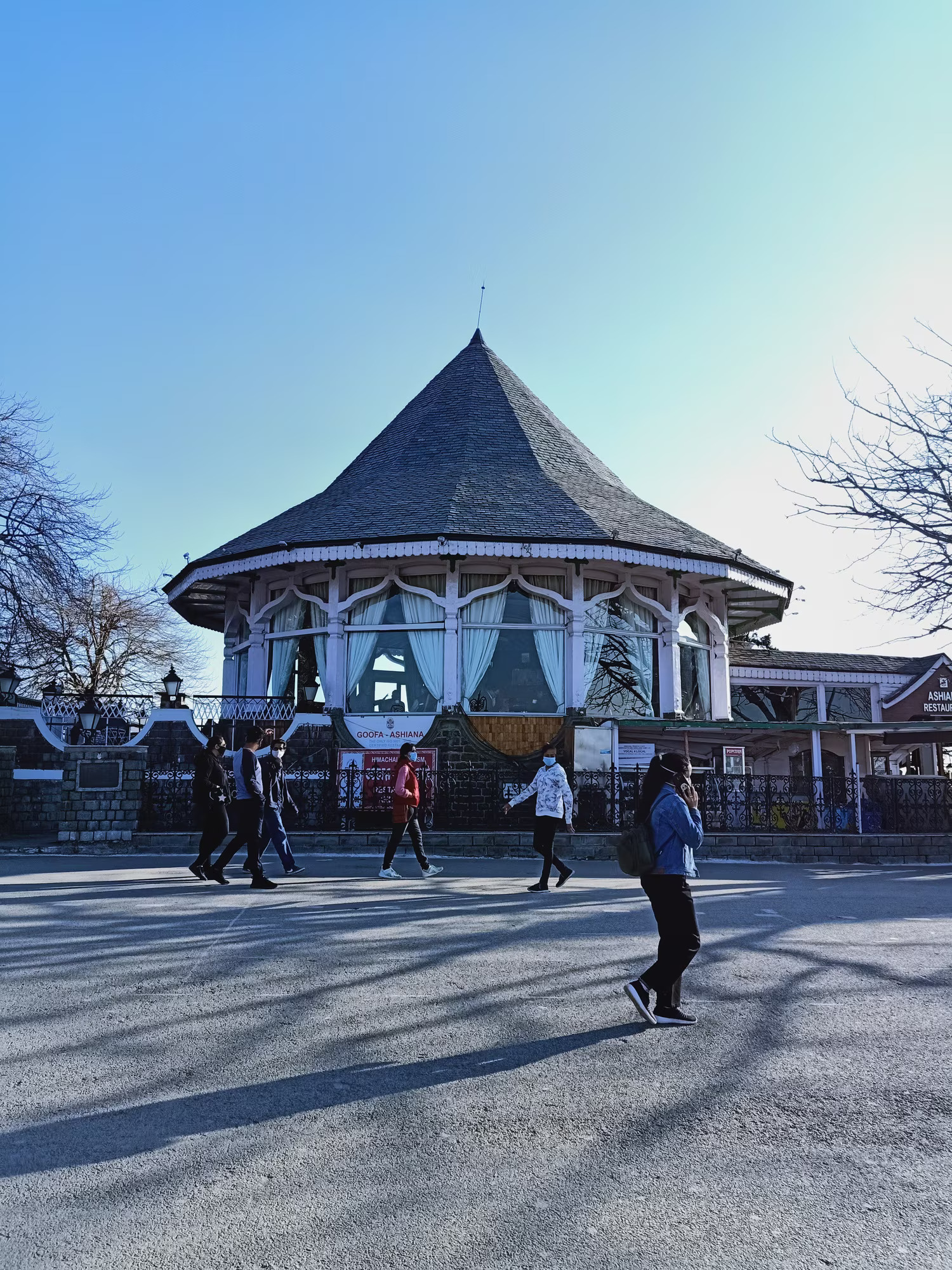
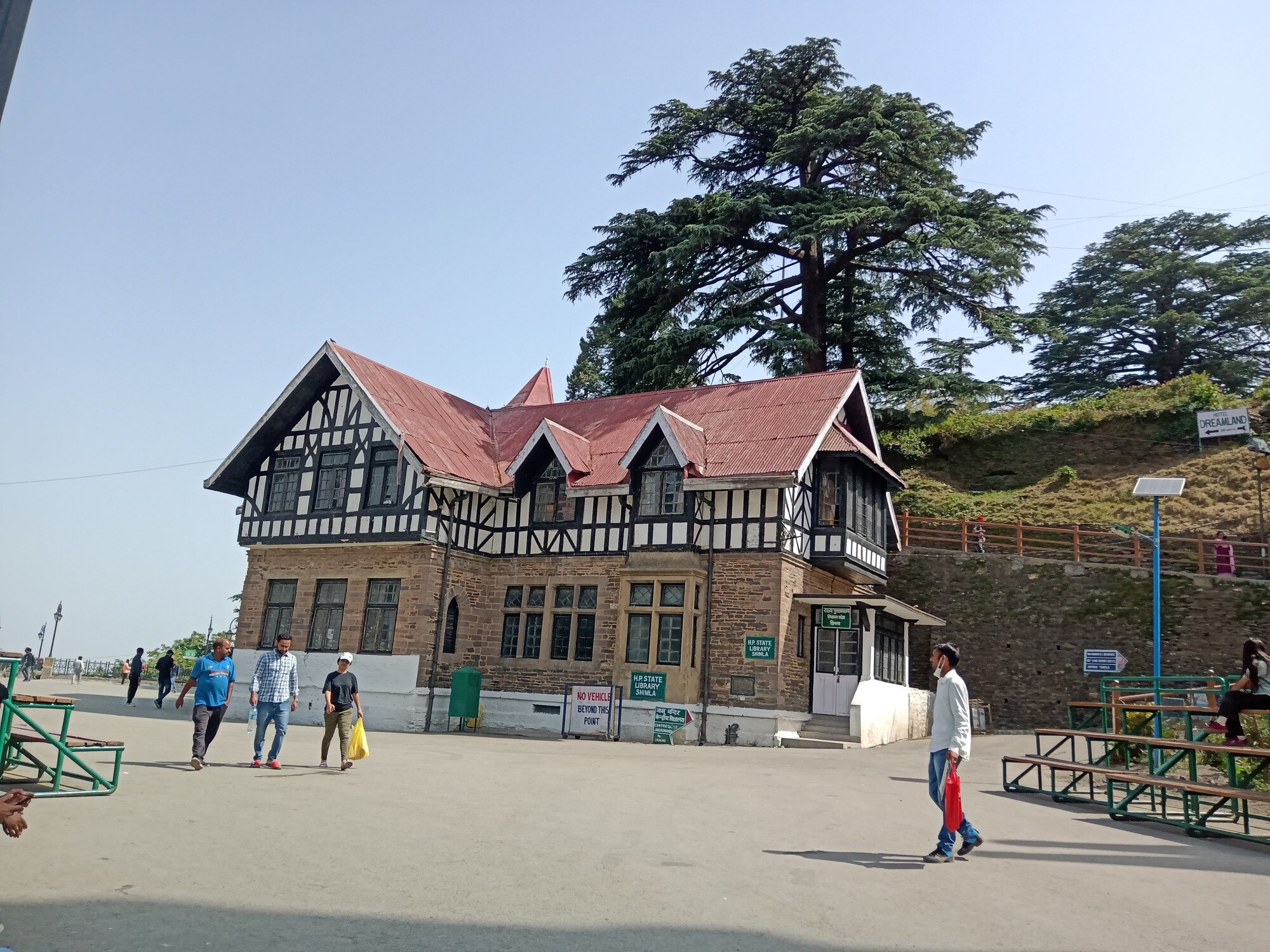
Mall Road is one of the main financial, commercial and business centres in Shimla, the capital city of Himachal Pradesh, India. Constructed during British colonial rule, the Mall road is located a level below The Ridge. The offices of municipal corporation, fire service and police headquarters are located here. Automobiles, except emergency vehicles are not allowed on this road. Another popular shopping centre of the city is Lower Bazaar, which is just below the Mall Road.
Mall Road has a number of showrooms, department stores, shops, restaurants and cafes. A Himachal emporium that offers handicraft products of Himachal Pradesh like locally designed woollen clothes, branded clothes, pottery items, wooden products, and jewellery is also located here.
Scandal Point is where The Mall joins The Ridge on the west side. The name arose from the commotion caused by the supposed elopement of a British lady with an Indian maharaja. The story goes that the Maharaja of Patiala had eloped with the daughter of the British Viceroy. This had led to the Maharaja being banished from entering Shimla by the British authorities.[2] He countered the move by setting himself a new summer capital – now famous hill resort of Chail, 45 km from Shimla. The most prominent feature of the point today is a statue of the Indian freedom fighter Lala Lajpat Rai (no relation to the scandal). Next to Scandal Point is General Post Office.
The Gaiety Theatre, located on the Mall, was opened on 30 May 1887. Many popular film personalities have performed on its stage.
Today, the Gaiety is primarily known for its social club. Schools in Shimla use this theatre for performing arts.The theatre has been renovated, with the original structure untouched to keep its heritage preserved while making it more attractive.
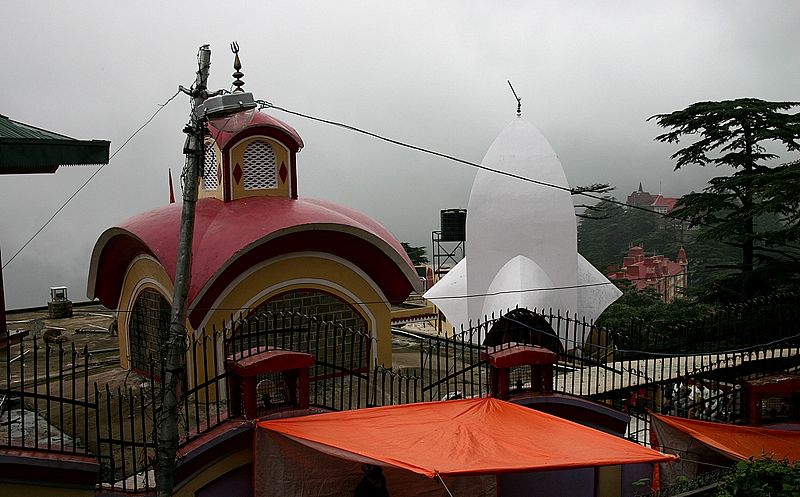
The Kali Bari temple was built in 1845 by Bengalis who had come to Simla (summer capital of British India) as British servants from Calcutta (capital of India that time). It is dedicated to the goddess Kali. It is believed that in an ancient temple of Shimla, the goddess Kali existed, near Jakhoo. In the temple a wooden image is worshiped locally.
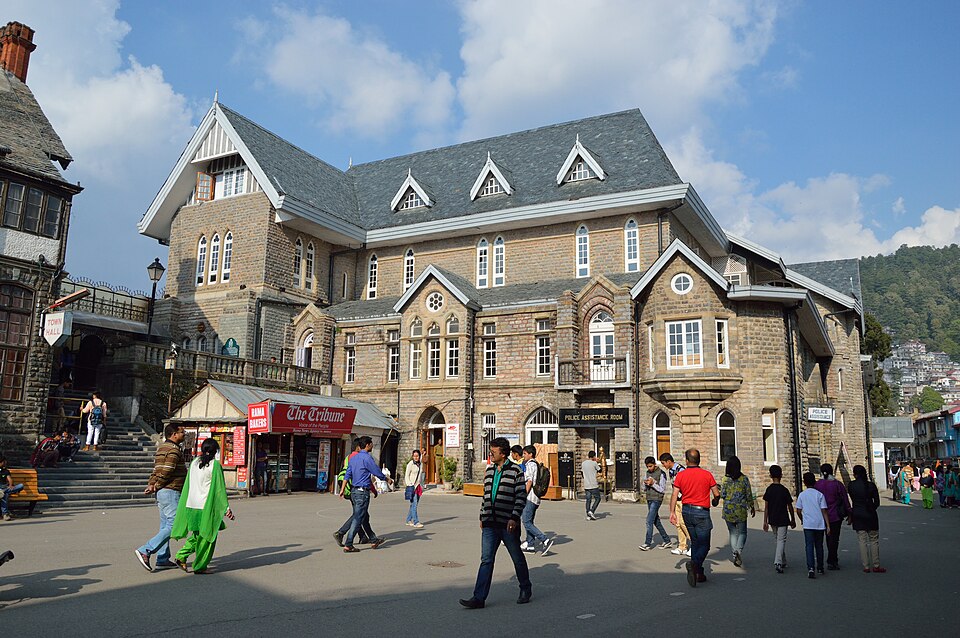
The Town Hall was constructed in 1908 and was designed by the Scottish architect James Ransome. The building has been the centre of municipal activities since the beginning and it currently houses the Shimla Municipal Corporation. The building adds to the surrounding architecture, reminiscent of the pre-independence era. The large steps and the entrance to this building are a common site for pictures depicting the Mall at Shimla. A project was started in 2014 to restore the building to its original look and more than 8 crore rupees were spent in renovating this colonial architectural marvel.
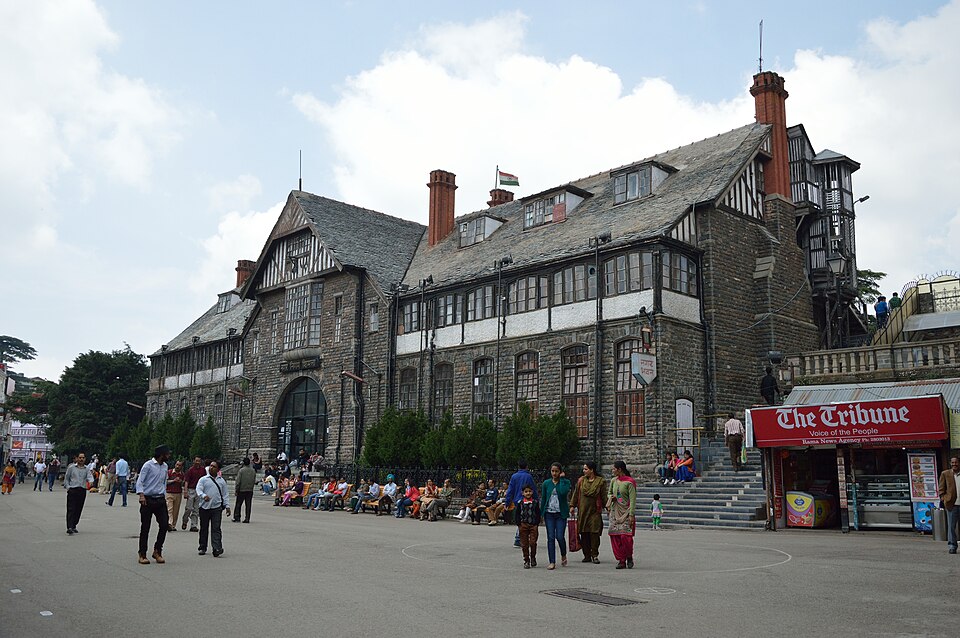
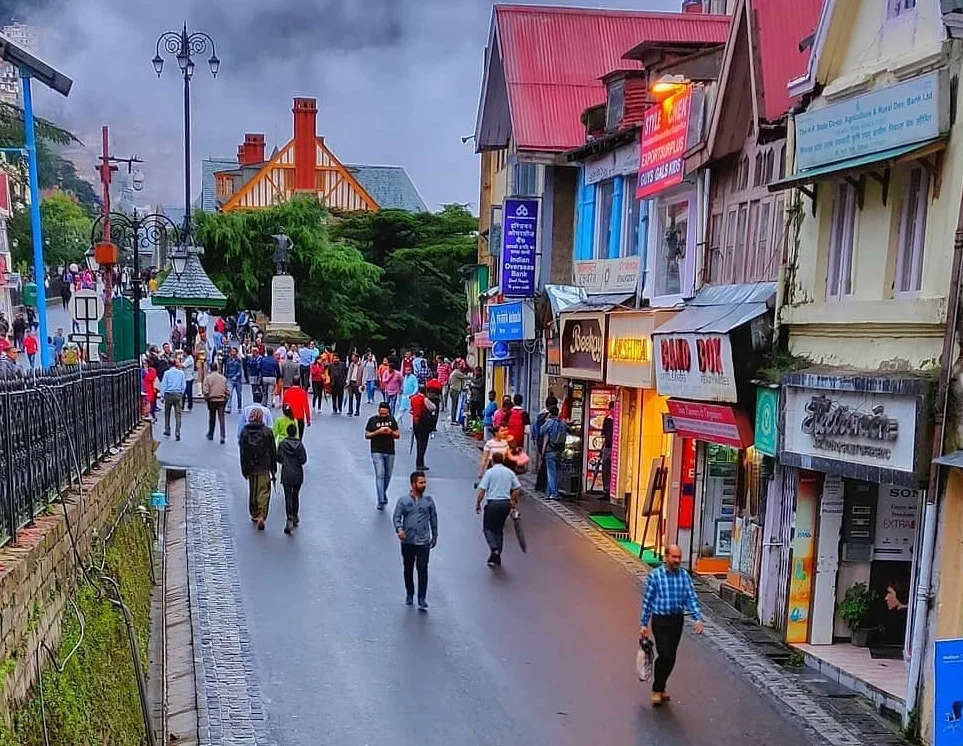
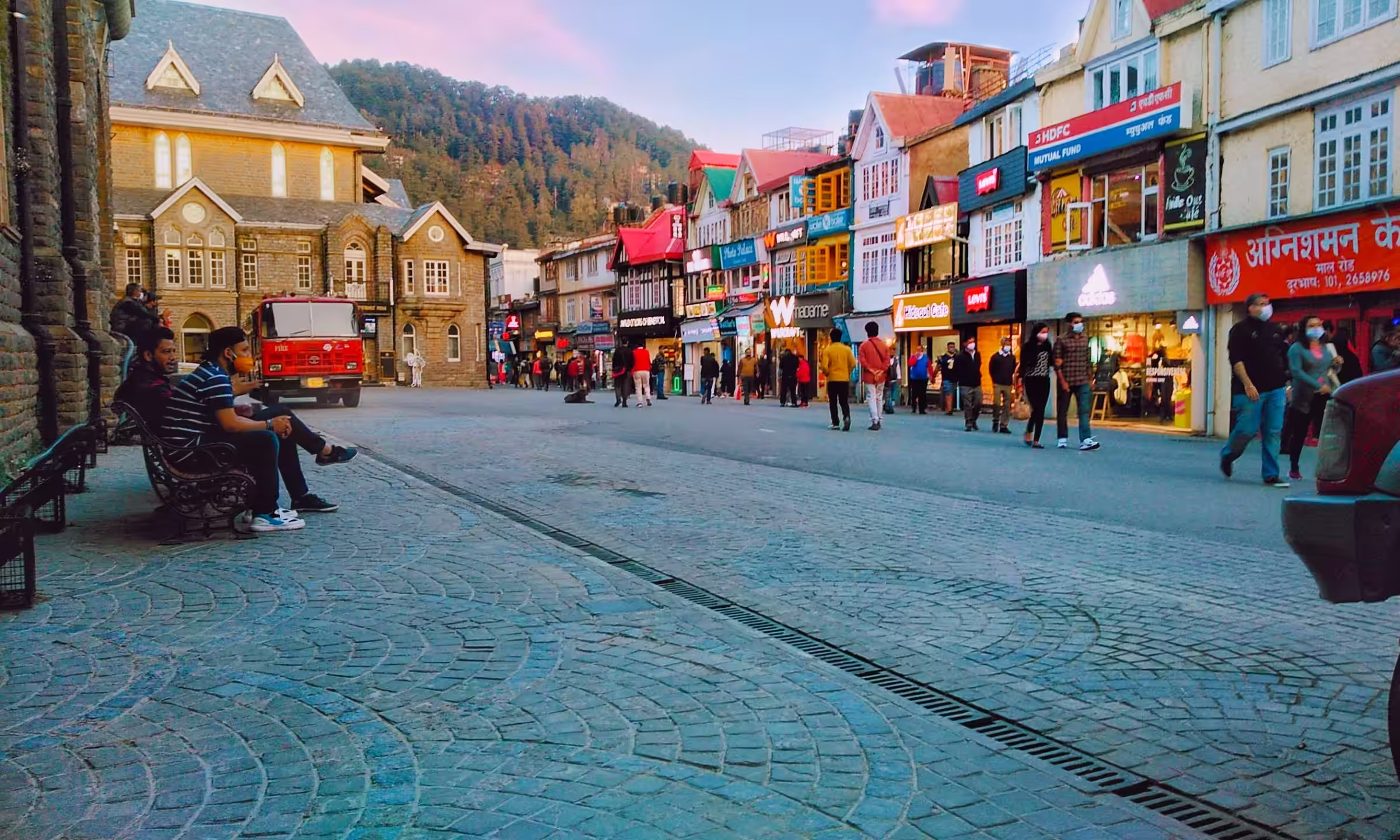
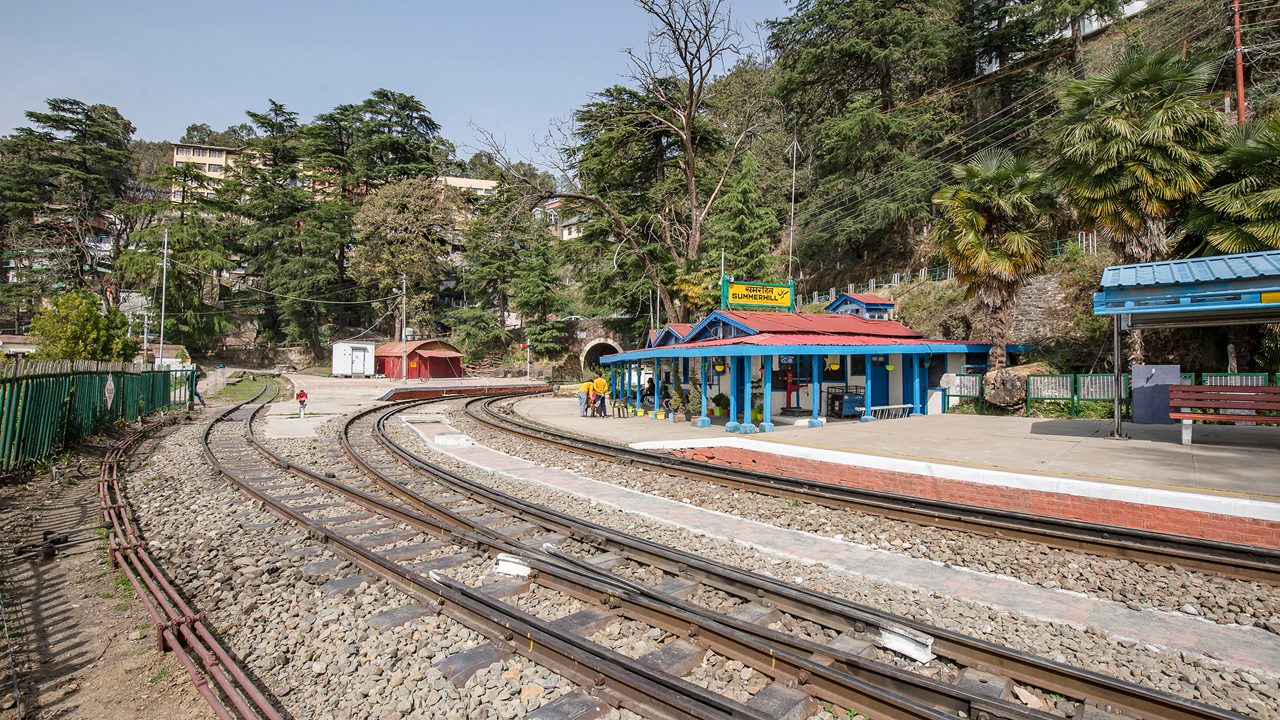
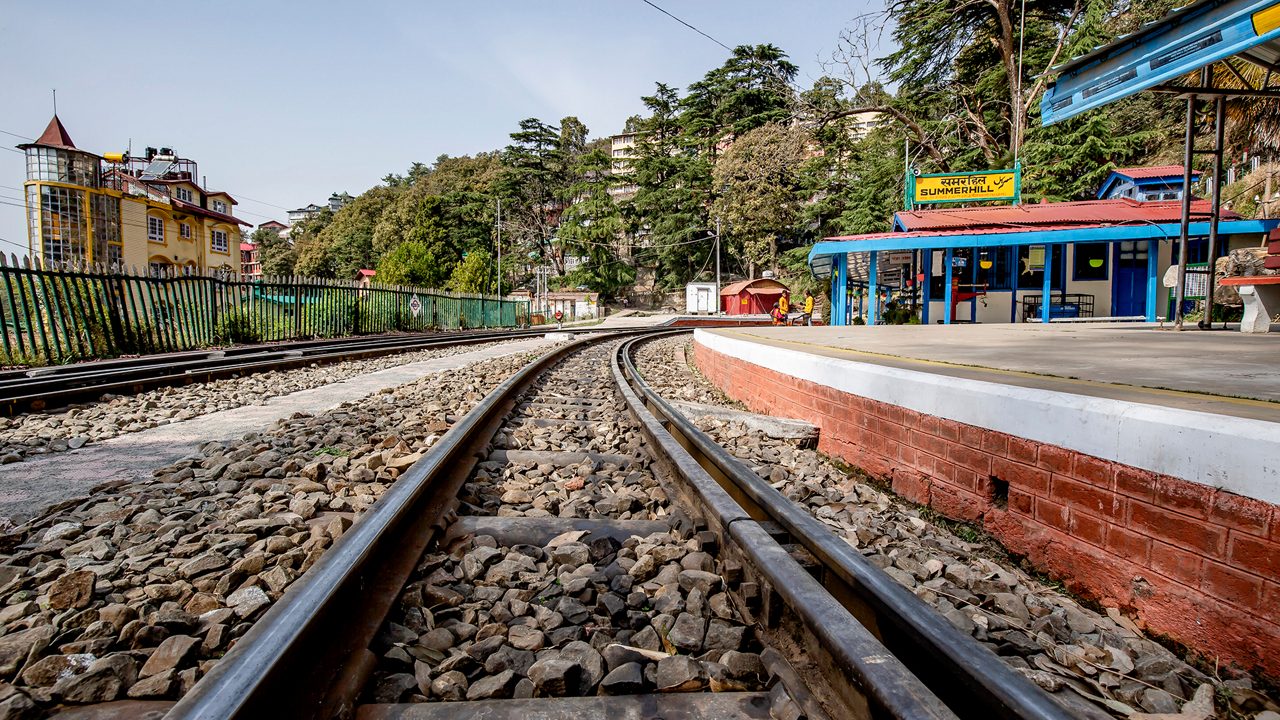
Summer Hill is a part of Shimla, the state capital of Himachal Pradesh at a height of 2,123 meters. It is on a hill, 5 km west to the Shimla Ridge, and is part of the seven-hill cluster.
In the past, Summer Hill has offered residence to Mahatma Gandhi, who stayed here at the Georgian mansion of Rajkumari Amrit Kaur during his Shimla visits.Also known as the Potter's Hill,these pine and deodar laden slopes have many quaint residences, like one belonging to the family of noted painter Amrita Shergil(1913-1941).
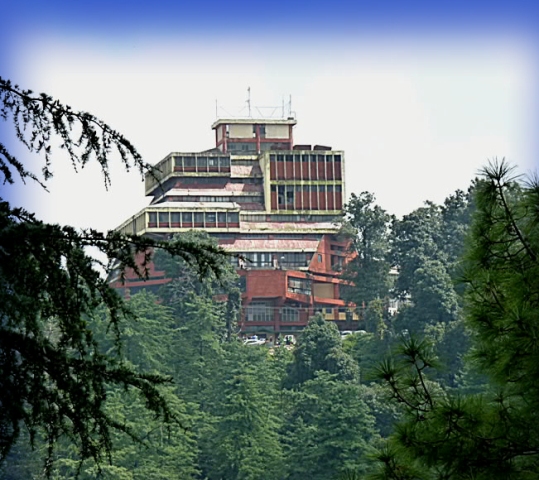
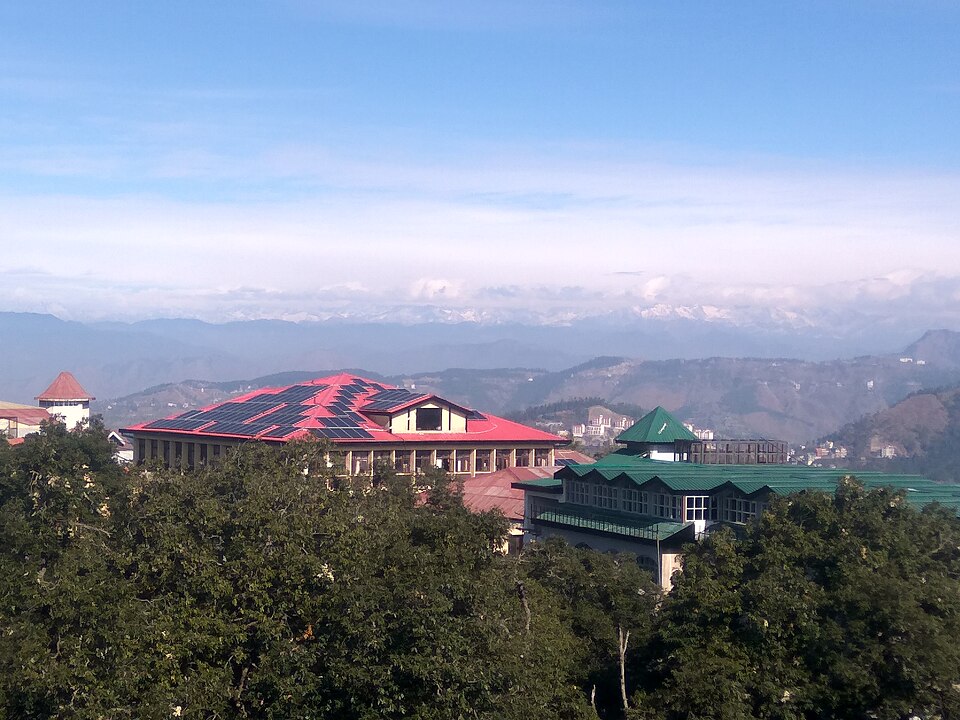
Besides being a popular tourist destination, the Indian Institute of Advanced Study (established 1965), housed in the former Viceregal Lodge, which was built in 1884–88, is on the nearby Observatory Hill.
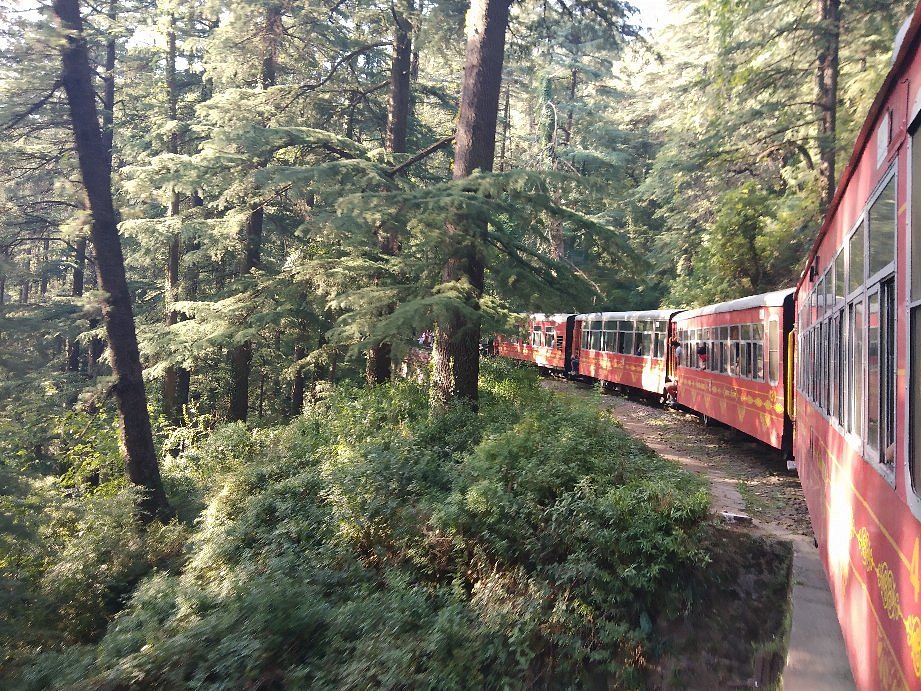
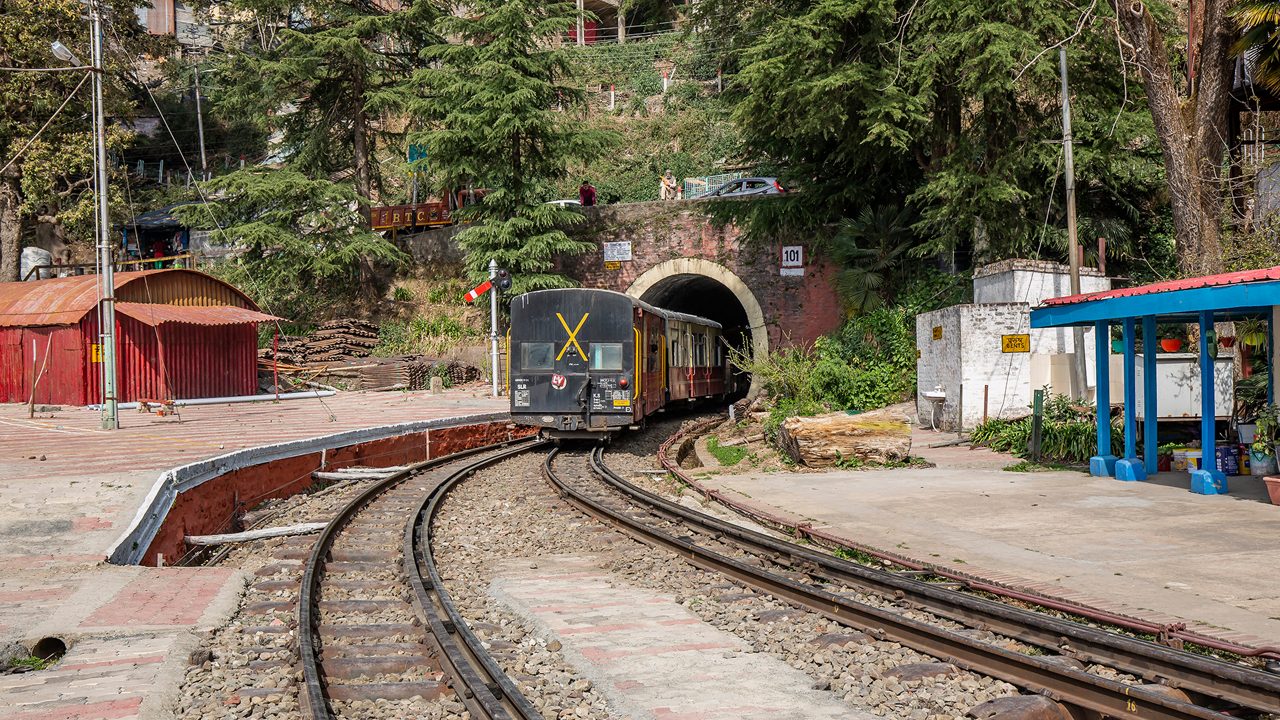
Today, it hosts the Himachal Pradesh University, which mainly offers post graduate programmes in Humanities, Commerce, Science, Management, Law and Languages, and was started in 1975. Most students walk to the Hill Station of Shimla from the campus, though Summer Hill lies on the Kalka-Shimla Railway line.
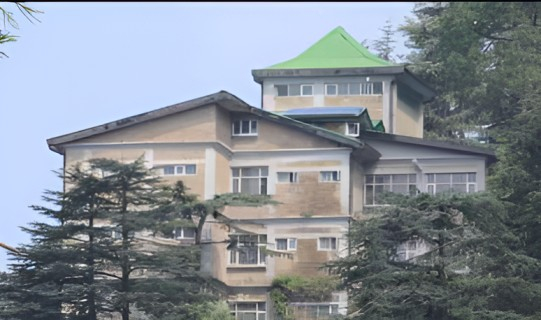
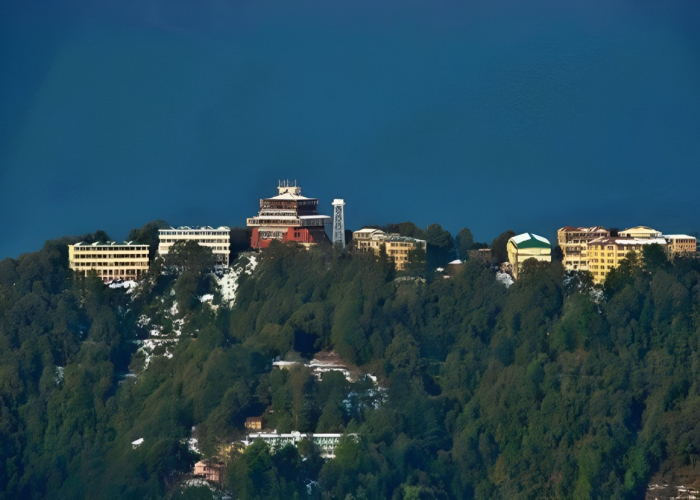
Sankat Mochan Temple is a Hindu temple, dedicated to Hindu deity Hanuman in Shimla, Himachal Pradesh, India. The temple is Shimla's second most visited Hanuman temple after Jakhu Temple. It was established in 1950 by noted religious figure, Neem Karoli Baba.
The temple was established in 1950 by Neem Karoli Baba, after he spent 10–12 days in the forest area. While meditating, he got some instinct that Hanuman temple should be built on the site. Baba told his wish to his followers and eventually in the year of 1962 the then Lieutenant Governor Bajrang Bahadur Singh and other followers started the construction of the temple. The idols of Rama-Sita-Lakshmana, Shiva and Ganesha were also established in the temple. The temple was inaugurated on 21 June 1966 on the day of Tuesday. Gradually the temple gained a lot of popularity and faith.
At present the locals come here everyday, as well as tourists who visit Shimla. Because it is Lord Hanuman temple, every Tuesday and Saturday a lot of people visit, and on Sundays huge number of people visit the temple. On each Sunday a large Bhandara is also organised here. In the vicinity of the temple there is also the small temple dedicated to Neem Karoli Baba, which was made in 1998. The view of Shimla city is also seen from the temple.
The temple is located at an altitude of 1,975 m above sea level on Chandigarh-Shimla highway. The natural forested environment attracts tourists. Views of Shimla city are also seen from the temple.

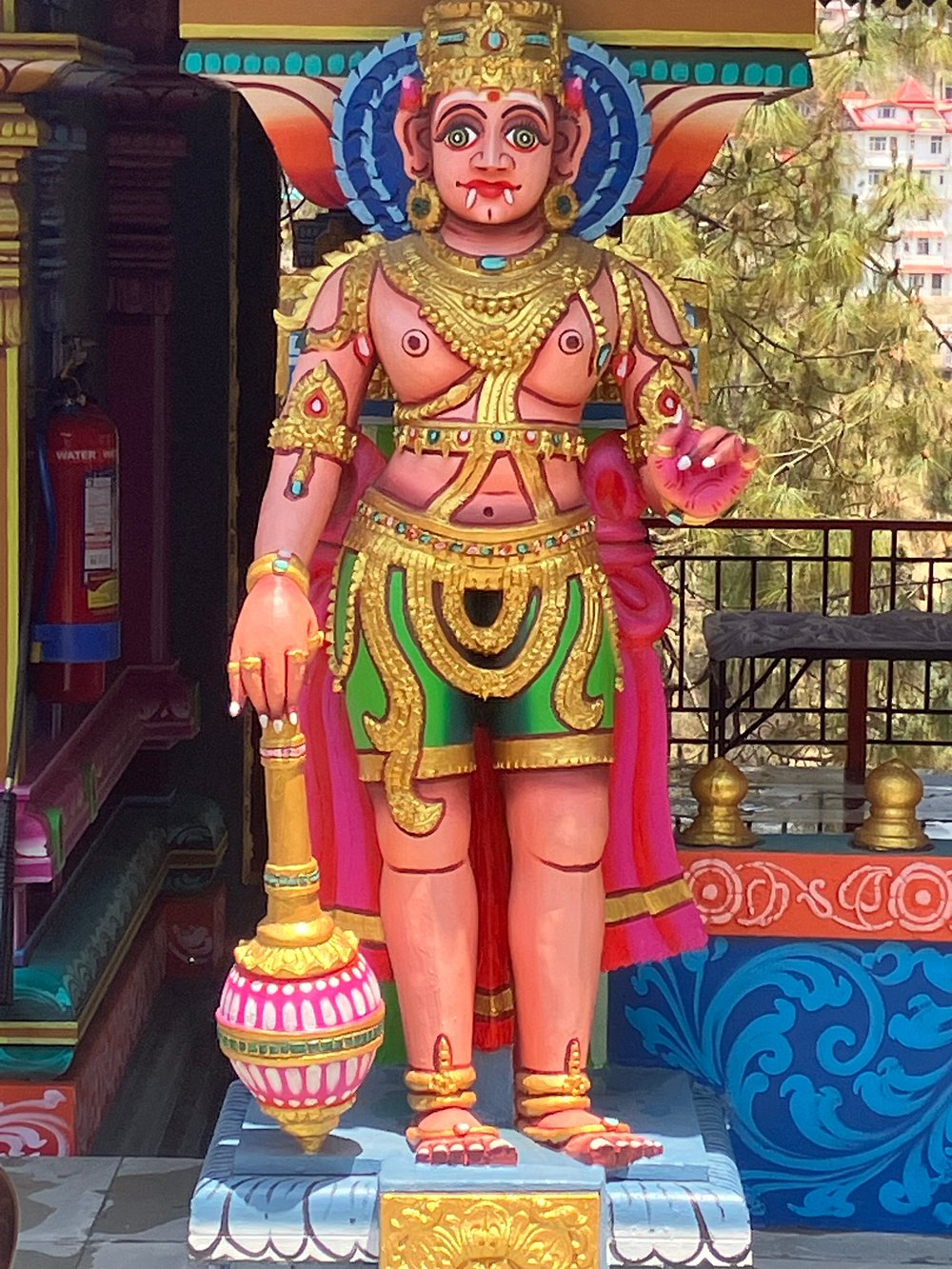


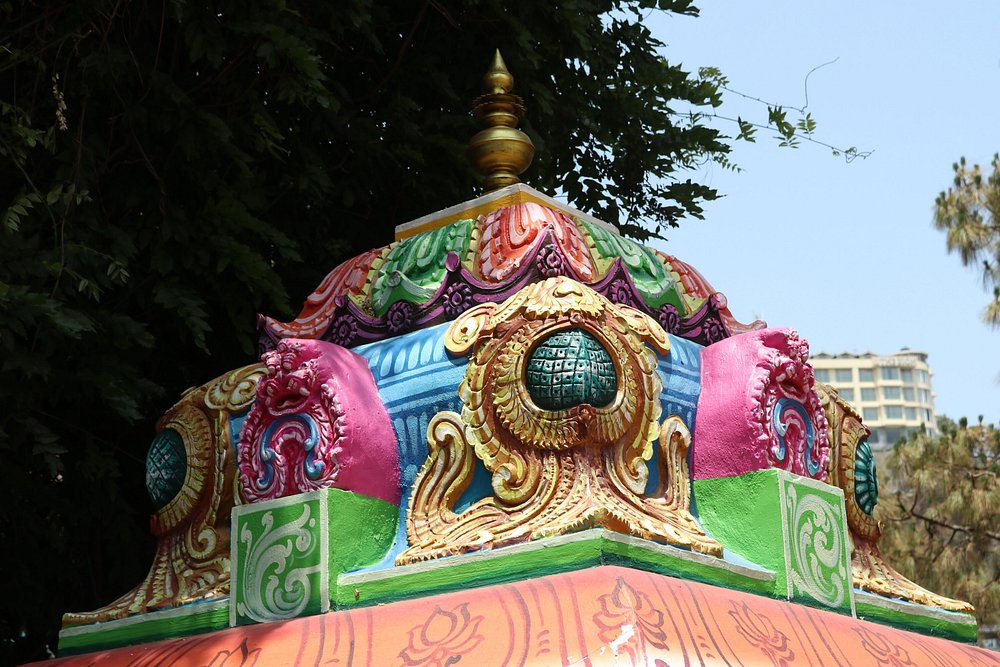
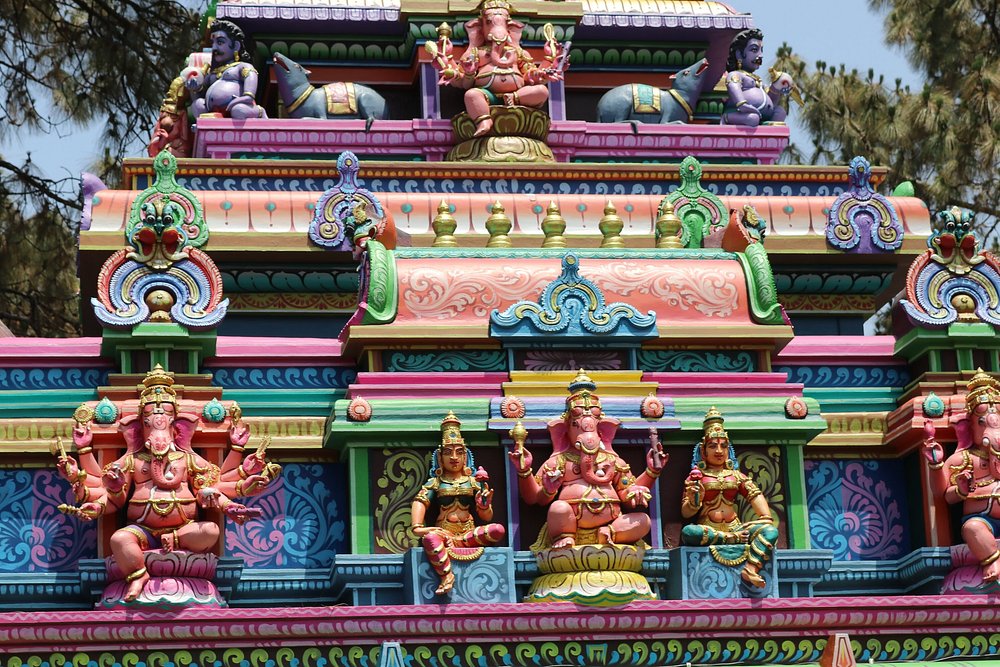
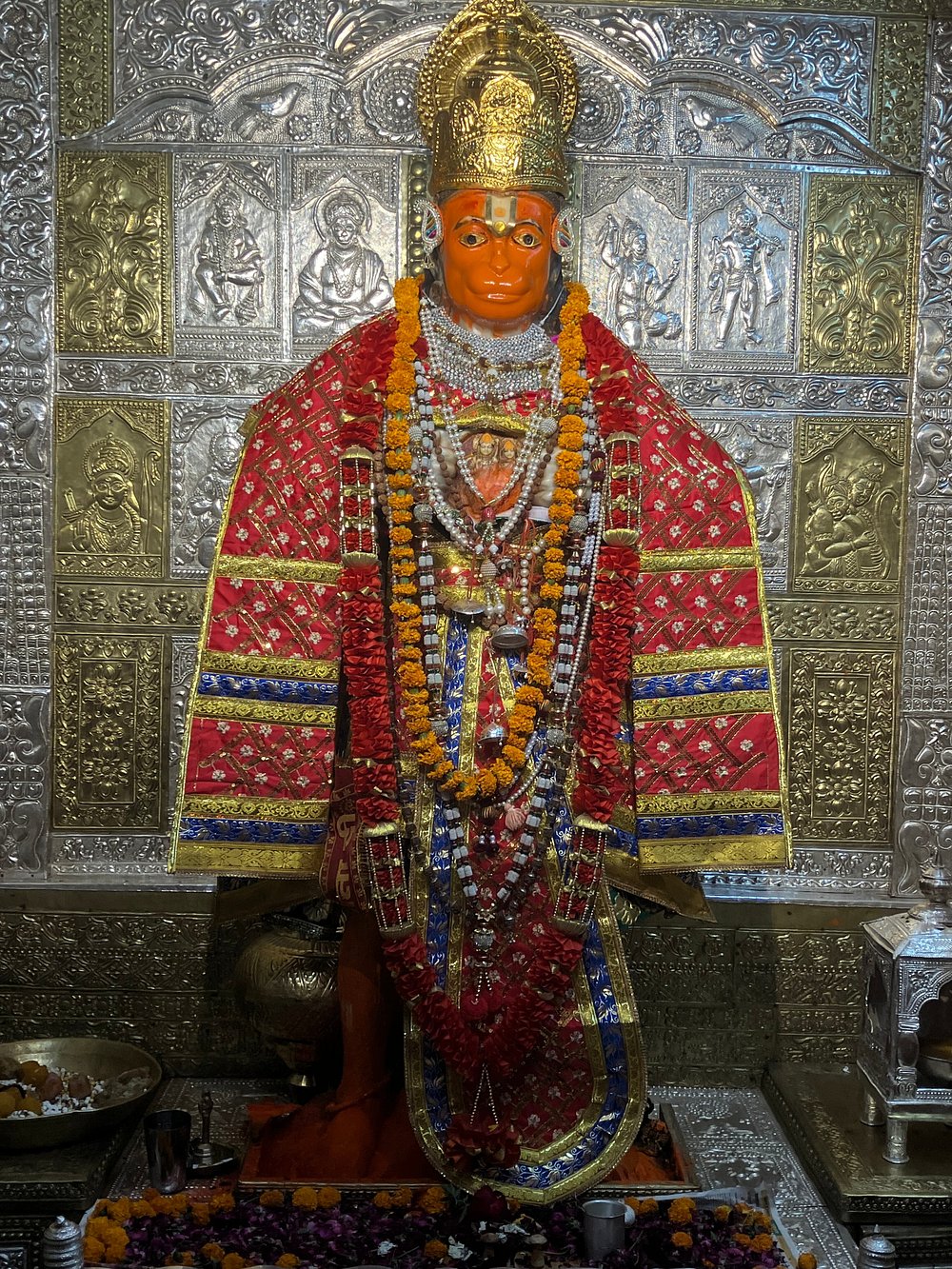


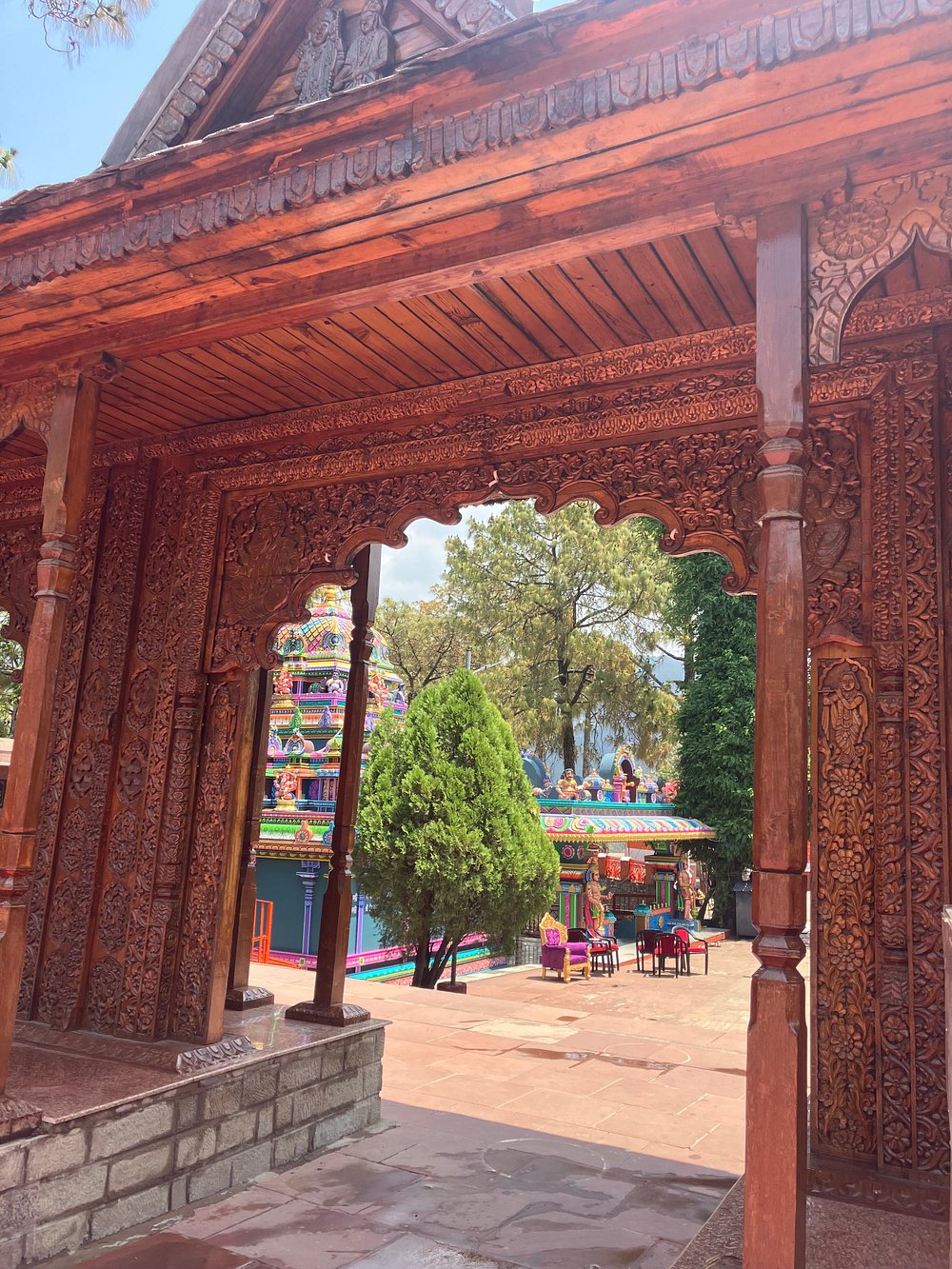
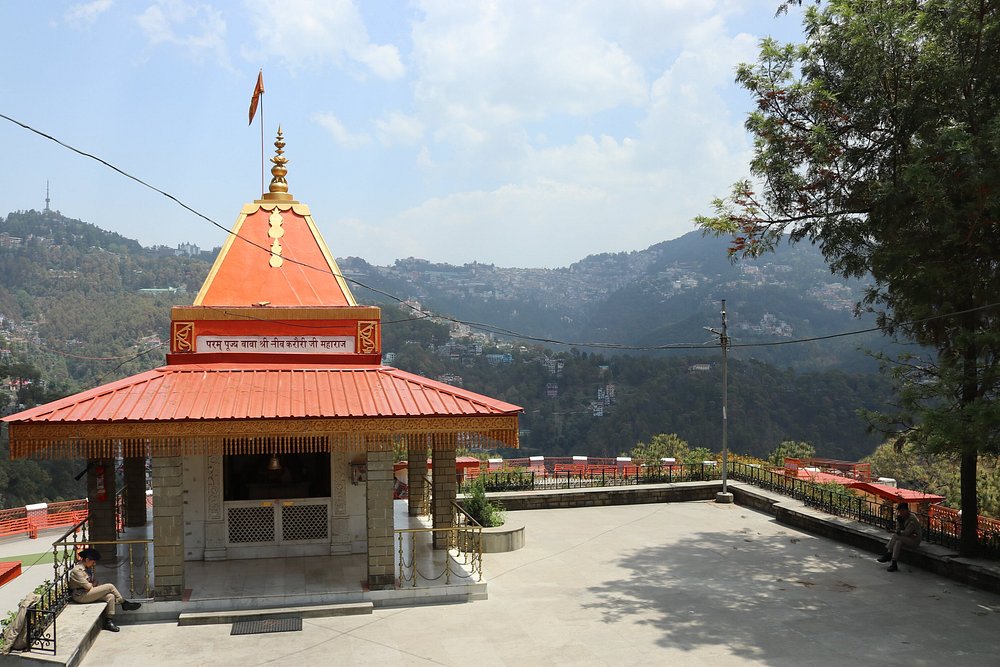

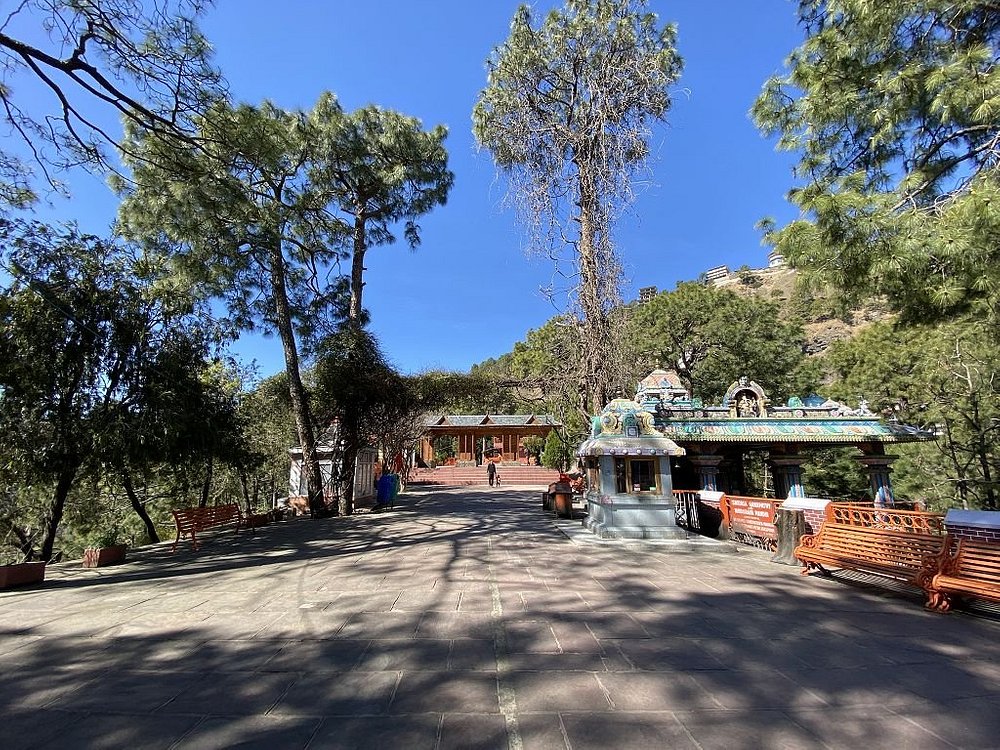
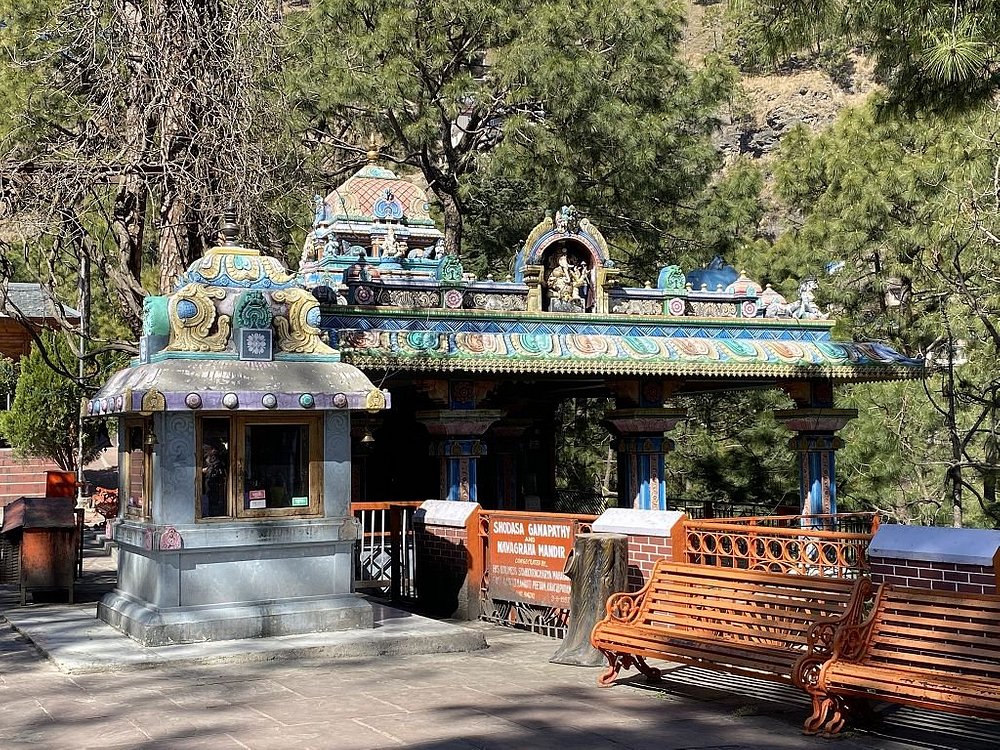
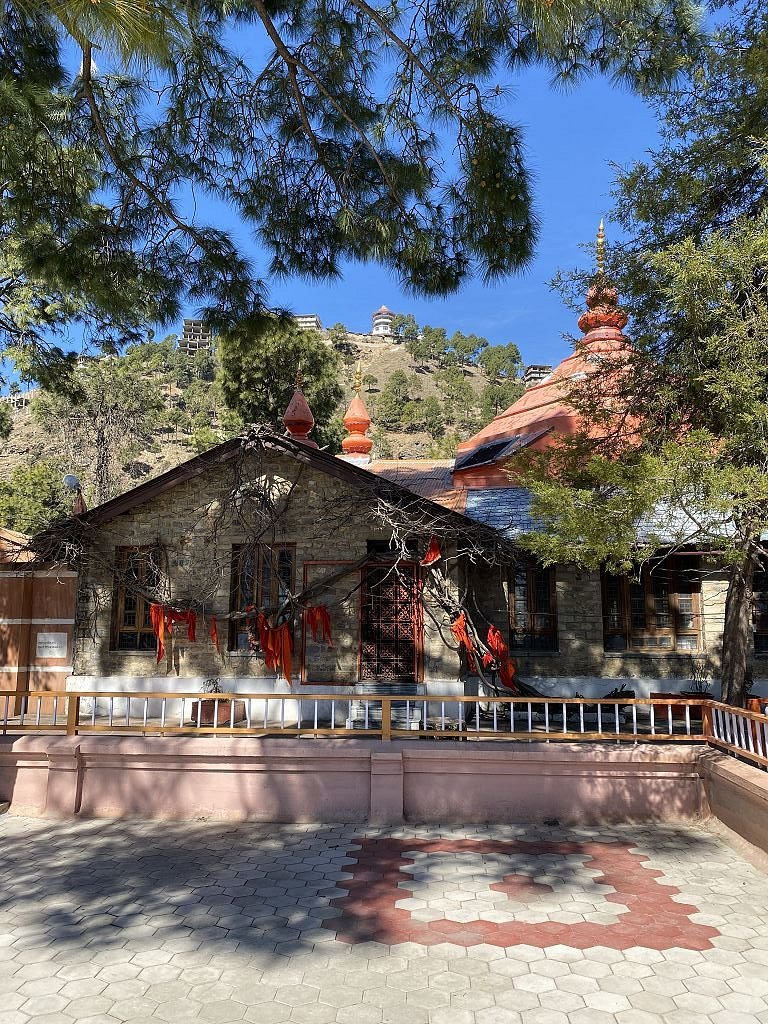
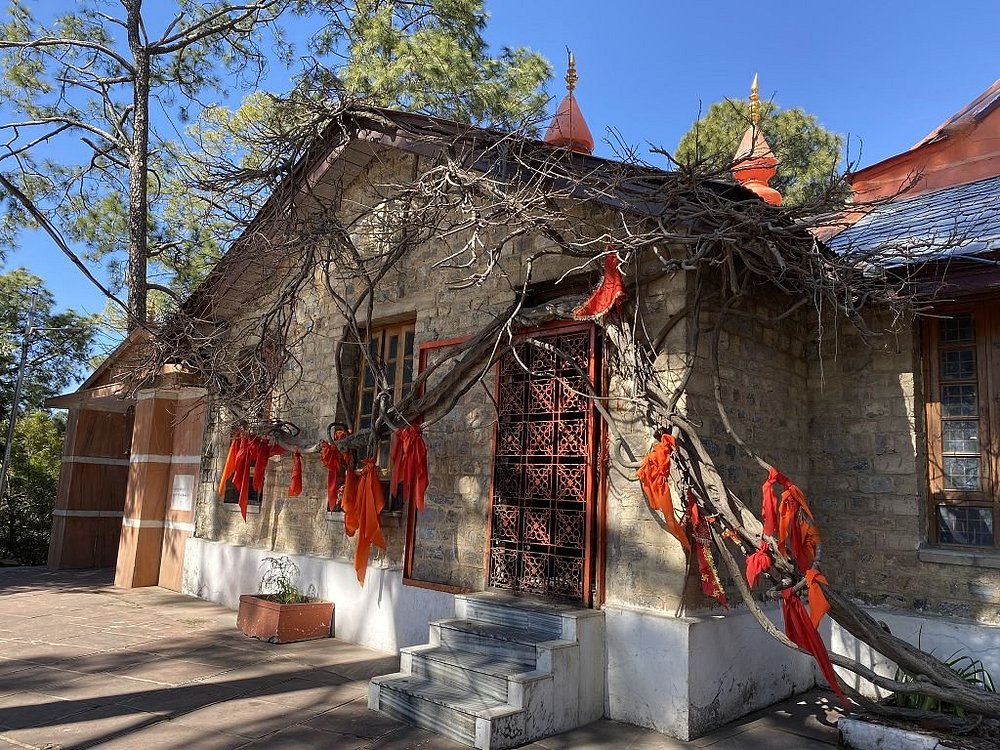
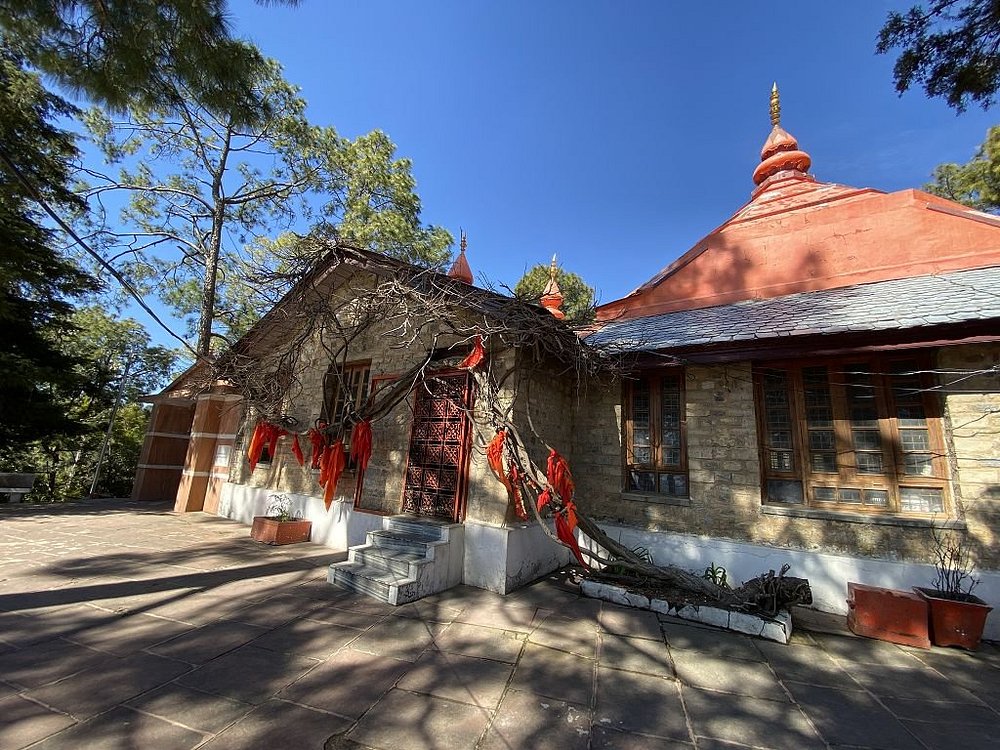
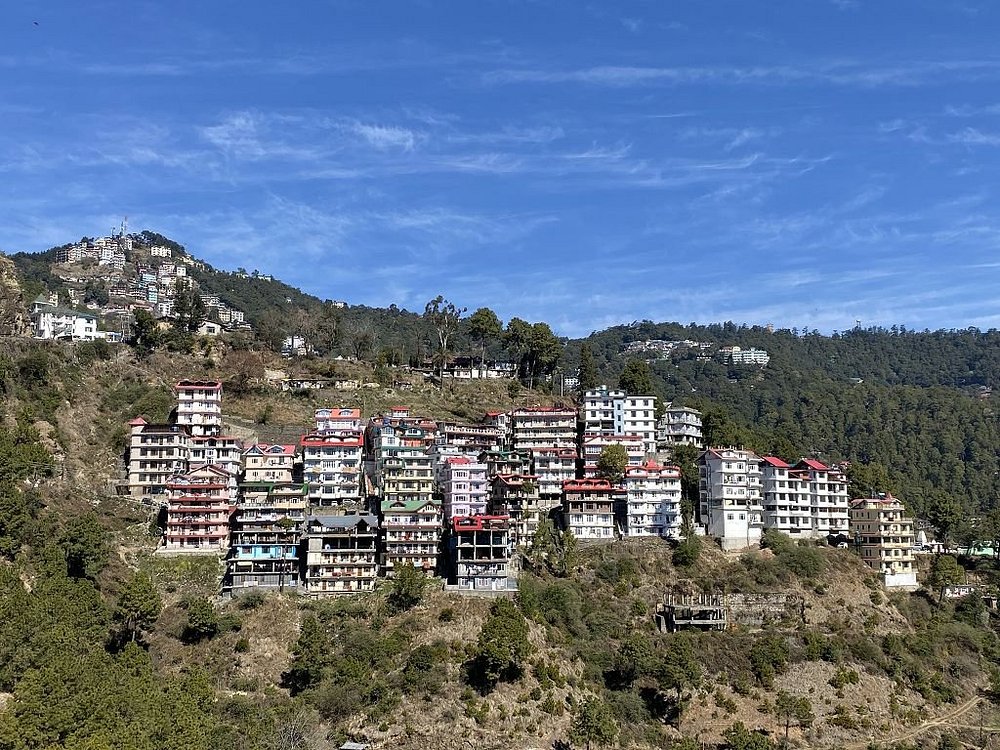
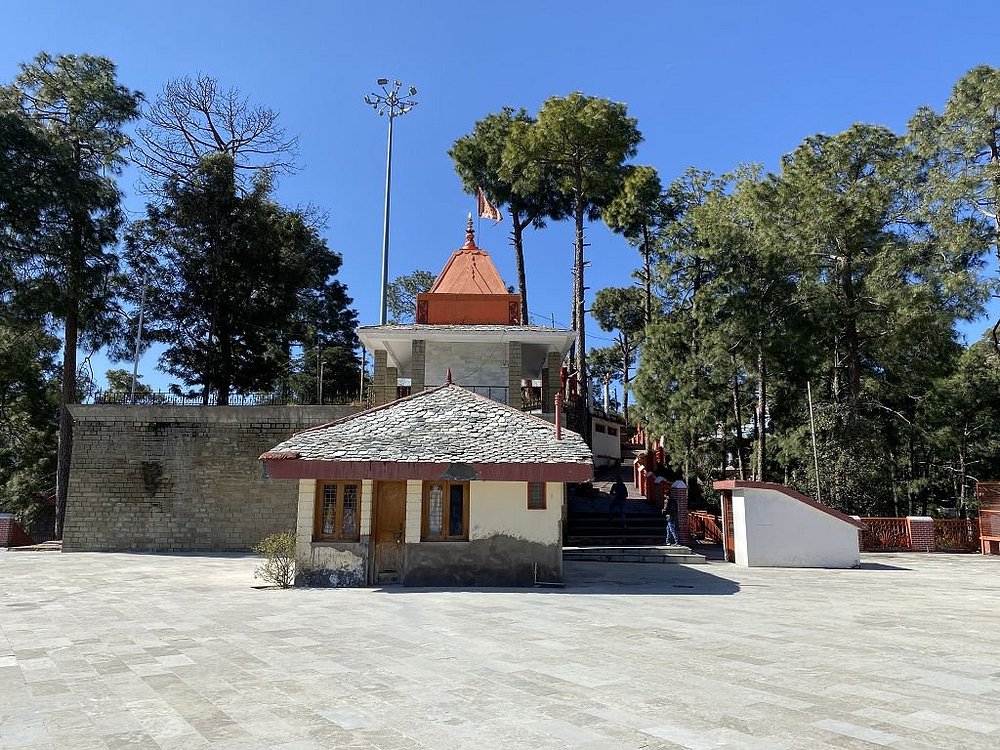
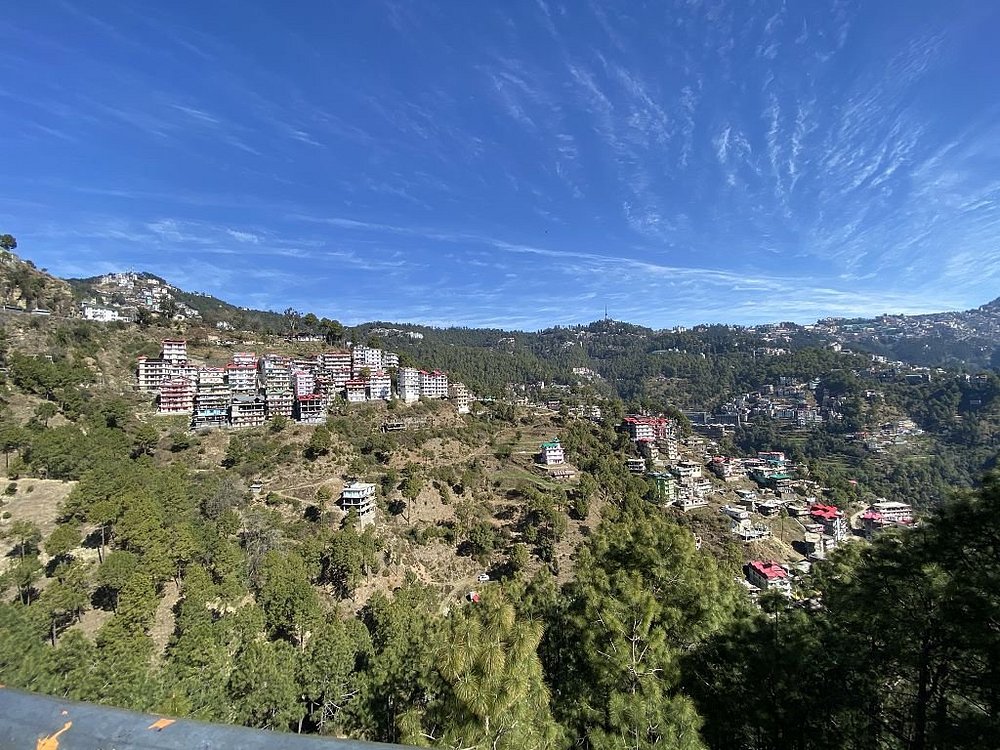
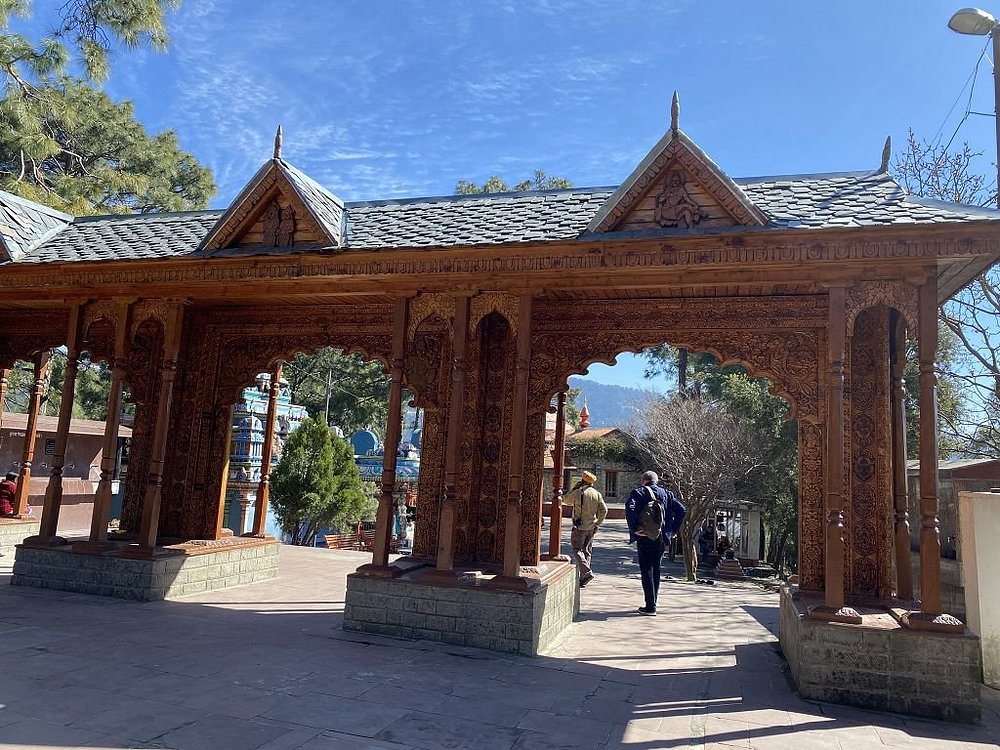
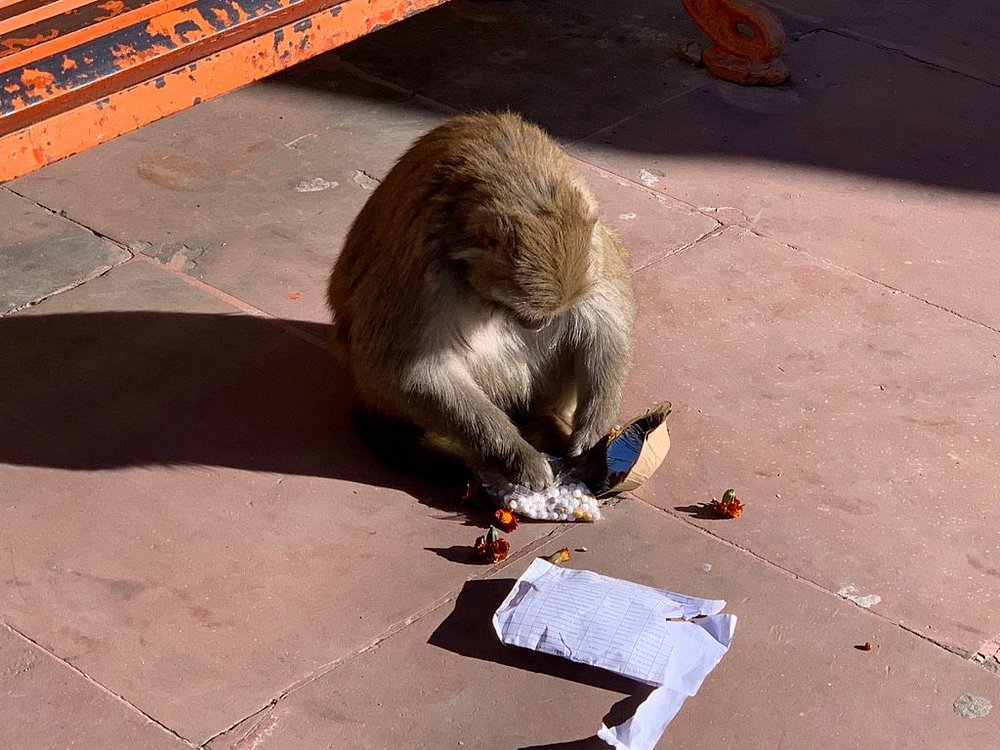

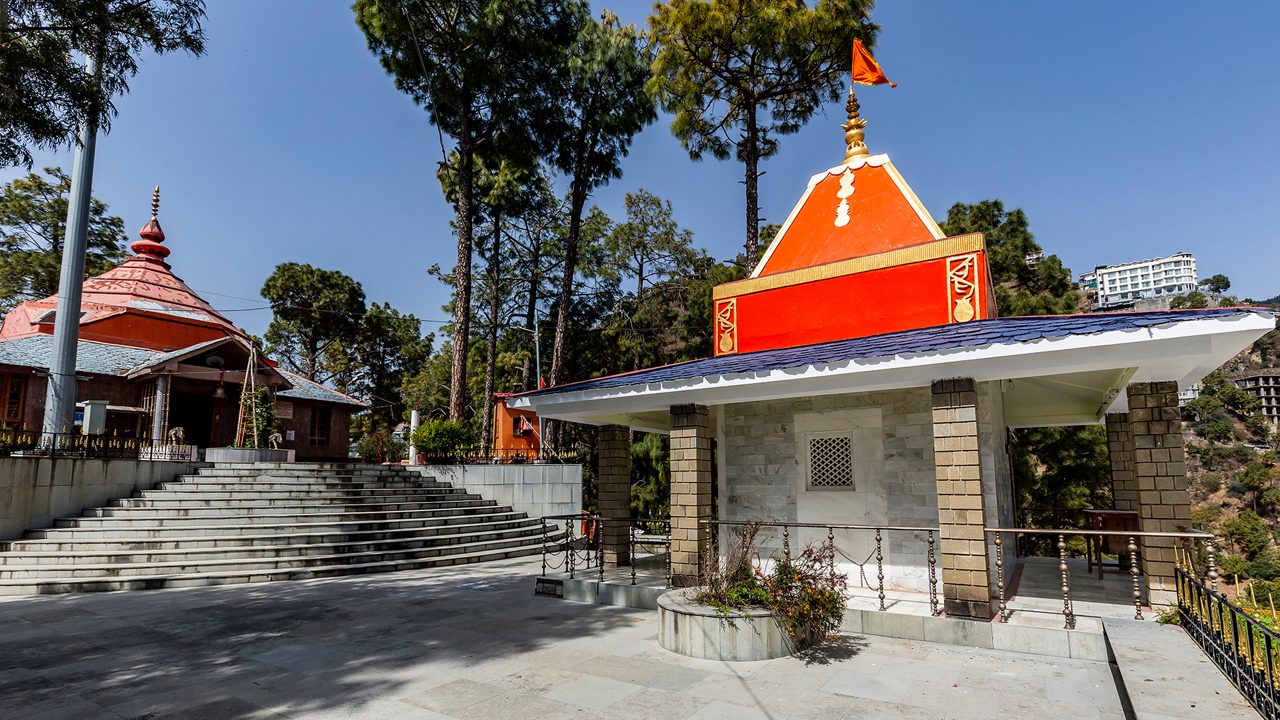
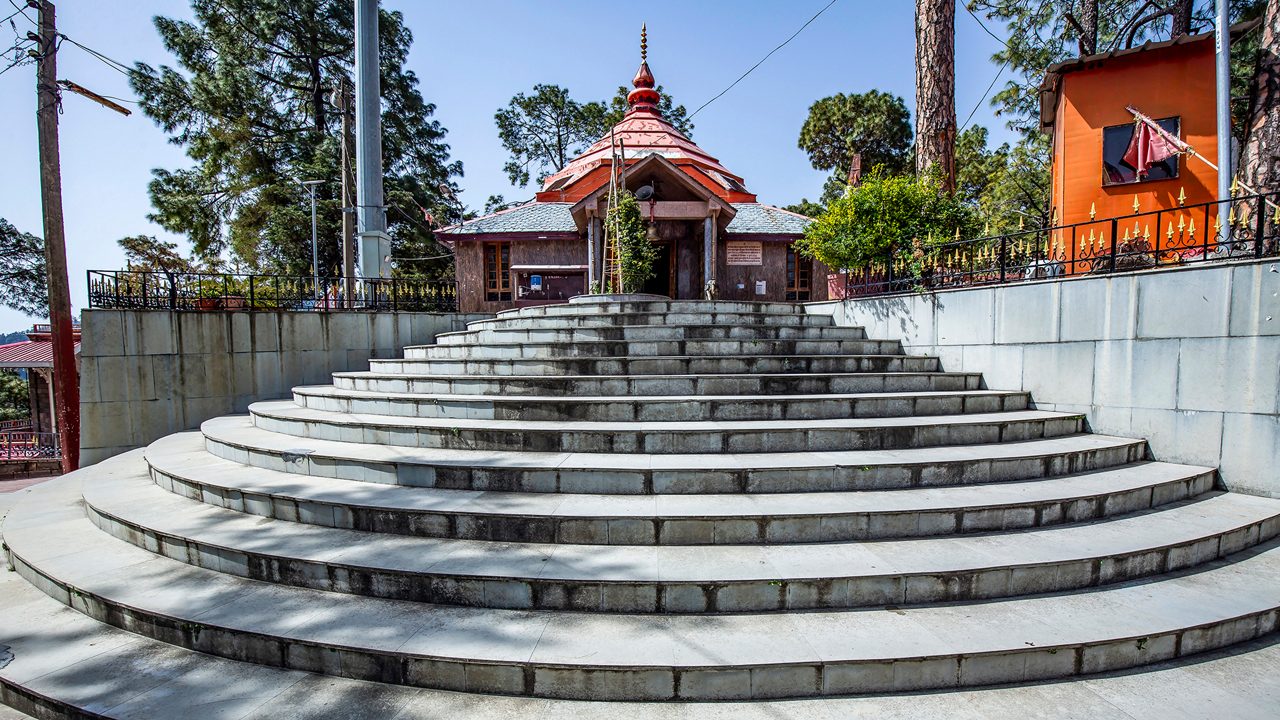
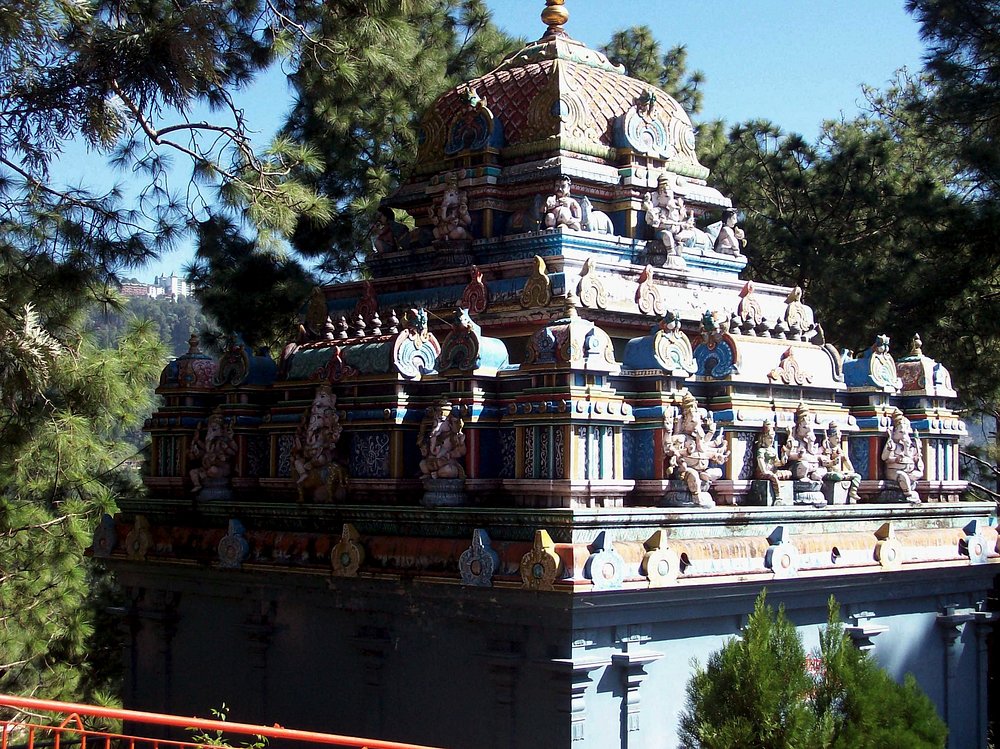
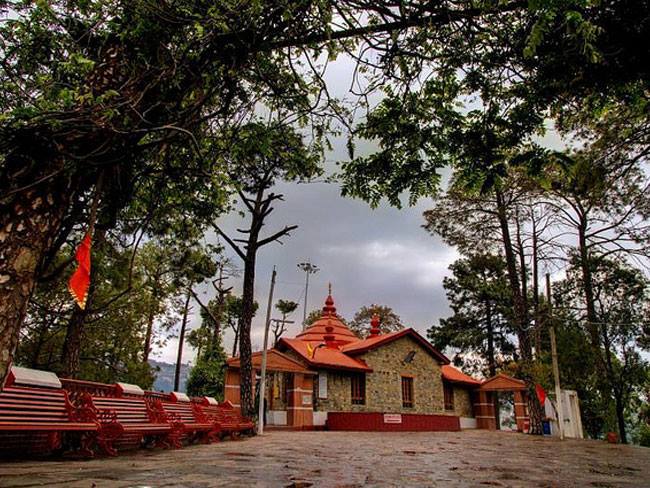

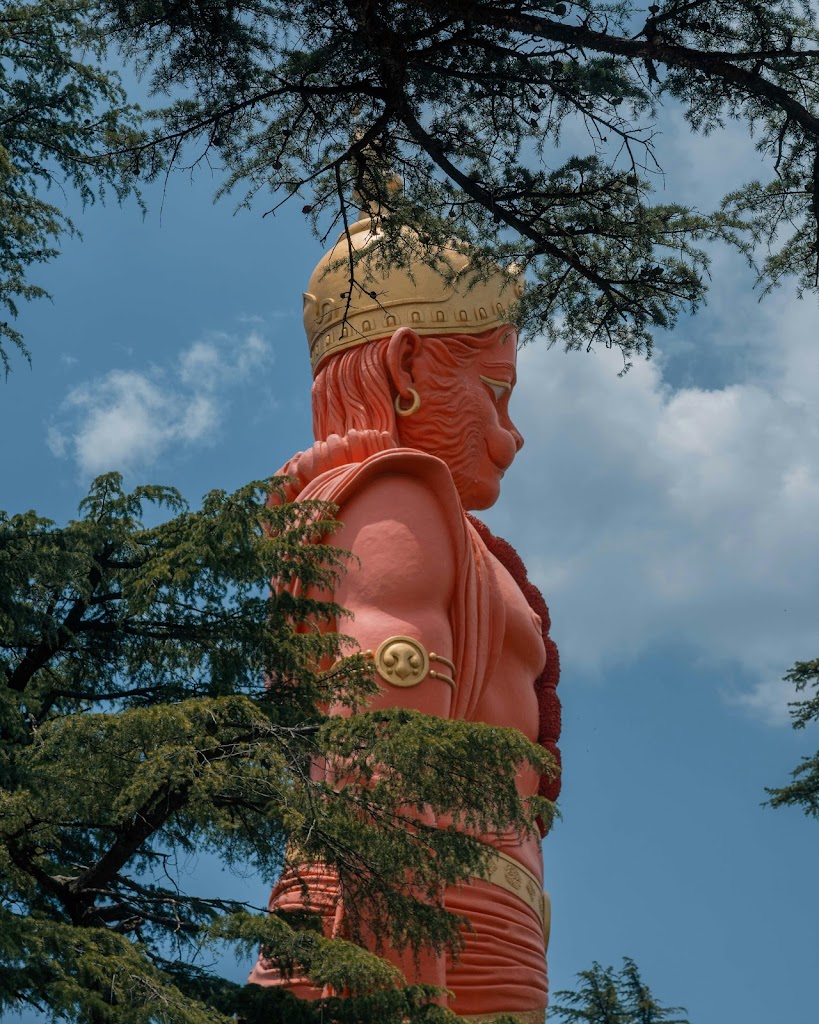
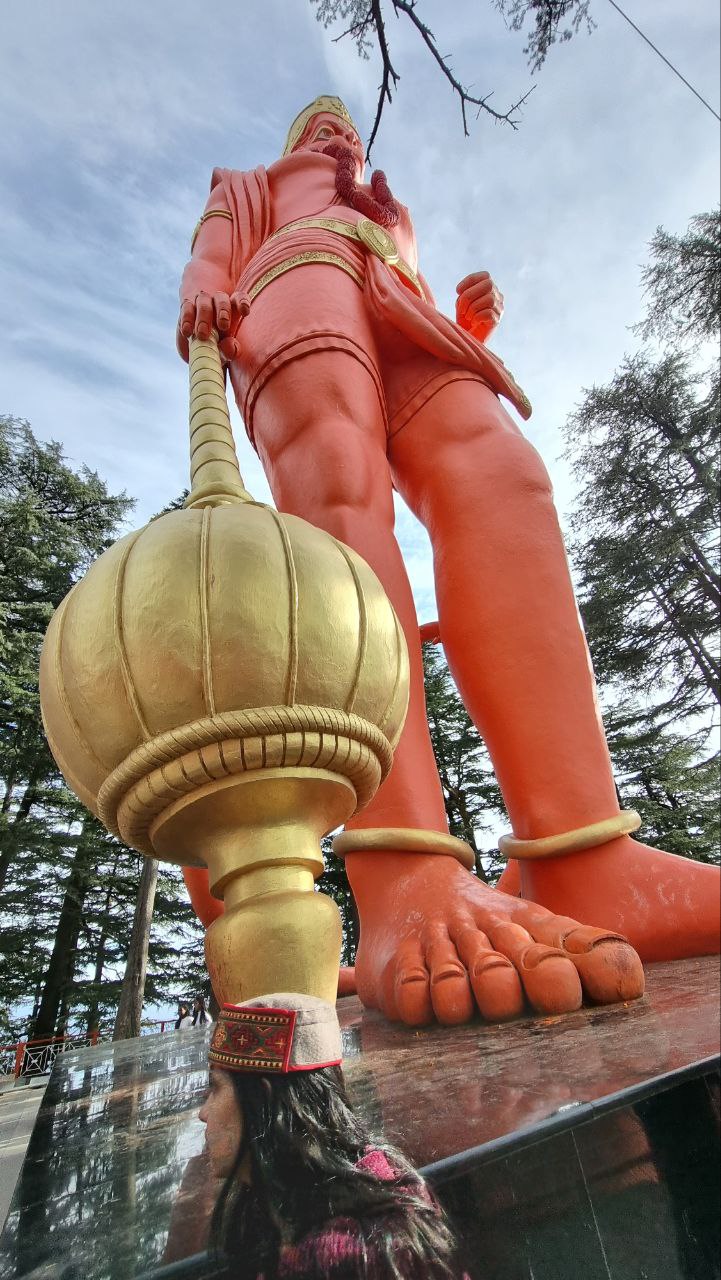
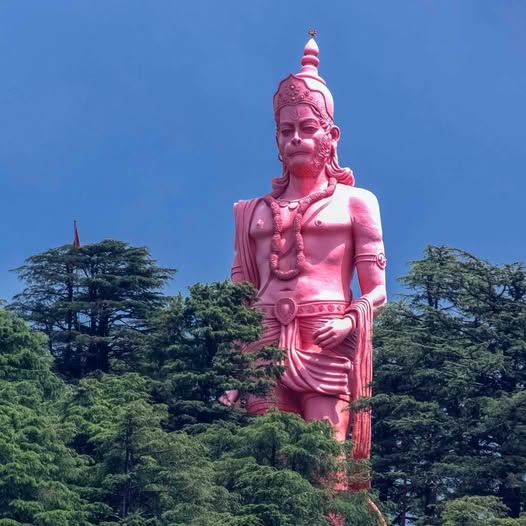
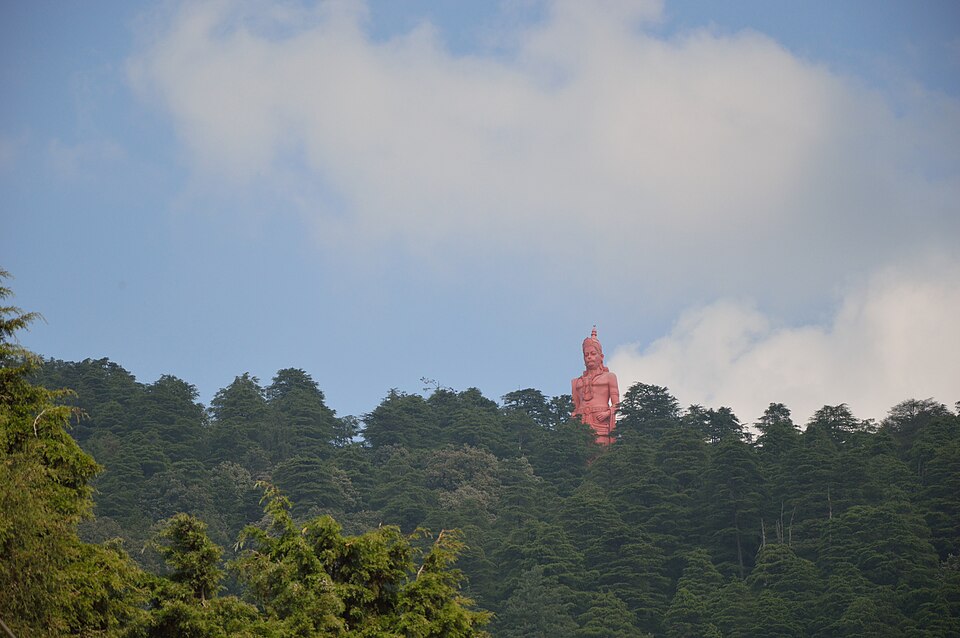
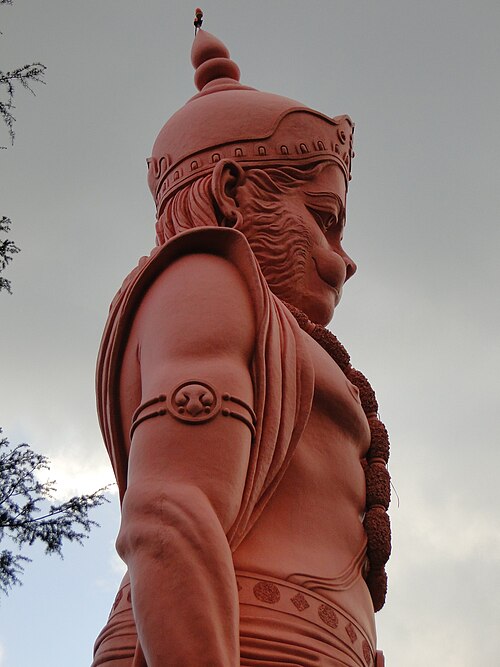
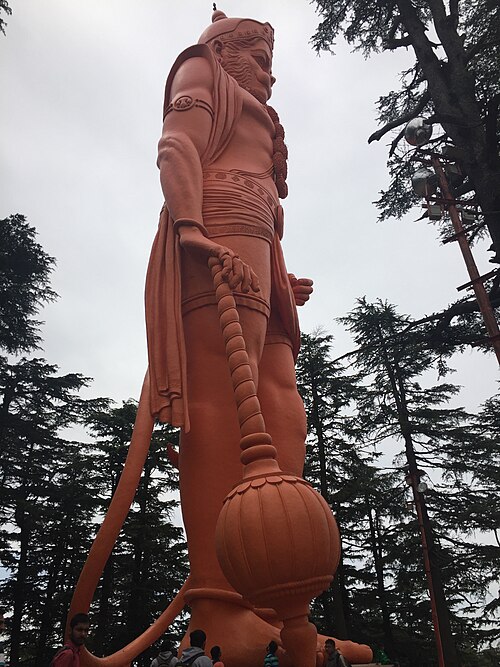
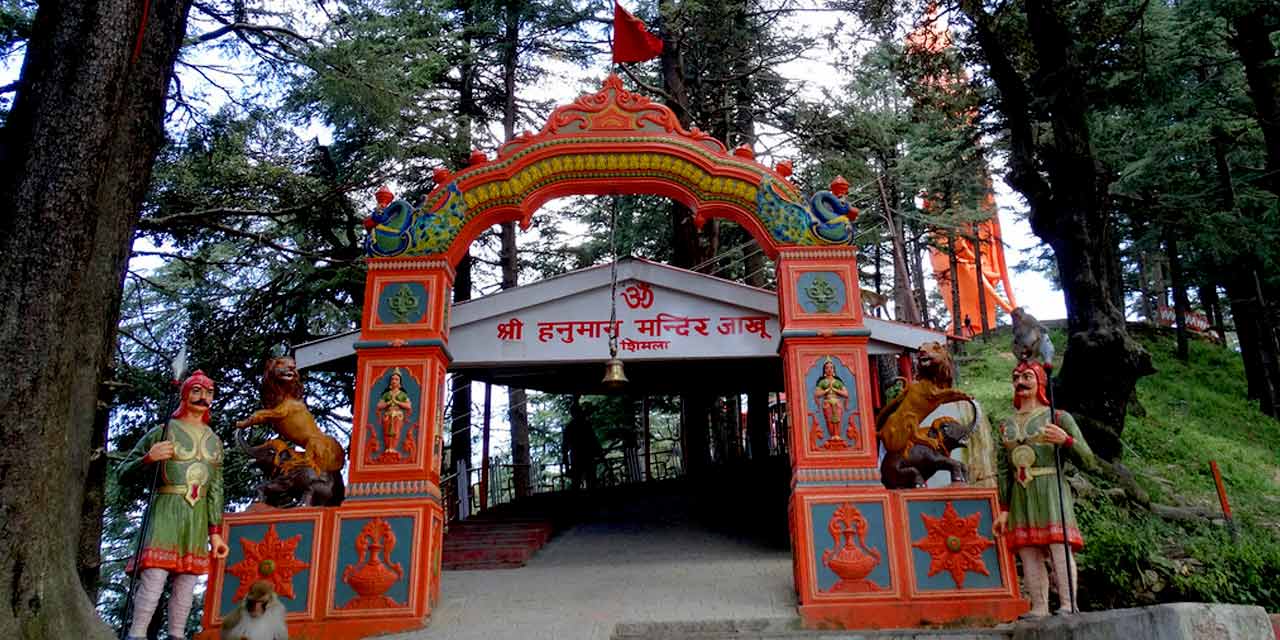
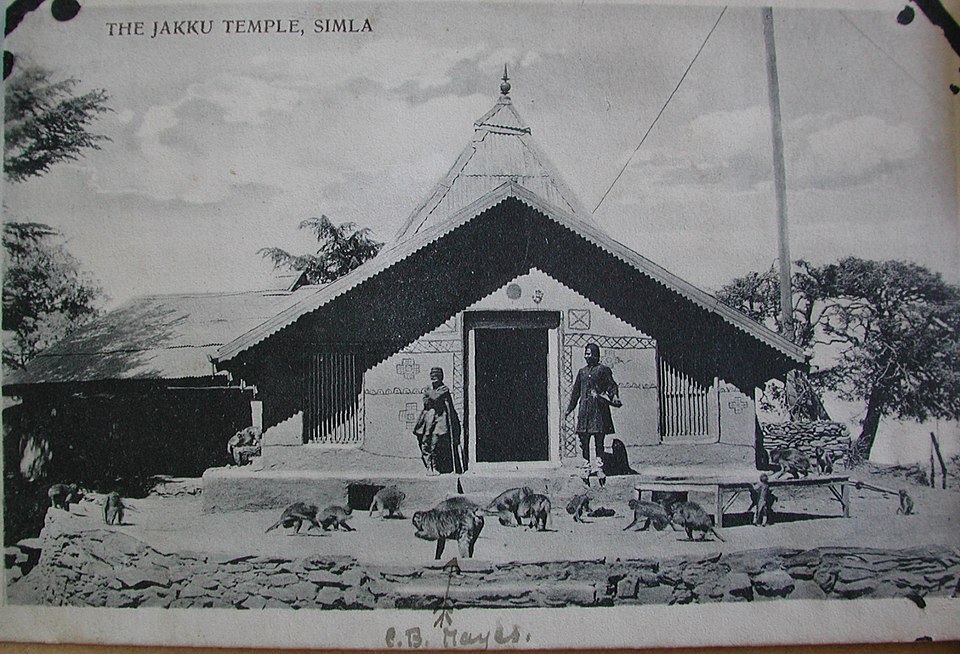
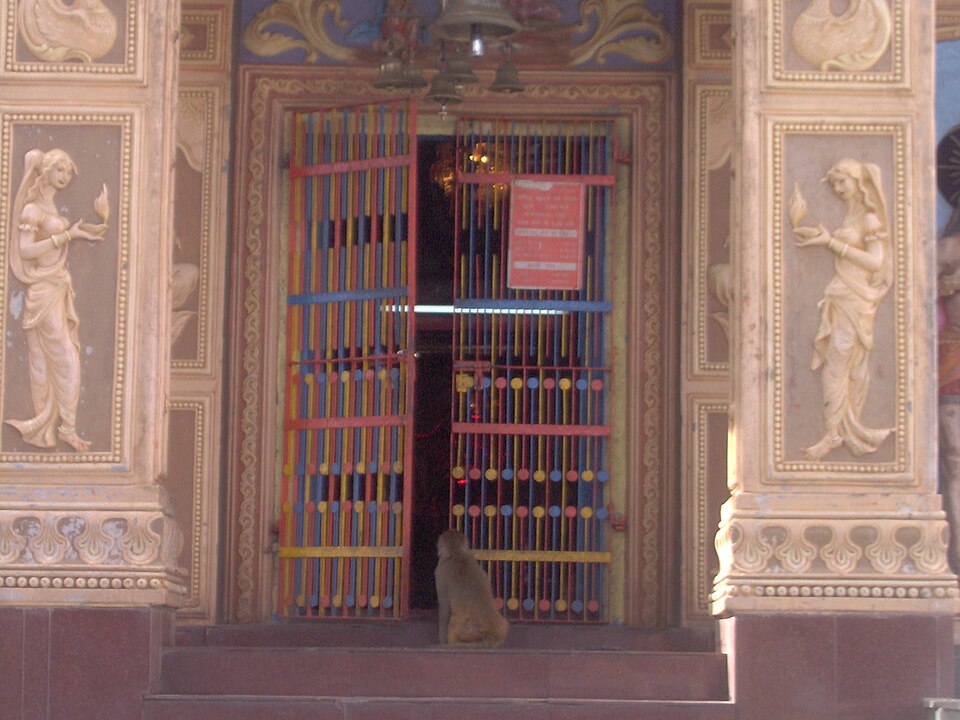
Jakhu Temple (also Jakhoo Temple) is an ancient Hindu temple in Shimla, Himachal Pradesh, India, dedicated to the Hindu deity Lord Hanuman. It is situated at Jakhu Hill, Shimla's highest peak, 2.5 km (1.6 mi) east of the Ridge at a height of 2,455 m (8,054 ft) above sea level. Every year, a festival is held on Dussehra, before 1972 the festival used to be held at Annadale. Shri Hanuman Ji's statue is situated in the temple premises which is known as one of the tallest in the world.
A giant 108-feet-high idol of Hanuman was unveiled at Jakhu Hanuman temple on 4 November 2010. At 108 feet (33 m), it surpasses the statue of Christ the Redeemer, which measures at 98 feet (30 m), in Rio de Janeiro, Brazil. The cost of construction was Rs 1.5 crores
The temple is accessible by foot, horse, taxi or ropeway. The Jakhu Ropeway is an aerial lift that links a point near the centre of Shimla to the temple. It was developed by Jagson International Limited and opened in 2017.



Kufri is a resort hill station in the district of Shimla, India. It is located 12 km (7.5 mi) from the state capital Shimla on the National Highway 5 (also known as Hindustan-Tibet road). On the Kufri Avenue, the main thoroughfare, boutiques and restaurants mix with Indian-style hotels and souvenir shops are to look for during a visit.
The name Kufri is derived from the word kufr meaning "lake" in the local language. The highest point in the surrounding region, Kufri has a Himalayan wildlife zoo which hosts rare antelopes, felines and birds including the Himalayan monal, the state bird of Himachal Pradesh until 2007. During winter a meandering path through the potato plantations turns into a popular ski track.
Kufri is located at 31.10°N 77.25°E. It has an average elevation of 2,720 metres (8923 feet).
The region around Shimla including Kufri was once a part of the Kingdom of Nepal until the area was ceded to the British Raj as part of the Sugauli Treaty. This region remained obscure from the rest of the world until the British 'discovered' it in 1819.

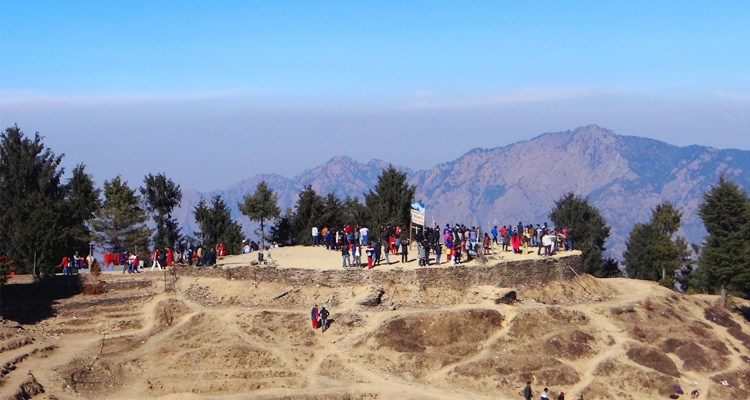
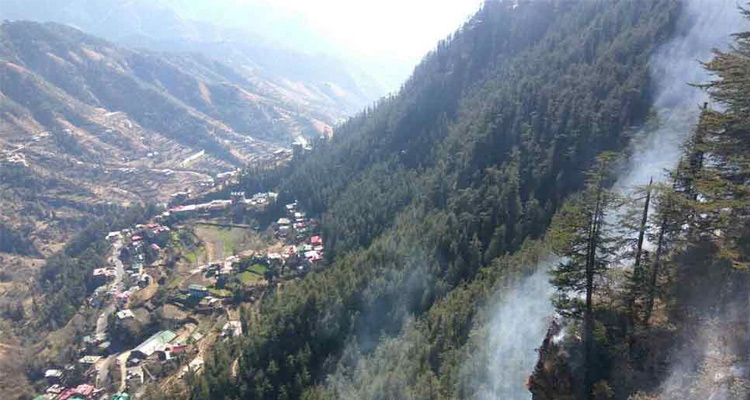


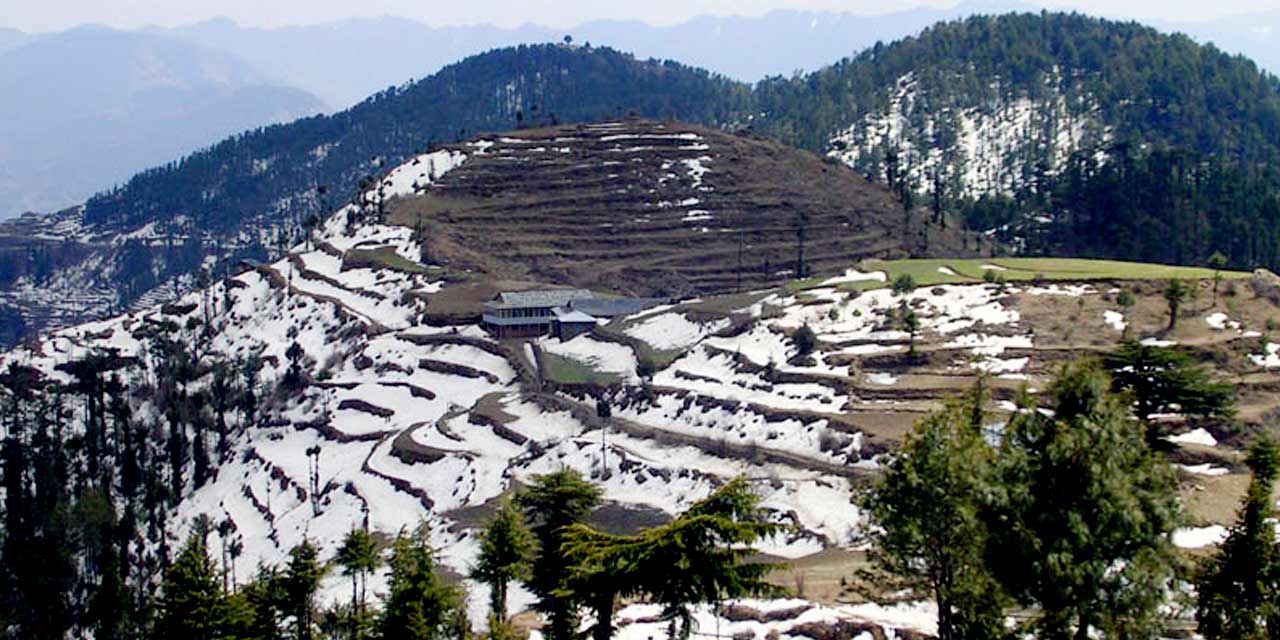
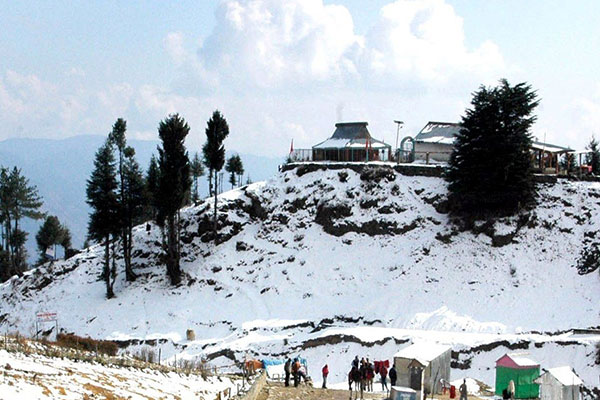

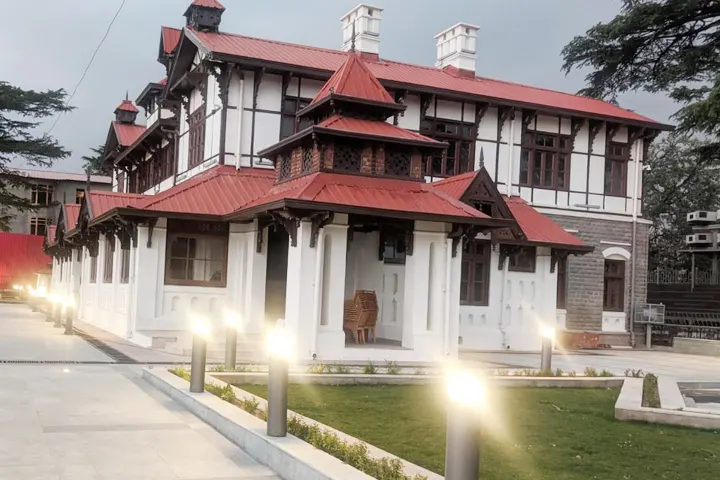
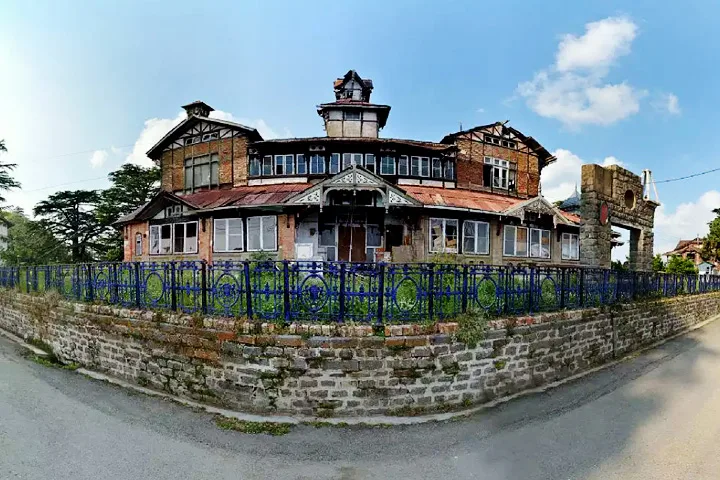
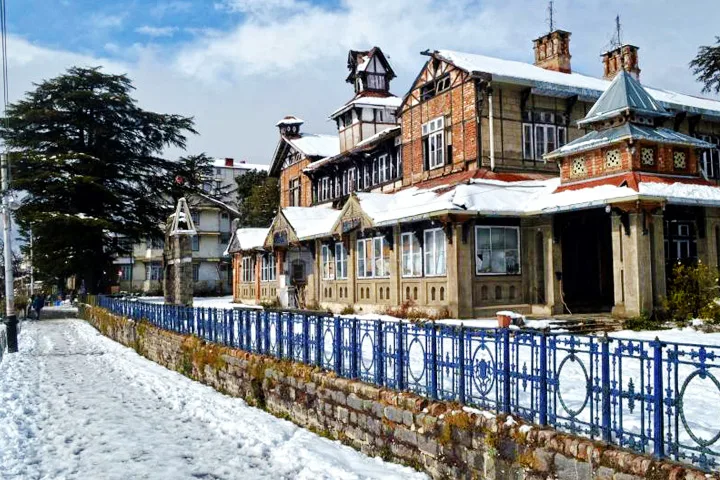
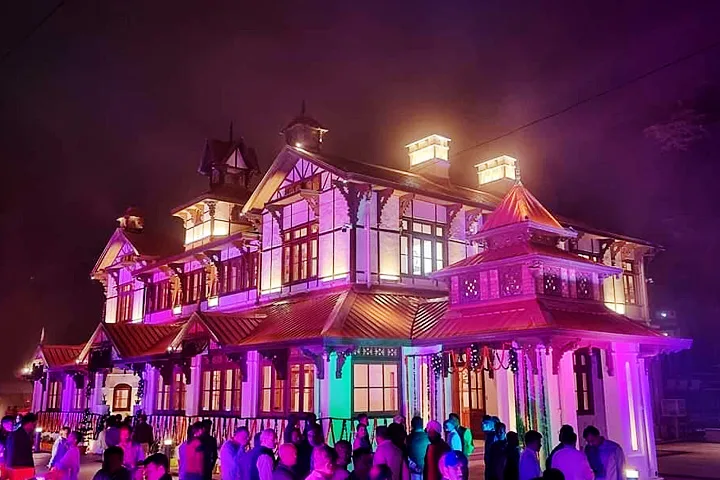
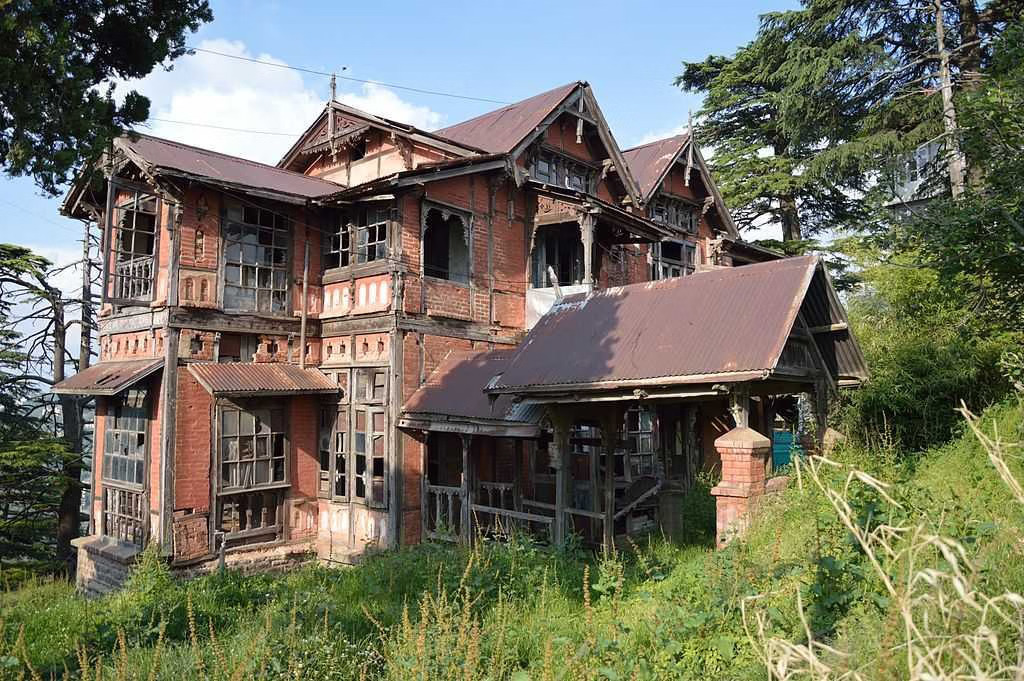
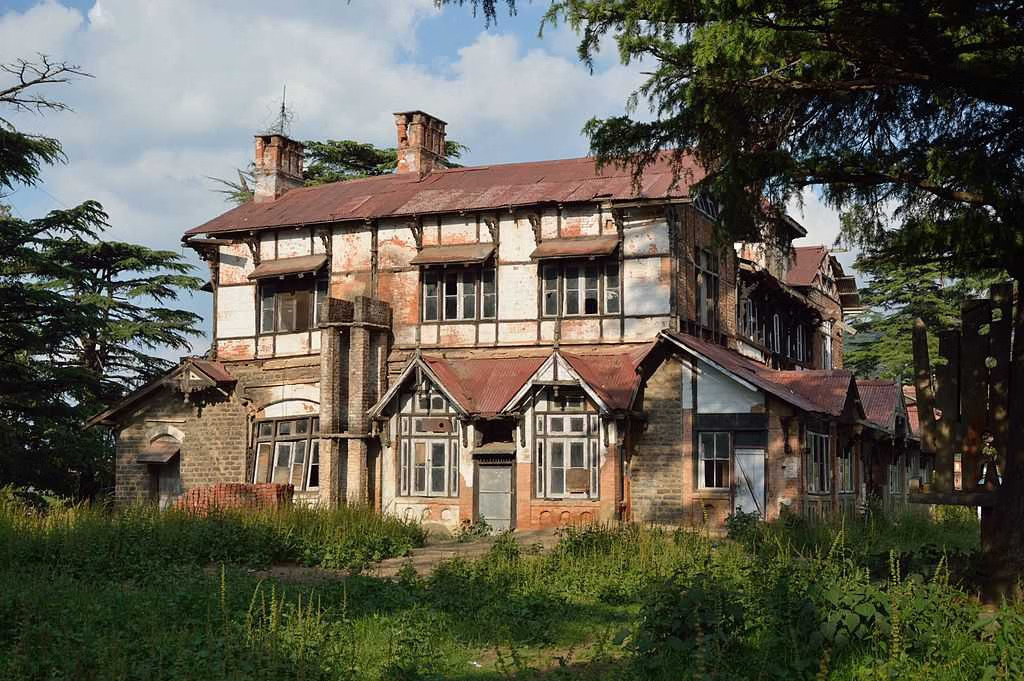
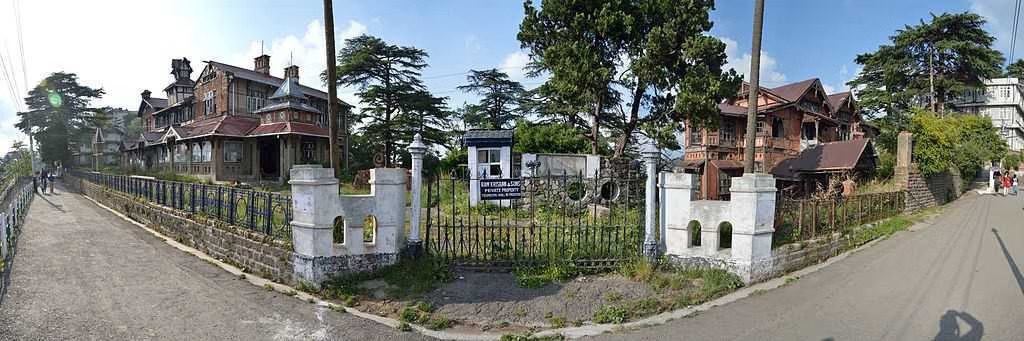
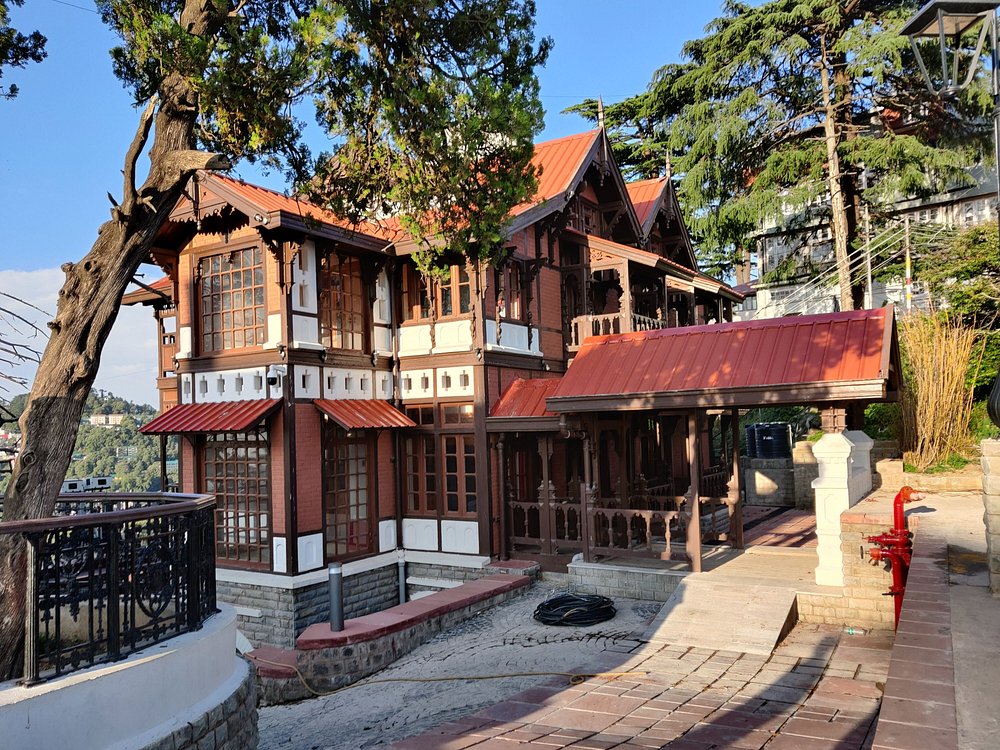
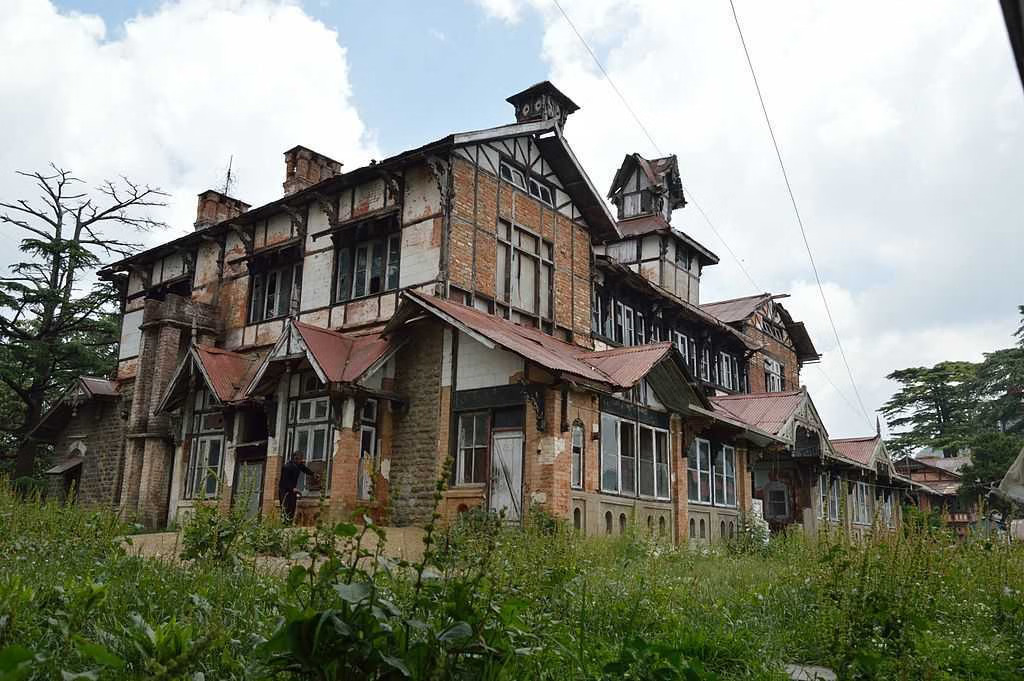
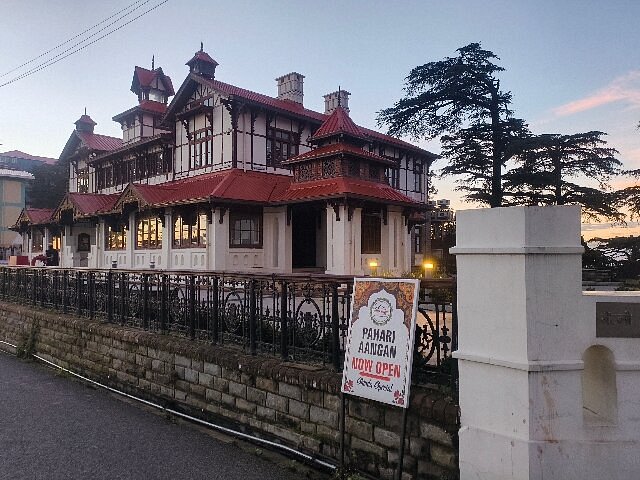
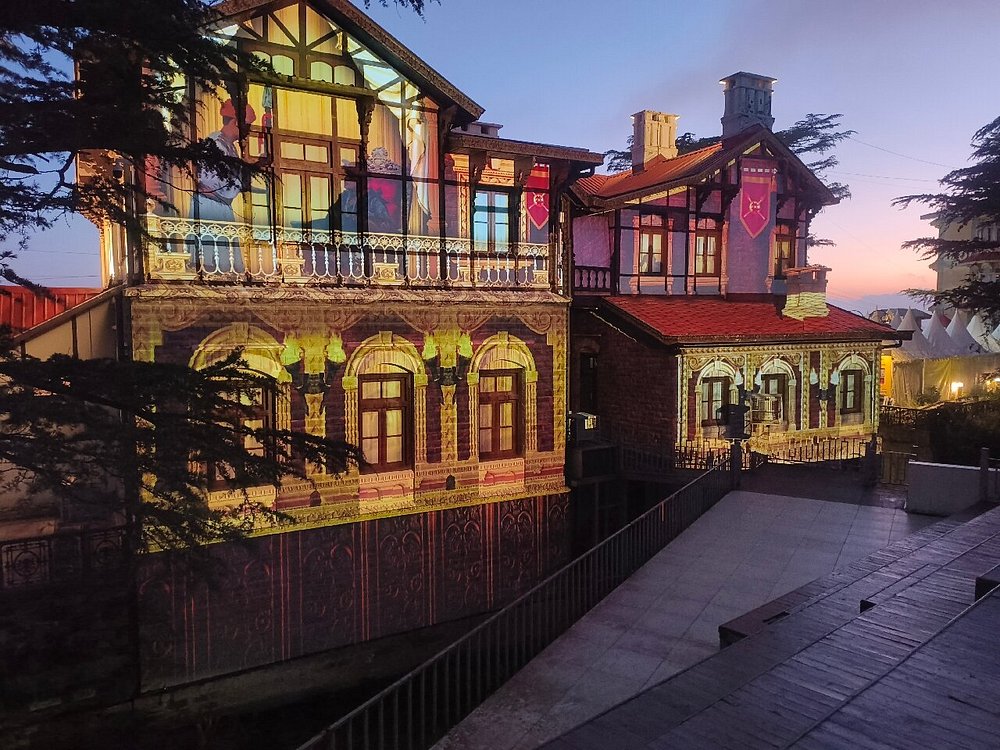
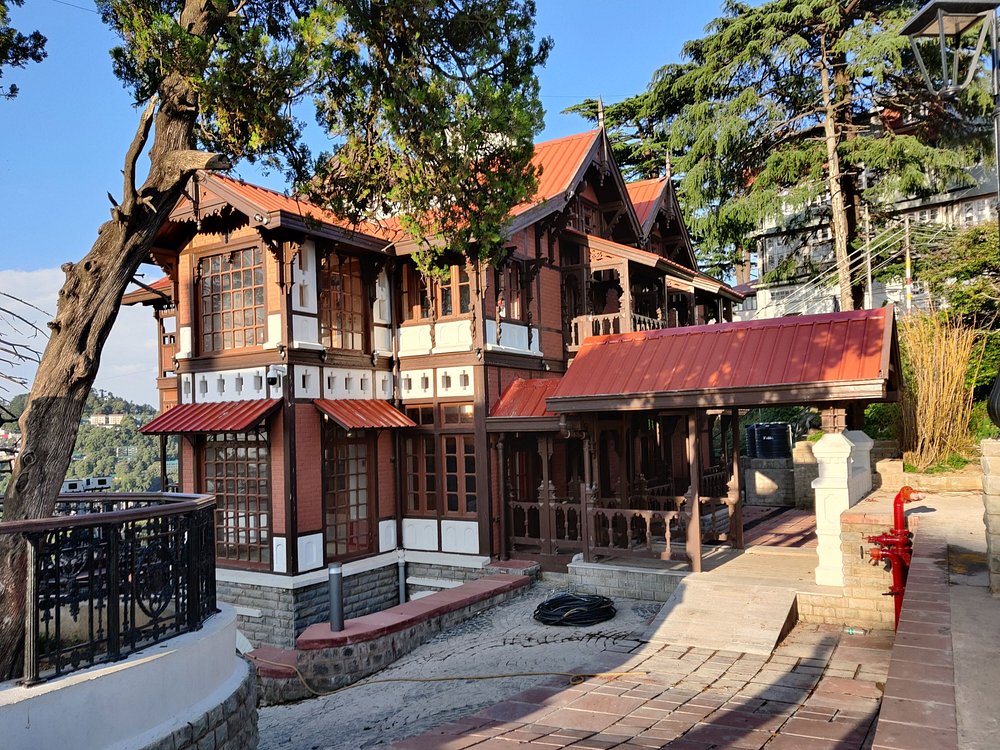
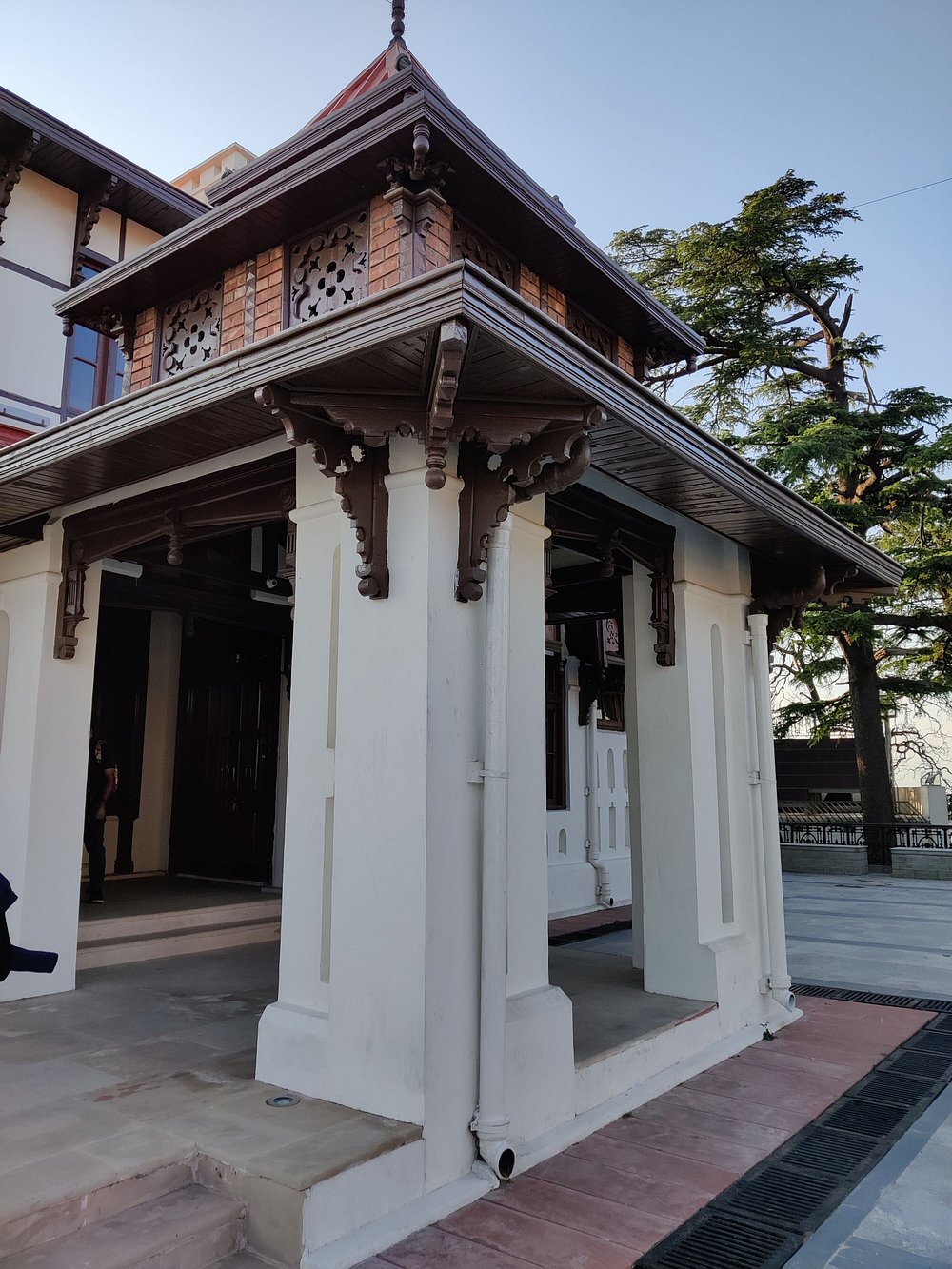
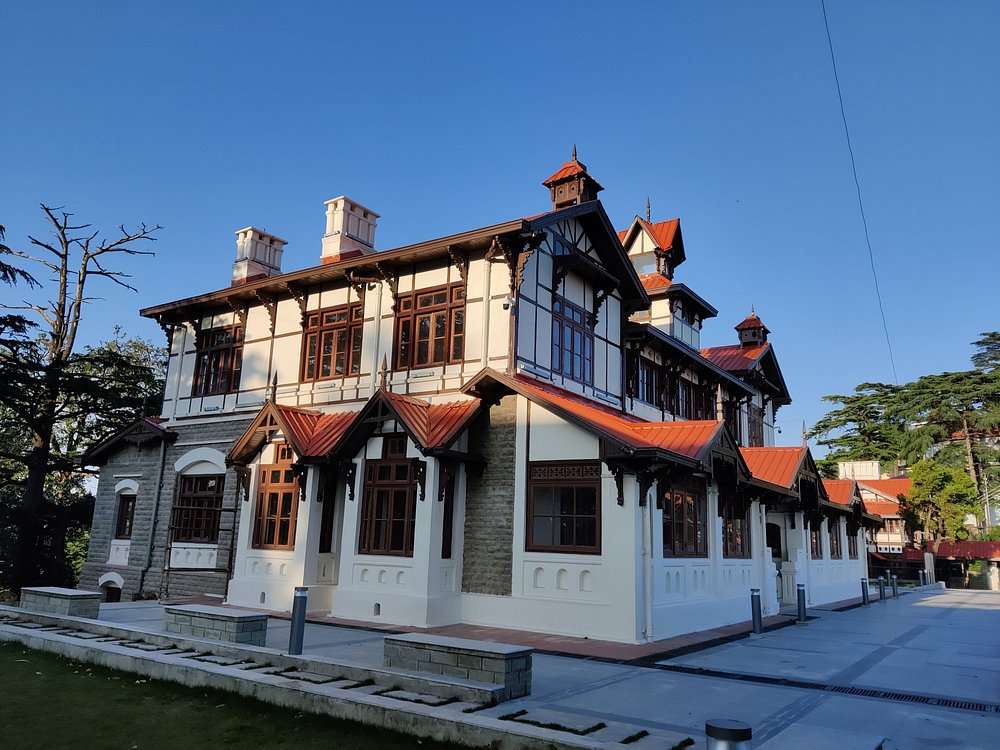
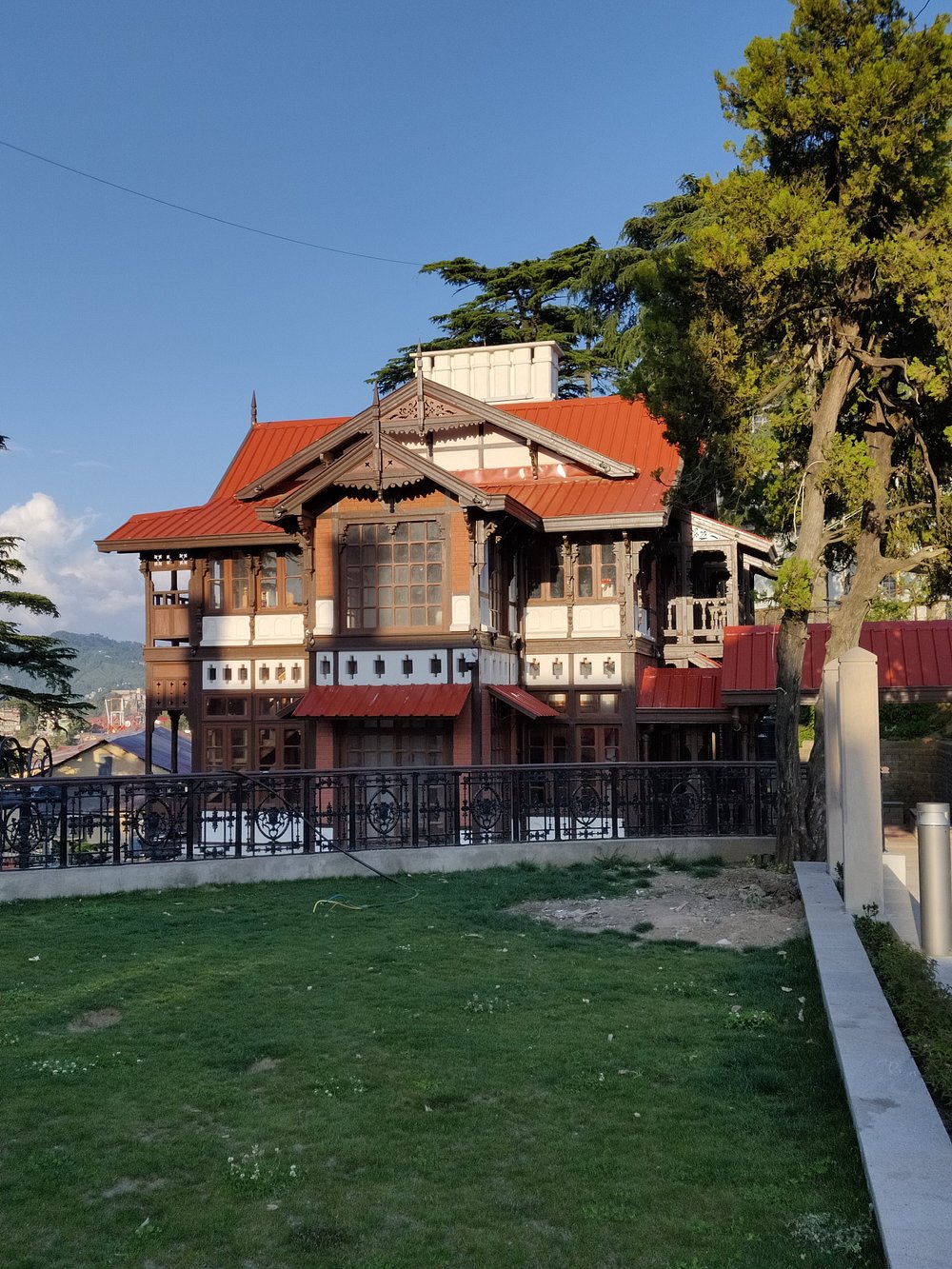
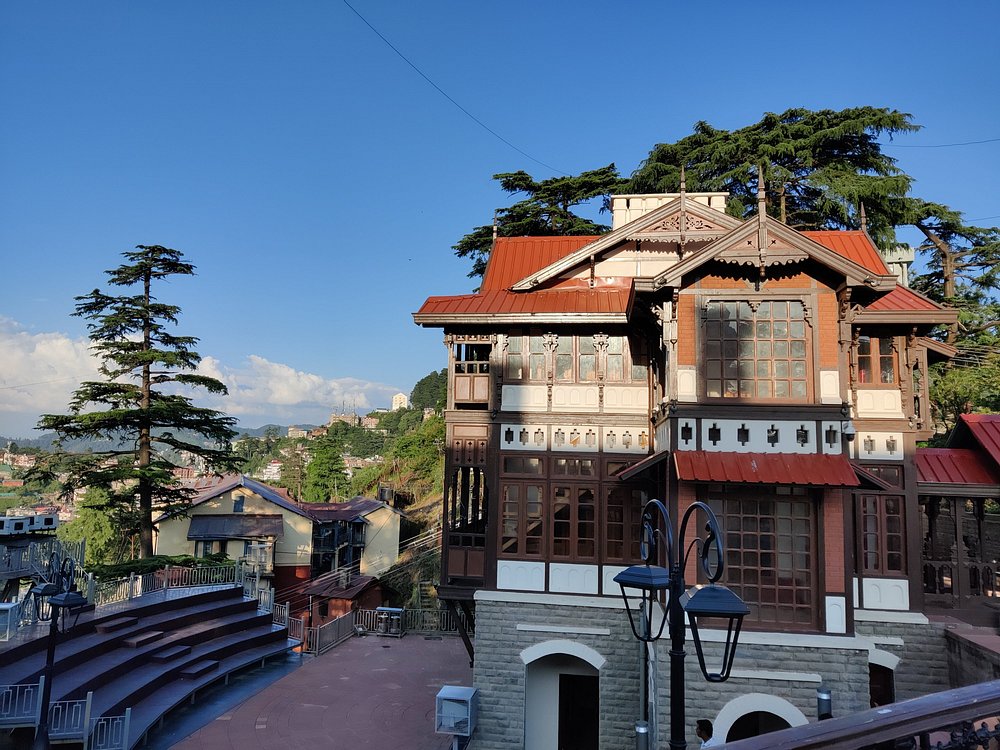
The British-era Bantony Estate in Shimla, a grand private castle once was the summer Palace of the erstwhile Maharaja of Sirmaur, a grandeur architectural landmark. The castle is located near Scandal point on Kali Bari Road.The Bantony Esttate is a heritage site built during the British era and is situated on the Bantony Hill of Shimla. The beautiful wooden architecture of the building amidst the sprawling lawns is a site worth exploring.
Bantony Castle is one of the historic and monumental buildings of Shimla town and has a very rich history. It was built over 145 years ago. Before the castle was built, the estate had only a cottage that belonged to Captain A. Gordan and later in 1880, the castle was built up and became the summer residence of Maharaja Sirmour. During the first World War it was handed over by Maharaja Sirmaur to the Govt. of India for housing additional temporary offices for army.
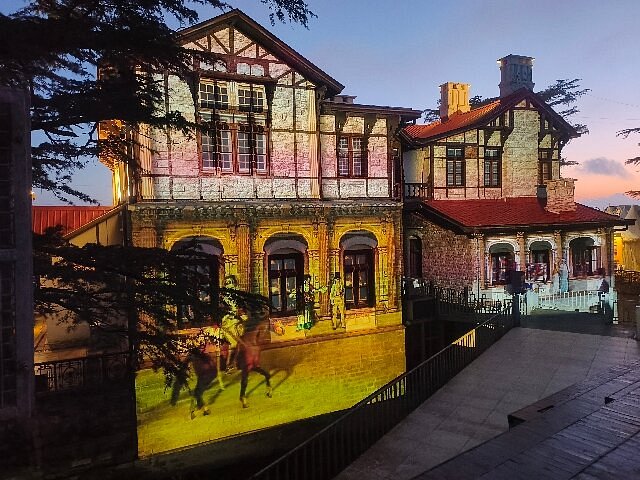
After independence, ‘The Tribune’ office was shifted here from Lahore. Later on it remained the office of the Director General of Police. The main building is a two-storeystructure constructed in the mockTudor style, part chalet and crowned with a sloping roof with mini-towers. The castle is said to have been designed by TEG Cooper. In the year 2017, the Himachal Pradesh Government acquired the Bantony Castle Estate from the owner and restored the heritage building to establish a digital Museum and Light & Sound Show to portray the history, Art and Culture of the State.





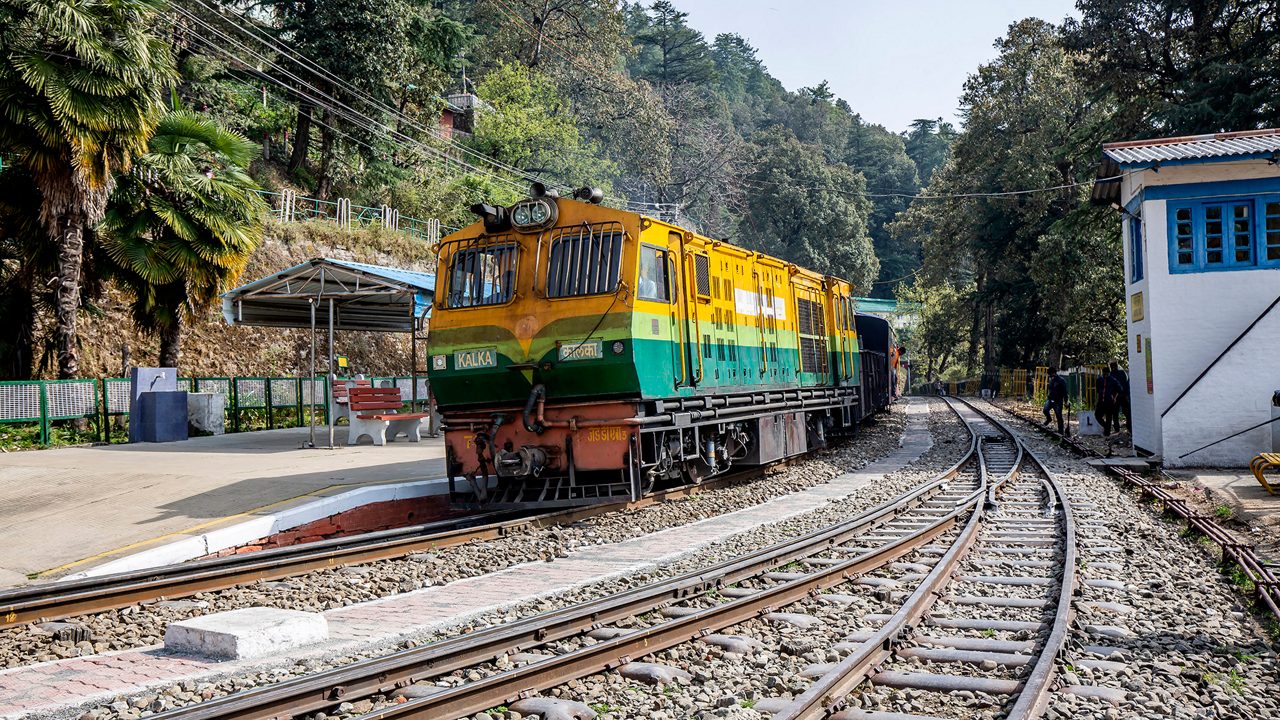
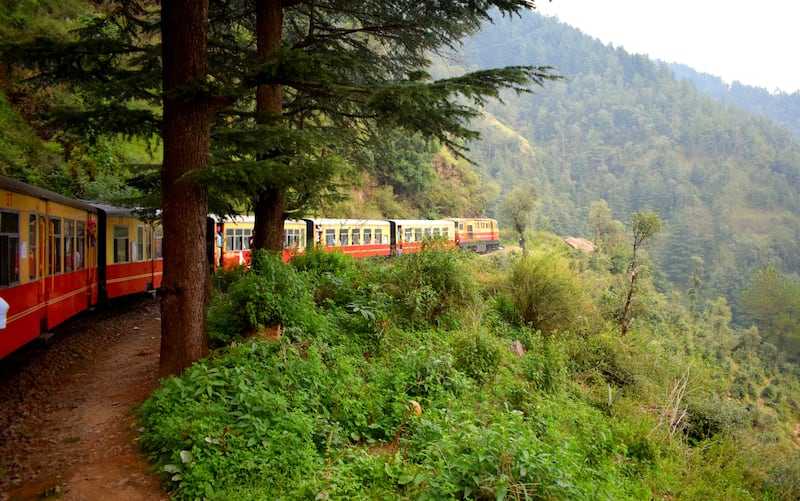
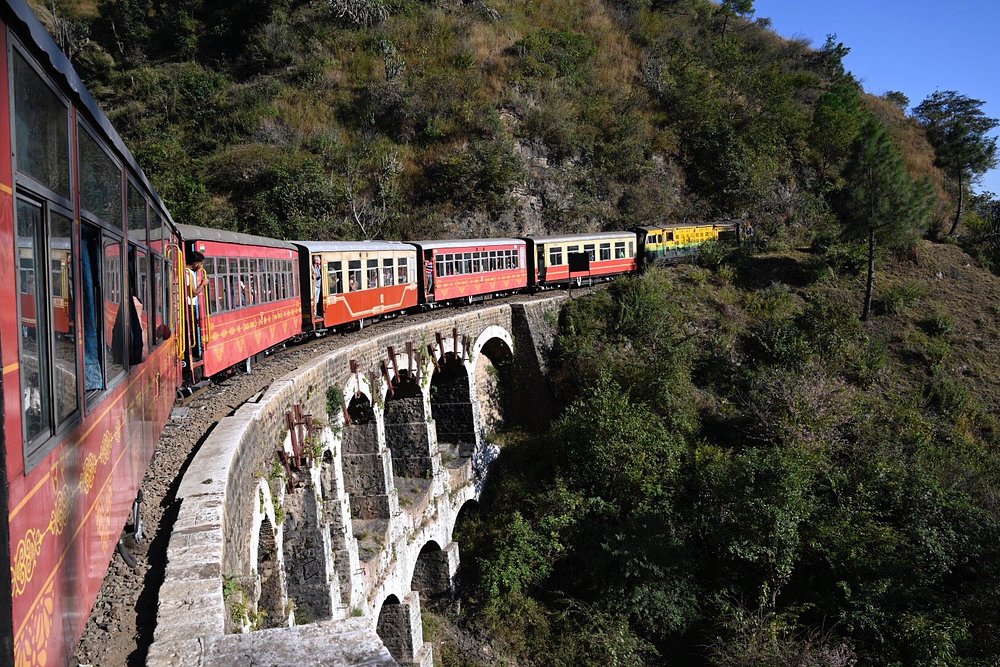
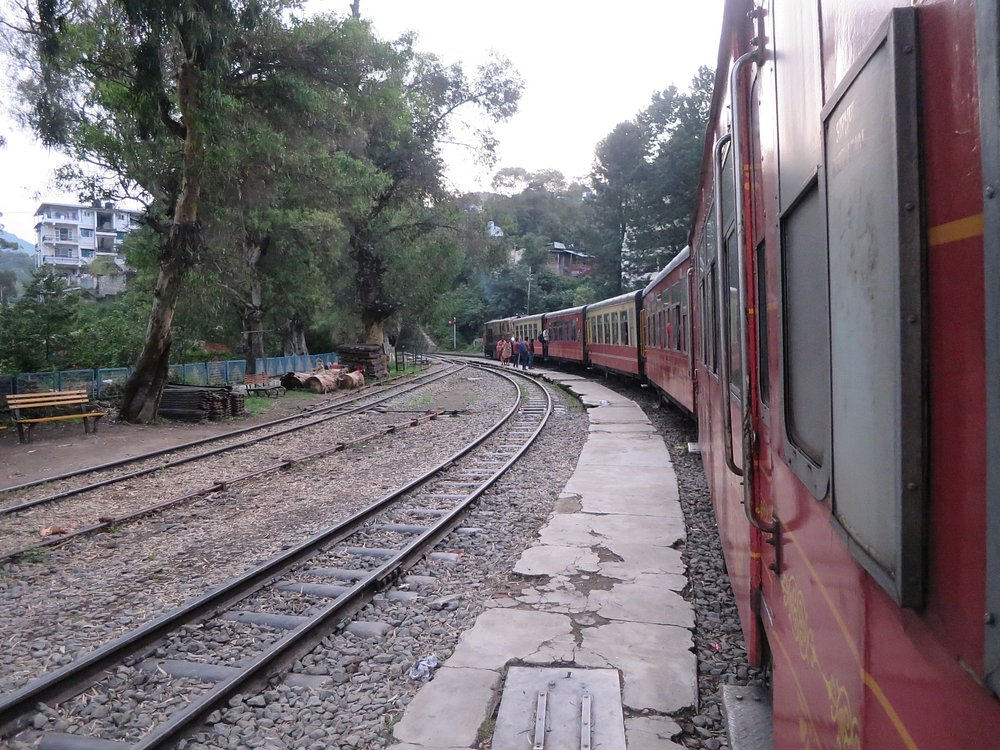
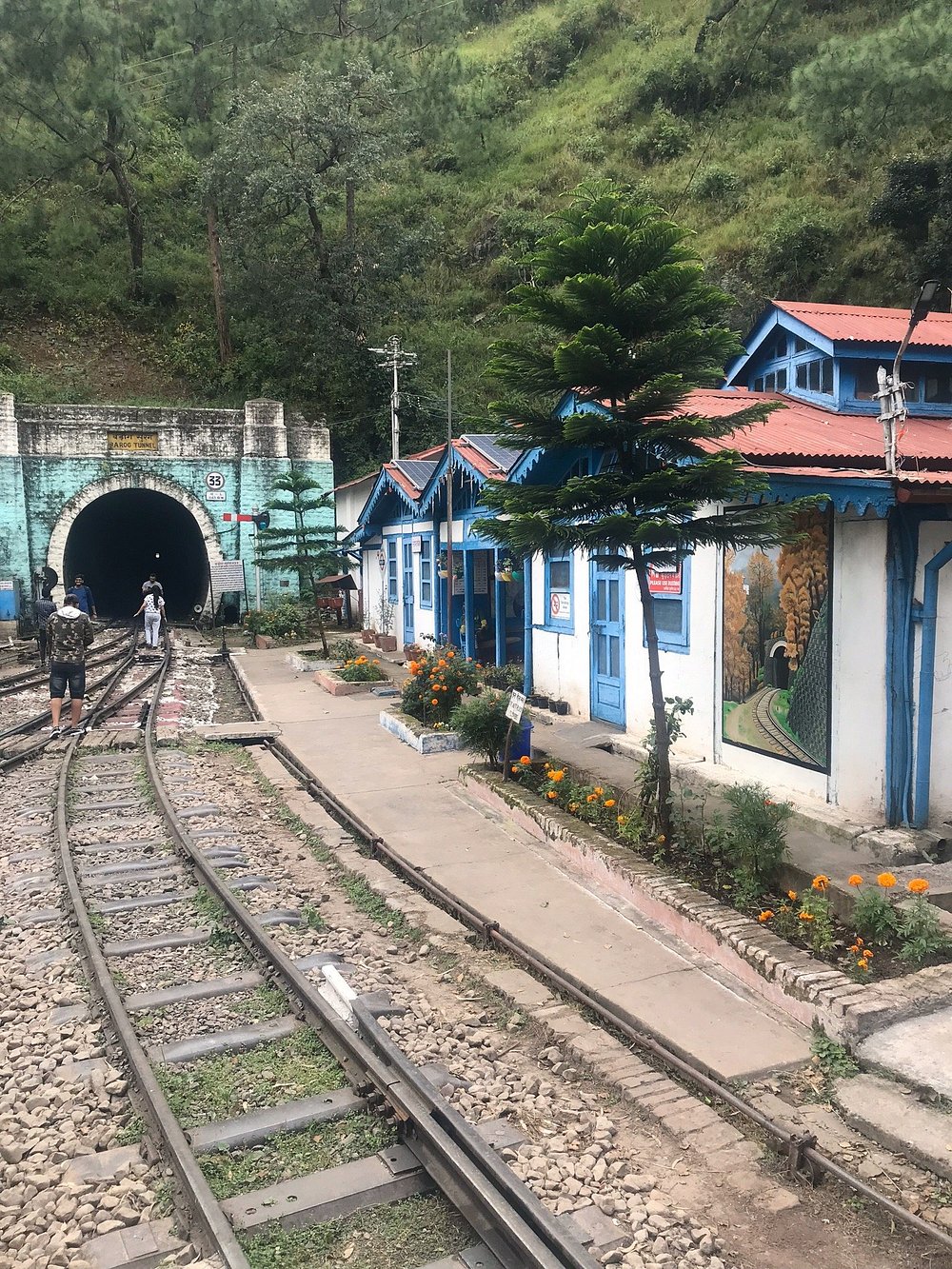
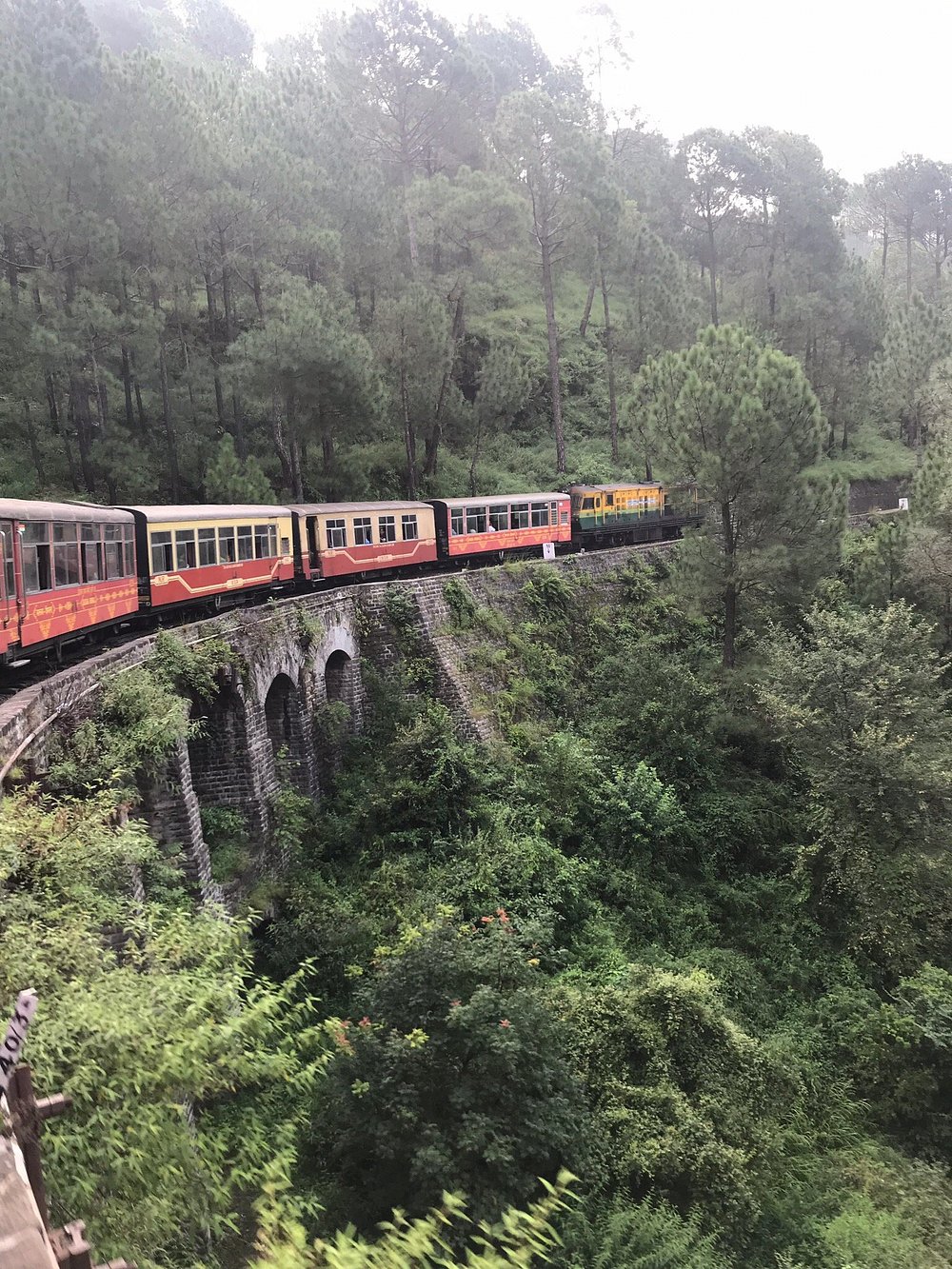
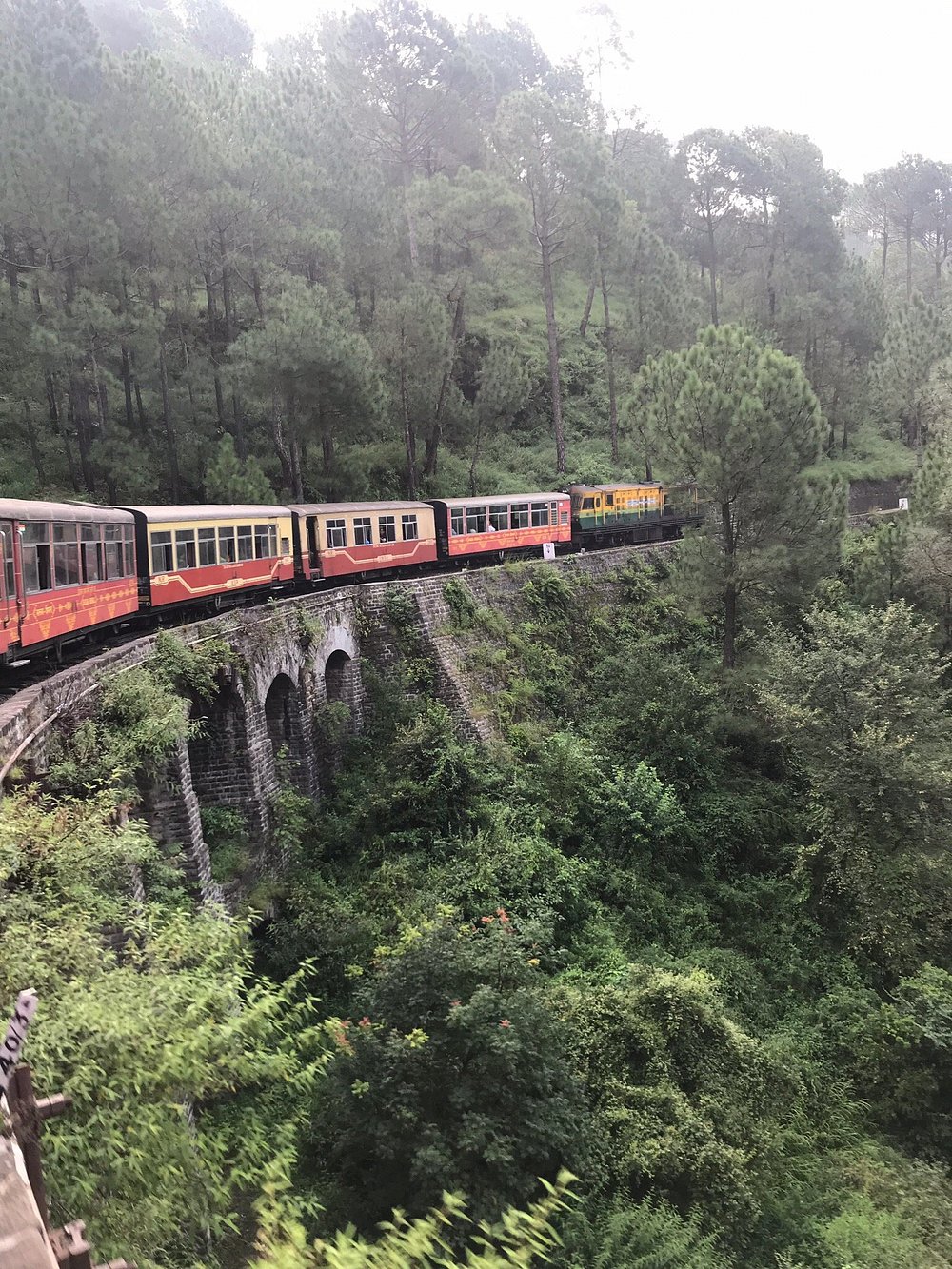
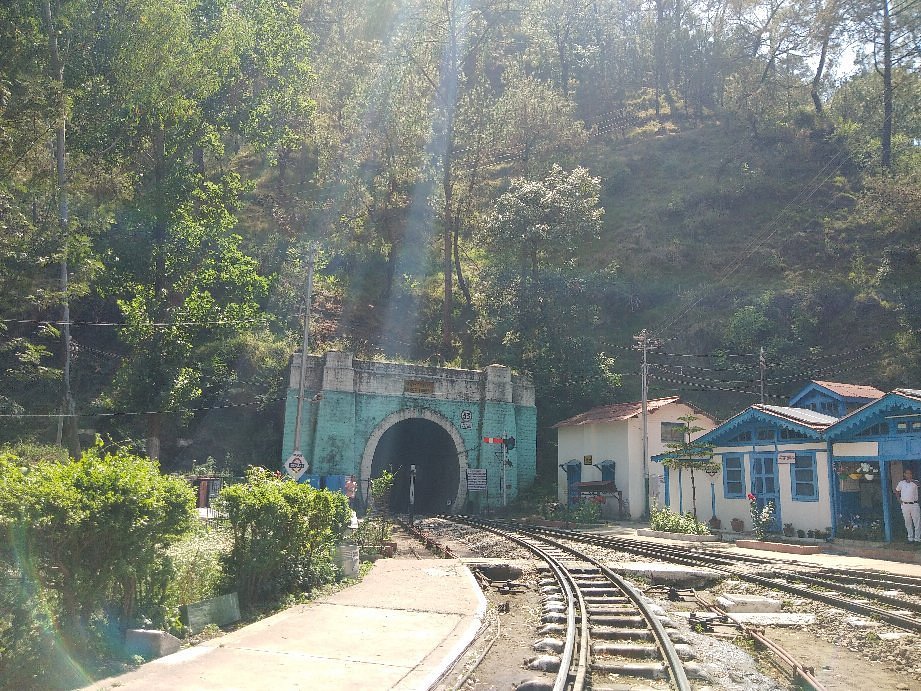
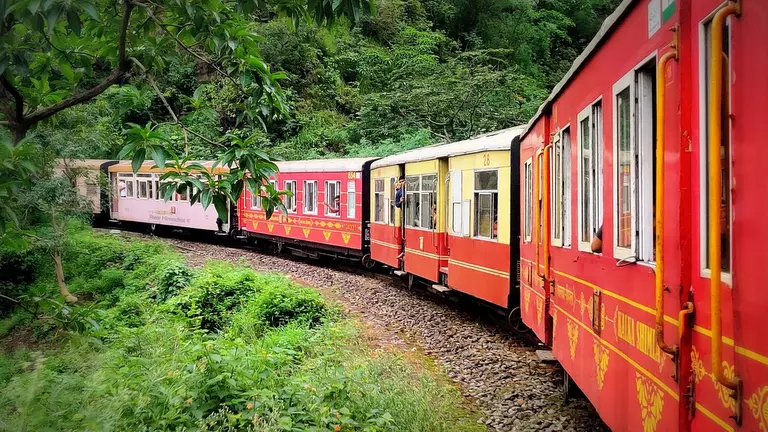
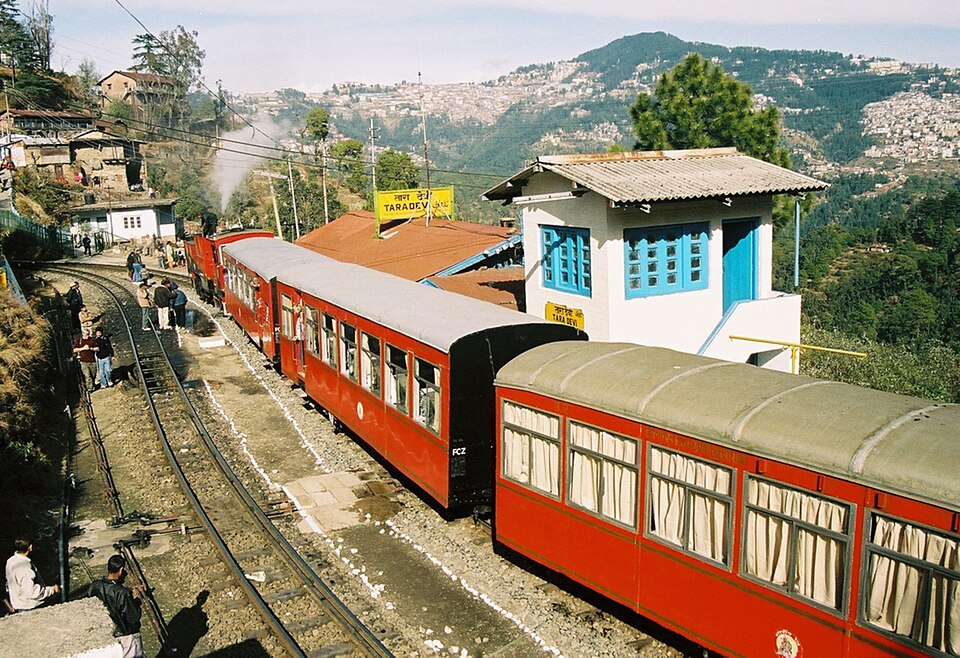
The Kalka–Shimla Railway is a 2 ft 6 in (762 mm) narrow-gauge railway in North India which traverses a mostly mountainous route from Kalka to Shimla. It is known for dramatic views of the hills and surrounding villages. The railway was built under the direction of Herbert Septimus Harington between 1898 and 1903 to connect Shimla, the summer capital of India during the British Raj, with the rest of the Indian rail system.
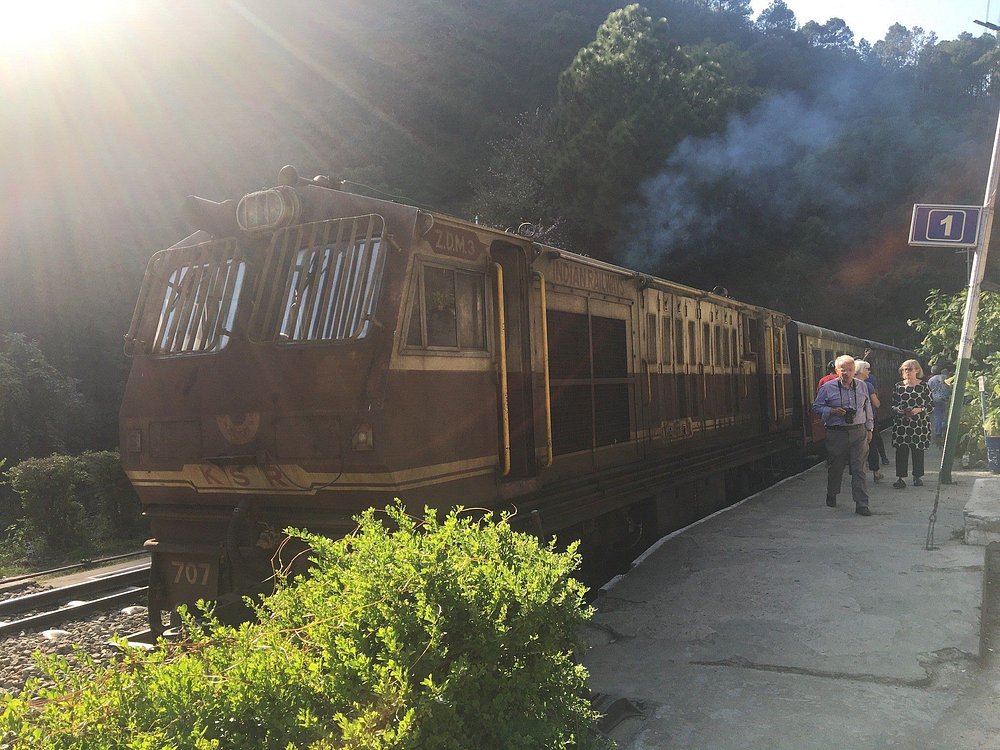
Its early locomotives were manufactured by Sharp, Stewart and Company. Larger locomotives were introduced, which were manufactured by the Hunslet Engine Company. Diesel and diesel-hydraulic locomotives began operation in 1955 and 1970, respectively.
On 8 July 2008, UNESCO added the Kalka–Shimla Railway to the mountain railways of India World Heritage Site.
Shimla (then spelt Simla), which was settled by the British shortly after the first Anglo-Gurkha war, is located at 7,116 feet (2,169 m) in the foothills of the Himalayas. The idea of connecting Shimla by rail was first raised by a correspondent to the Delhi gazette in November 1847.
Shimla became the summer capital of British India in 1864, and was the headquarters of the Indian army. This meant that twice a year it was necessary to transfer the entire government between Calcutta and Shimla by horse and ox drawn carts.
In 1891 the 5 ft 6 in (1,676 mm) broad gauge Delhi–Kalka line opened, which made the construction of a branch line up to Shimla feasible.
The earliest survey was made in 1884, followed by another survey in 1885. Based on these two surveys, a project report was submitted in 1887 to the government of British India. Fresh surveys were made in 1892 and 1893, which led to four alternative schemes being suggested - two adhesion lines, 67.25 mi (108.23 km) and 69.75 mi (112.25 km) long, and two rack lines.Fresh surveys were again made in 1895 from Kalka to Solan to determine whether a 1 in 12 rack or a 1 in 25 adhesion line should be chosen. After much debate, an adhesion line was chosen in preference to a rack system.
Construction of the Kalka–Shimla Railway on 2 ft (610 mm) narrow-gauge tracks was begun by the privately funded Delhi-Ambala-Kalka Railway Company following the signing of a contract between the secretary of state and the company on 29 June 1898.The contract specified that the line would be built without any financial aid or guarantee from the government. The government however provided the land free of charge to the company. The estimated cost of 8,678,500 rupees doubled by the time the line was opened. The Chief Engineer of the project was Herbert Septimus Harington and the Chief Contractor was Sujan Singh Hadaliwale.
The 95.68 km (59.45 mi) line opened for traffic on 9 November 1903 and was dedicated by Viceroy Lord Curzon. This line was further extended from Shimla to Shimla Goods (which had once housed the bullock cart office) on 27 June 1909 making it 96.60 km (60.02 mi).
The Indian Army were sceptical about the two feet gauge chosen for the line and requested that a wider standard gauge be used for mountain and light strategic railways. Eventually the government agreed that the gauge was too narrow for was essentially a capital city and for military purposes. As a result, the contract with the railway company was revised on 15 November 1901 and the line gauge changed to 2 ft 6 in (762 mm) with the track built to date being regauged. Some sources however state the regauging wasn't undertaken until 1905.
In 1905 the company took delivery of a 10-ton Cowans Sheldon travelling crane to assist with lifting rolling stock back onto the tracks after accidents and for general track maintenance. Due to the high capital and maintenance costs and difficult working conditions, the railway was allowed to charge higher fares than on other lines. Nevertheless, the company had spent 16,525,000 rupees by 1904 with no sign of the line becoming profitable, which lead to it being purchased by the government on 1 January 1906 for 17,107,748 rupees. Once it came under the control of the government the line was originally managed as an independent unit from the North West Railway office in Lahore until 1926, when it was transferred to Delhi Division. Since July 1987, the line has been managed by the Ambala Division from Ambala Cantt.
In 2007, the Himachal Pradesh government declared the railway a heritage property. For about a week, beginning on 11 September 2007, a UNESCO team visited the railway to inspect it for possible selection as a World Heritage Site. On 8 July 2008, it became part of the mountain railways of India World Heritage Site with the Darjeeling Himalayan and Nilgiri Mountain Railways.

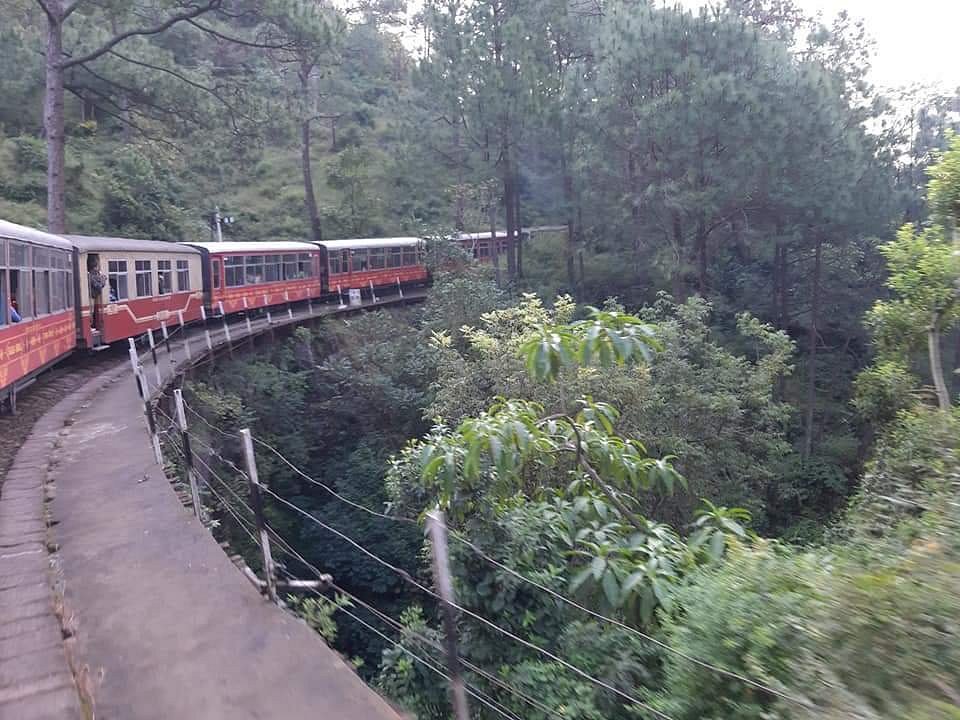
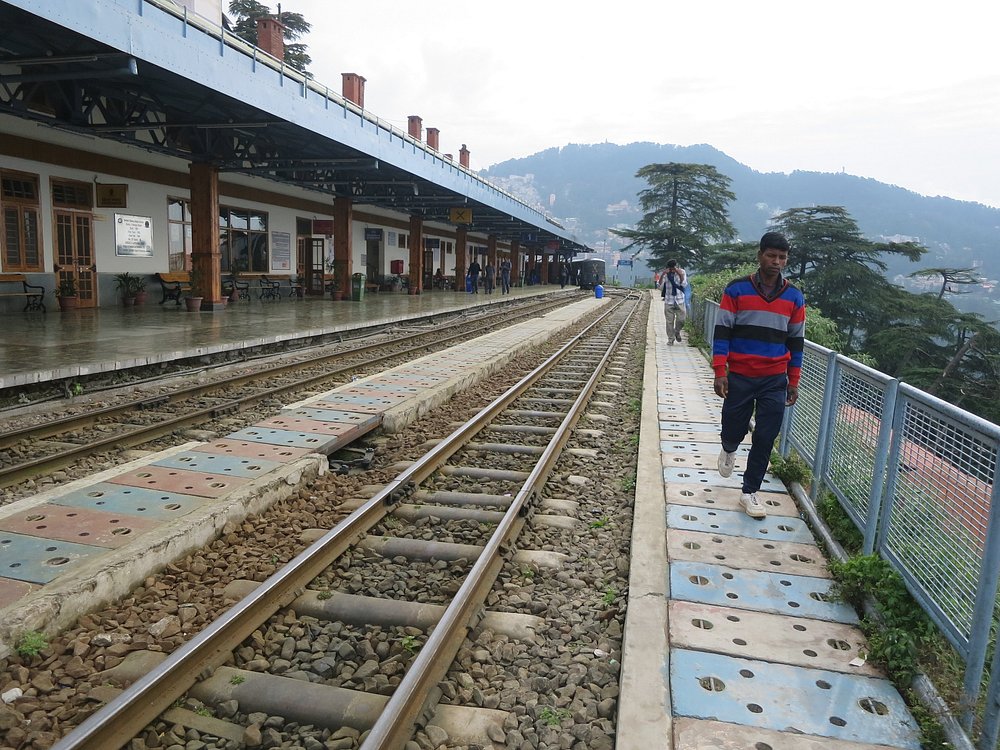
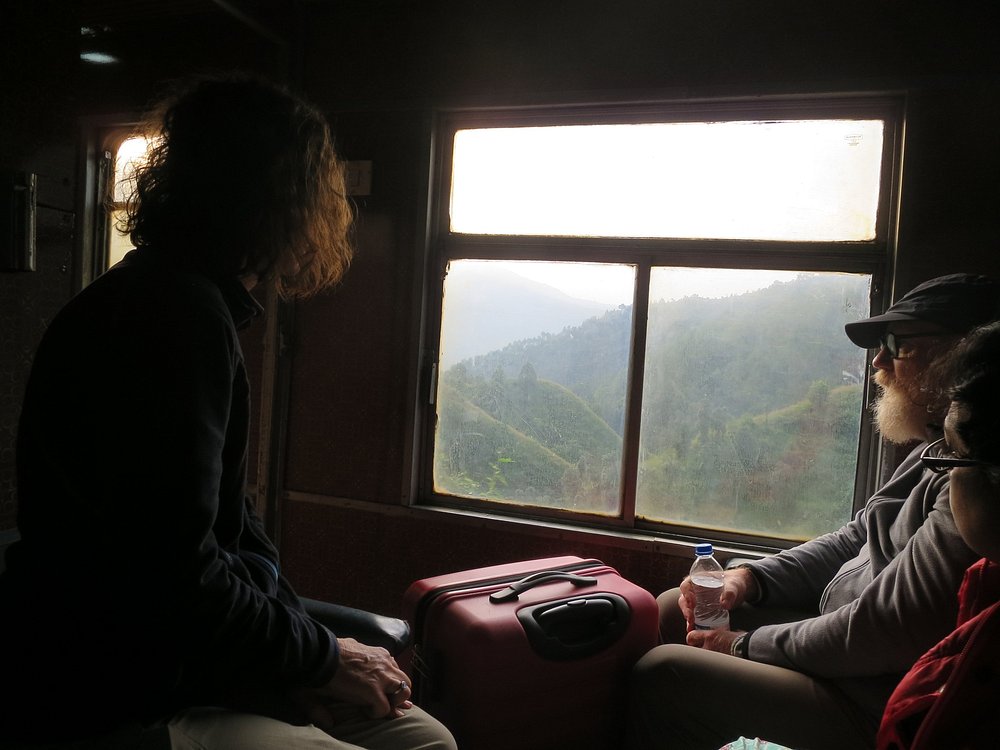
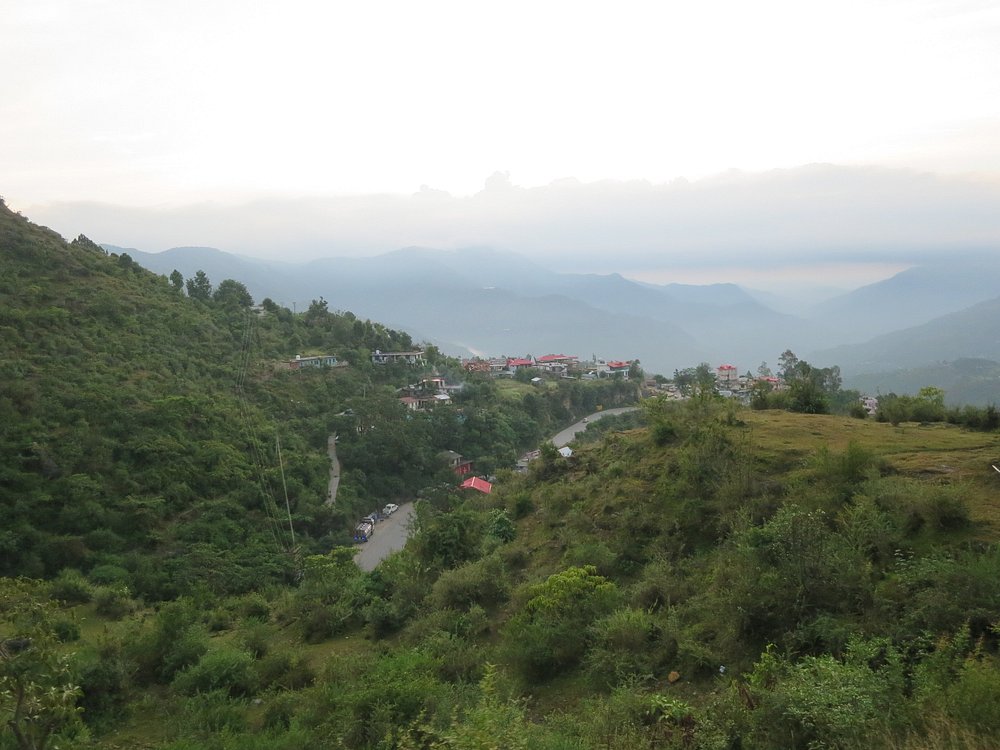


Nichar is a village located in the Kinnaur district of Himachal Pradesh state, India, at an altitude of 2100 meters. It is located on the old Hindustan-Tibet road. Most of the people follows Hinduism as well as Buddhism. It is known for natural water body called "chhalang bayu". The Usha Mata temple is in Nichar. The people of Nichar celebrate a fair called 'HU HU mela' (BAATI mela in local language). Nichar is one of the three administrative areas of Kinnaur distt. The region has a variety of flora and fauna and is home to wildlife species such as red bears, antelopes, and Ghoral. Nichar has wide range of alpine forest. That's why it is called as green valley. It is most green village in distt Kinnaur. The temperature of Nichar remains moderate throughout the year and hence, tourist can visit here in any season. With its natural environment and wildlife, it has become one of the most sought-after places to visit in Kinnaur.


Moorang(3591m): Situated above the left bank of Satluj at some distance from the confluence of the Tirang and 39 kms away from the Kalpa. The location is very beautiful and approach to this picturesque village is through apricot orchard. The dell is encircled by the lofty mountains on every side, except westward open to the Satluj, on the bank of which there is an old fort believed to be built by Pandavas. The fort has a square structure situated on a knoll overlooking the Satluj. Its main gate is approachable by a detached ladder. It has a flat roof. The local deity is Urming and there are three structures dedicated to the deity each existing in Thwaring, Garmang and Shilling. Generally these are empty as the ark of the deity remains in the fort. On a sacred day the ark is taken to the above named places. The ark has got 18 'mukh', made of silver, gold and brass. The 18 mukh represents the 18 days of the great epic Mahabharat.


A must see tourist spot for the solitude lovers and avid worshipper of nature, Lipa Asrang Sanctuary is around at a height of 4,000 to 5,022 m. The sanctuary is spread over an area of around 30.89 sq km. The variety of flora found in this sanctuary includes dry coniferous forest, dry alpine scrub, dwarf juniper scrub, dry broad leaves, western Himalayan temperate forest, and coniferous forest.
The most commonly found fauna in this sanctuary are Yak, Leopard, Ibex, Goral, Brown Bear, Blue Sheep, Himalayan black Beer, Musk Deer etc. Random tourists are not allowed to enter this sanctuary. So they need to take prior permission to explore the sanctuary


The Shri Bagalamukhi Mata Temple (also known as Maa Baglamukhi Temple) is a prominent Hindu shrine located in Bankhandi (near Dehra), Kangra district, Himachal Pradesh, India. It is dedicated to Goddess Bagalamukhi, one of the ten Mahavidyas (great wisdom goddesses) in Tantric Shaktism. The goddess is revered as Pitambara (clothed in yellow) and is associated with paralyzing enemies, granting victory in disputes, protection from evil, and fulfillment of wishes—especially in legal matters, competitions, and overcoming obstacles.
Exterior view of the temple nestled in the scenic Kangra valley.
The temple is considered a Siddha Peeth (accomplished spiritual site) and one of the three most significant Bagalamukhi shrines in India (along with those in Datia, Madhya Pradesh, and Nalkheda, Madhya Pradesh). It attracts devotees, including celebrities from politics, sports, and entertainment.
According to legends, The goddess emerged from a turmeric lake to calm a cosmic storm at Lord Vishnu’s request. The Pandavas are said to have built the temple overnight during their exile in the Dwapar Yuga. Lord Rama worshipped here (guided by Hanuman) to obtain the Brahmastra for victory over Ravana. The site is ancient, with references to its power in Tantric texts.


Yellow is the goddess’s favored color: The temple is painted yellow, devotees wear yellow clothes, offer yellow sweets (like besan laddoo), and adornments are golden/yellow.
Known for powerful havans (fire rituals) and yajnas believed to yield quick results—especially nighttime havans.
Devotees seek blessings for stambhana (paralyzing foes), victory in court cases, and protection.
Interior views showing the idol of Goddess Bagalamukhi, adorned in yellow.
The sanctum features the goddess in the center (sometimes flanked by Lakshmi and Saraswati), with nearby shrines for Lord Shiva, Bhairava, and Hanuman.
Festivals: Crowded during Navratri, Guru Purnima, and Vasant Panchami.


Whispers of love, strokes of tradition, and threads of devotion come together in the delicate artistry of the Chamba Rumal—a ceremonial cloth that tells tales of royalty, mythology, and resilience.
Legend whispered that the town’s very foundation was inspired by the loving gesture of a father towards his daughter. Raja Sahil Verman, the founder of Chamba, christened the town in honour of his beloved daughter, Champavati. It was her gentle touch, it is said, that pointed to the spot where the town would rise. Little did they know that this town would one day become the cradle of an enchanting art form — the Chamba Rumal