

Nestled in the lap of the Dhauladhar ranges, Kangra is a land where history, spirituality, art, and nature come together in perfect harmony. Our Kangra Cultural Tours take you beyond sightseeing—into the soul of one of Himachal Pradesh’s most culturally rich regions.
From the timeless grandeur of Kangra Fort to the serene spirituality of ancient temples, the valley echoes stories of kings, saints, and centuries-old traditions. Walk through villages where life moves at a gentle pace, witness vibrant local festivals, and experience the warmth of Kangra’s people and their deeply rooted customs.
Renowned for its Kangra miniature paintings, traditional music, folklore, and distinct cuisine, the region offers a cultural experience that feels both authentic and unforgettable. Surrounded by lush tea gardens, flowing rivers, and snow-capped peaks, every cultural stop is complemented by breathtaking natural beauty.
With Himachal Tripper, discover Kangra not just as a destination, but as a living heritage—where every path tells a story, and every moment connects you to the heart of Himachal.
Hidden amidst the tranquil mountains and sacred forests of Kangra Valley lie ancient centers of devotion where spirituality flows as naturally as the mountain streams. These revered spaces have been worshipped for centuries, drawing saints, seekers, and travelers in search of peace, strength, and divine connection.
Perched on serene hilltops or nestled deep within nature, these sacred sites offer more than rituals—they offer moments of reflection and inner calm. The sound of temple bells, rhythmic chants, and the gentle breeze carrying the scent of incense create an atmosphere that soothes the soul. Each place holds its own legend, deeply rooted in mythology and local faith, making every visit a journey through time and belief.
Surrounded by panoramic views of the Dhauladhar ranges, dense forests, and open skies, the spiritual experience here feels pure and powerful. Whether you seek blessings, cultural understanding, or quiet moments away from the rush of life, these sacred journeys bring a sense of balance, devotion, and timeless grace.
With our thoughtfully curated cultural tours, experience the spiritual heart of Kangra—where faith meets nature, and every step feels divinely guided.
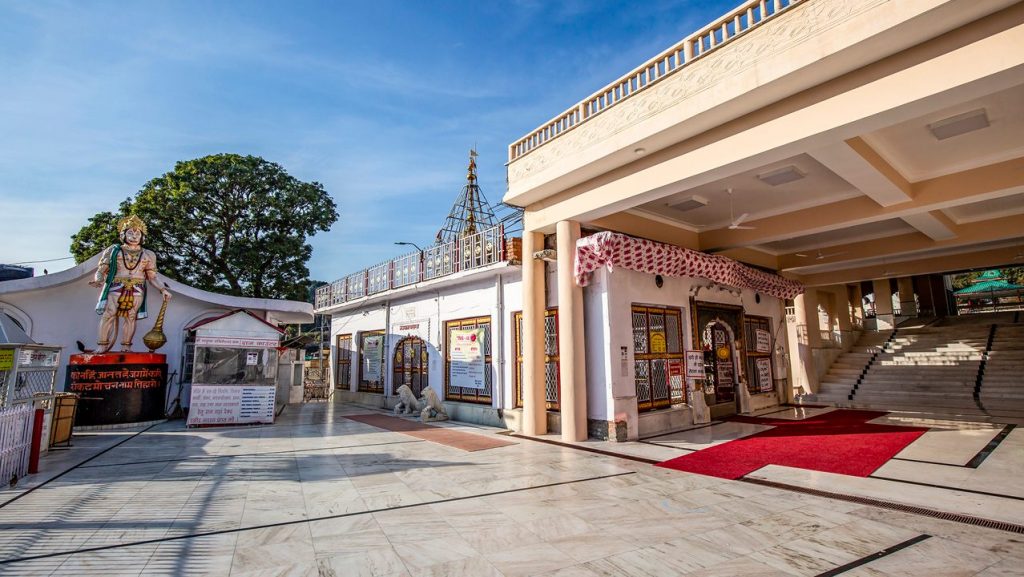
Shri Chamunda Nandikeshwar Dham is a major Hindu pilgrimage site in the Kangra district of Himachal Pradesh, India. Situated about 15 km from Dharamshala on the banks of the Baner River, it is uniquely dedicated to both Shakti (Goddess Chamunda) and Shiva (as Nandikeshwar), symbolizing the divine union of masculine and feminine energies.
The Legend of Chamunda: According to the Devi Mahatmya, during a fierce battle between gods and demons, the goddess Kaushiki created a fierce warrior from her eyebrows. This warrior, Chandika, slayed the demon generals Chanda and Munda. As a reward, Kaushiki bestowed upon her the title “Chamunda”.
The Shifted Shrine: The current temple was built approximately 400 to 700 years ago. Legend states that a 16th-century king and a priest prayed to the Goddess to move her shrine from its remote, inaccessible hilltop location (now known as Aadi Himani Chamunda) to a more reachable spot. The Goddess appeared in a dream, directing them to dig at the current site where her ancient idol was subsequently found and installed.
While highly revered as one of the five major Shakti temples of Himachal Pradesh (alongside Jwalamukhi and others), it is traditionally considered a Shakti Peeth by local lore, though some scholars note it is not always listed in the canonical 51/52 Shakti Peethas.
Main Shrine: Built in the traditional Himachali wooden style, the temple features intricate carvings, slate roofs, and stone foundations. The main idol of Chamunda Devi is considered so powerful that it is often kept draped in a red cloth.
The entrance to the inner sanctum is flanked by large idols of Lord Hanuman and Lord Bhairav, who serve as the Goddess’s protectors.
Nandikeshwar Cave: Behind the main temple, a marble staircase leads down to a natural cave-like scoop where Nandikeshwar Mahadev (Lord Shiva) is worshipped in the form of a self-manifested Lingam.
True to its ancient tantric roots, cremation rites are still performed on the banks of the river near the temple for the salvation of the departed.

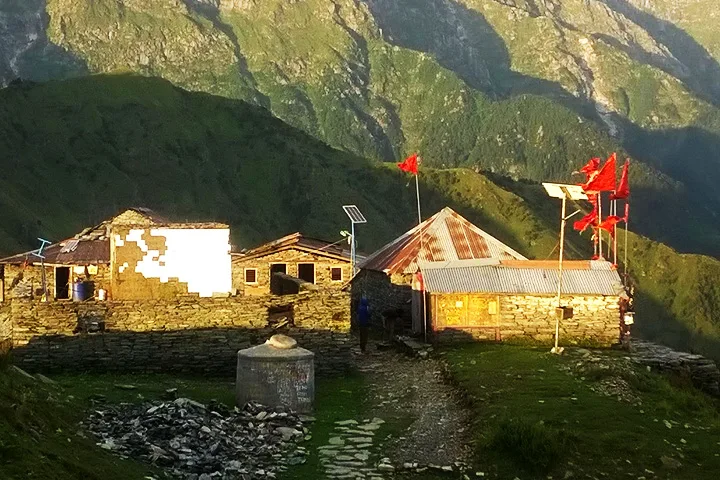
Shri Aadi Himani Chamunda Temple (also known as Aadi Himani Chamunda Devi Mandir or simply Himani Chamunda) is an ancient and revered Hindu shrine dedicated to Goddess Chamunda Devi, a fierce form of Shakti (one of the seven Matrikas and a Mahavidya). It is considered the original (Aadi) and more powerful abode of the goddess, located high in the snowy (Himani) Dhauladhar mountains. This temple is distinct from the more accessible Shri Chamunda Devi Mandir (Chamunda Nandikeshwar Dham) in the valley below, which was established later for easier worship.

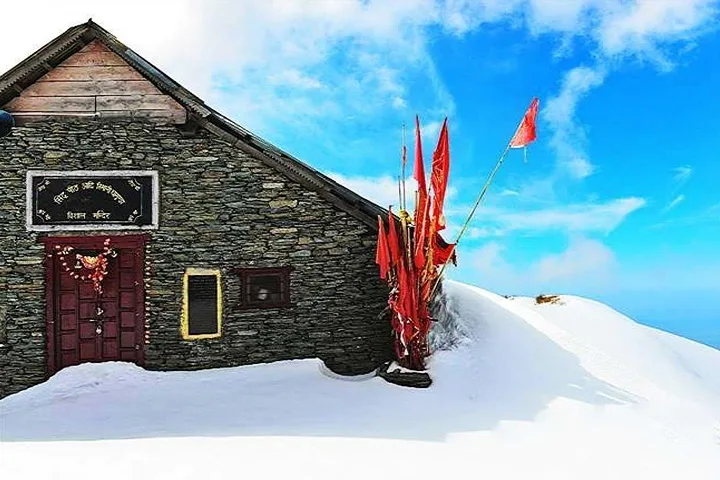

The temple dates back to at least the 17th century, near ruins of the palace of Raja Chandar Bhan Chand Katoch (Katoch dynasty, d. 1660). Restored in the 1990s by devotee P.D. Saini and locals after centuries of neglect; damaged by fire/lightning in 2014 and since reconstructed. Mythology: This is where Goddess Chamunda slew demons Chanda and Munda by hurling boulders from the peak (one boulder reportedly visible near the valley temple’s Shiva shrine). Considered the primordial seat of the goddess; the valley temple was created later when sages requested a more accessible site for daily rituals. Chamunda Devi symbolizes victory over evil, protection, and tantric power.
A Siddh Peeth (powerful spiritual site) for seekers of divine intervention, especially against adversaries or obstacles. Serene, less crowded than the valley temple—ideal for meditation amid nature. Facilities: Basic rest house (sarai) with bedding/utensils; tea shops en route (carry water beyond halfway). Open seasonally: March 15 to November 15 (closed in winter due to heavy snow). Best time: April–June or September–October (avoid monsoons for slippery trails).
Interior and idol views of Chamunda Devi shrines (representative of the fierce goddess form).
The trek combines spiritual pilgrimage with adventure, rewarding visitors with breathtaking views of the Kangra Valley and snow-capped peaks. It’s a hidden gem for those seeking tranquility and raw divine.


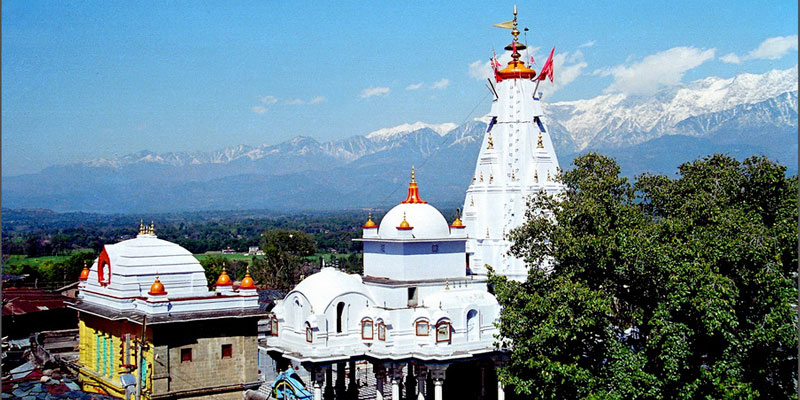
The Shri Bagalamukhi Mata Temple (also known as Maa Baglamukhi Temple) is a prominent Hindu shrine located in Bankhandi (near Dehra), Kangra district, Himachal Pradesh, India. It is dedicated to Goddess Bagalamukhi, one of the ten Mahavidyas (great wisdom goddesses) in Tantric Shaktism. The goddess is revered as Pitambara (clothed in yellow) and is associated with paralyzing enemies, granting victory in disputes, protection from evil, and fulfillment of wishes—especially in legal matters, competitions, and overcoming obstacles.
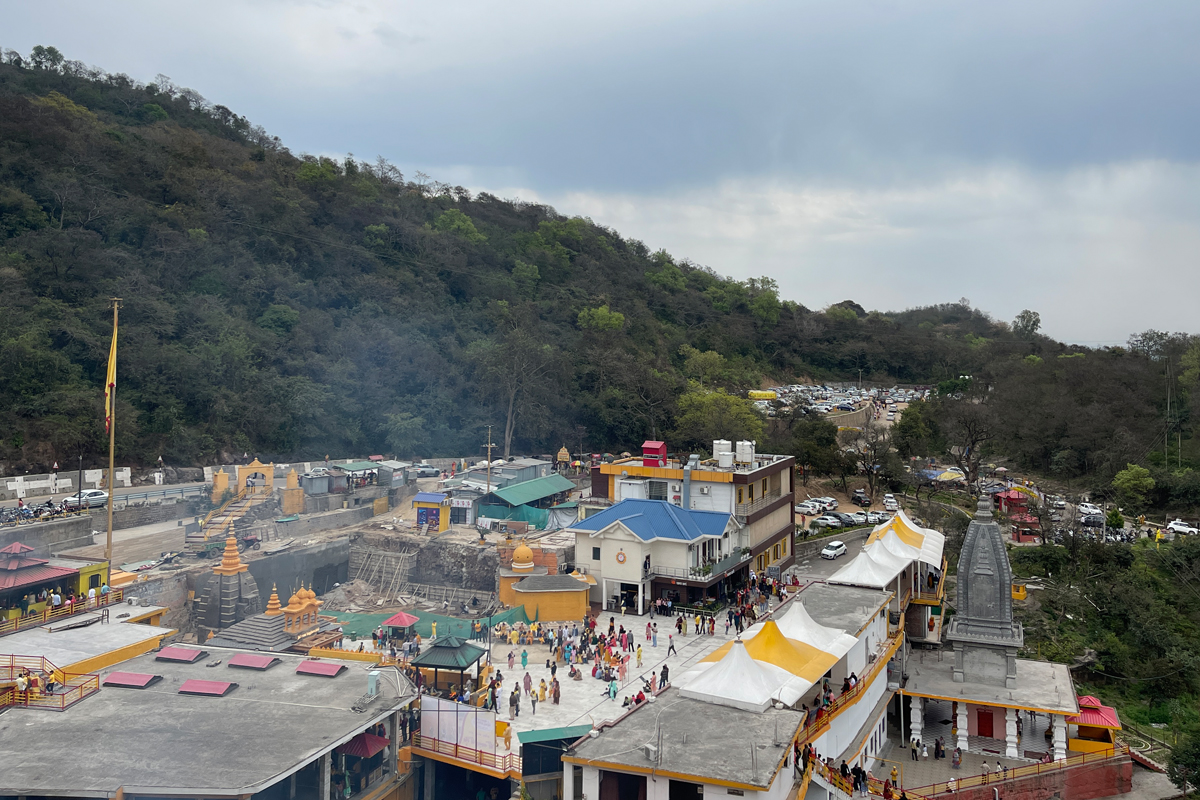
Exterior view of the temple nestled in the scenic Kangra valley.
The temple is considered a Siddha Peeth (accomplished spiritual site) and one of the three most significant Bagalamukhi shrines in India (along with those in Datia, Madhya Pradesh, and Nalkheda, Madhya Pradesh). It attracts devotees, including celebrities from politics, sports, and entertainment.
According to legends, The goddess emerged from a turmeric lake to calm a cosmic storm at Lord Vishnu’s request. The Pandavas are said to have built the temple overnight during their exile in the Dwapar Yuga. Lord Rama worshipped here (guided by Hanuman) to obtain the Brahmastra for victory over Ravana. The site is ancient, with references to its power in Tantric texts.


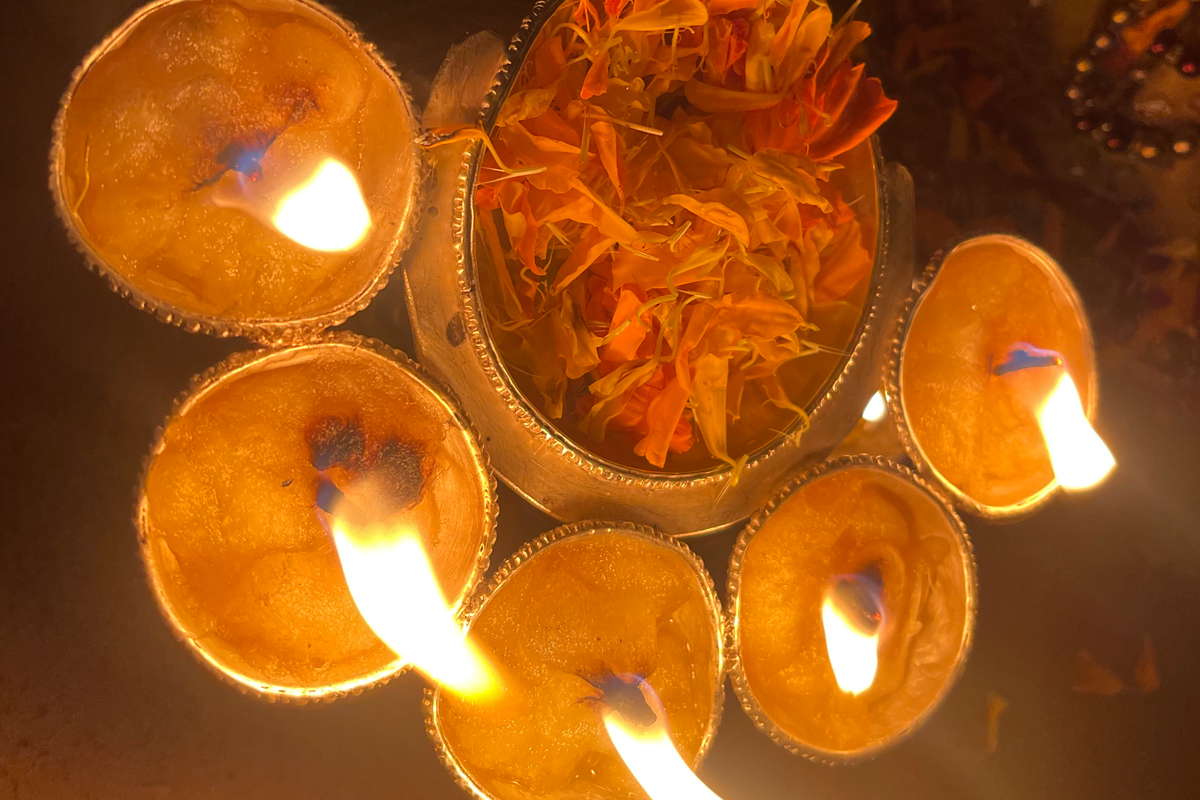
Yellow is the goddess’s favored color: The temple is painted yellow, devotees wear yellow clothes, offer yellow sweets (like besan laddoo), and adornments are golden/yellow.
Known for powerful havans (fire rituals) and yajnas believed to yield quick results—especially nighttime havans.
Devotees seek blessings for stambhana (paralyzing foes), victory in court cases, and protection.
Interior views showing the idol of Goddess Bagalamukhi, adorned in yellow.
The sanctum features the goddess in the center (sometimes flanked by Lakshmi and Saraswati), with nearby shrines for Lord Shiva, Bhairava, and Hanuman.
Festivals: Crowded during Navratri, Guru Purnima, and Vasant Panchami.

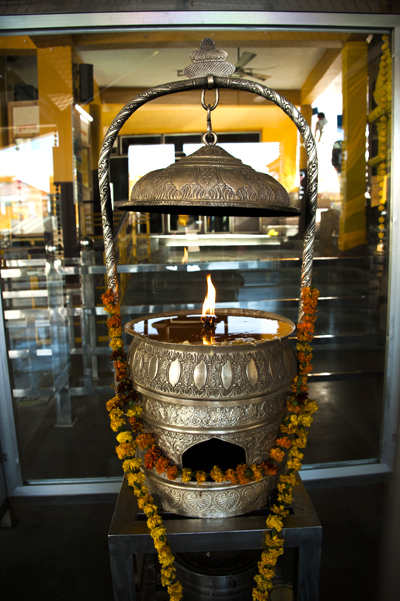
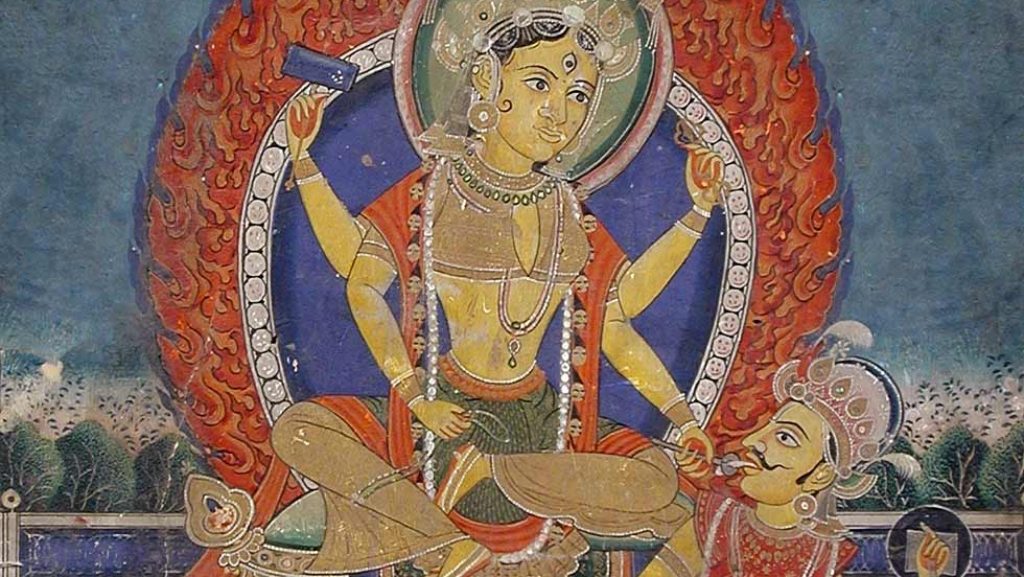
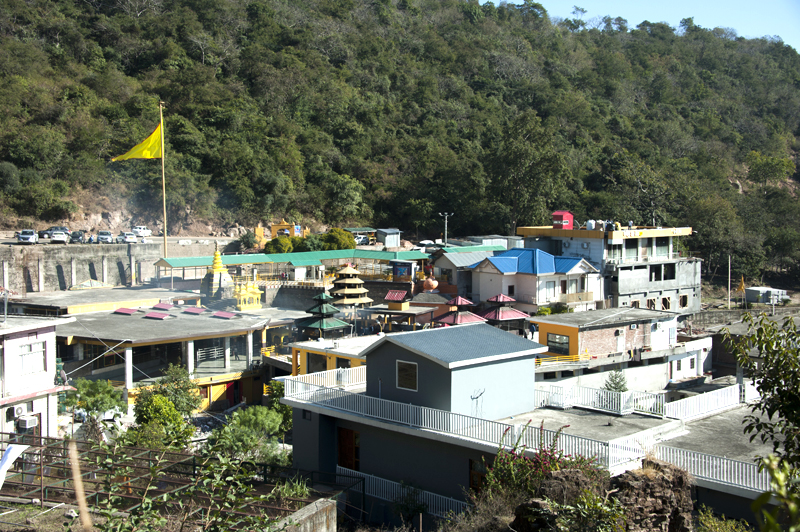
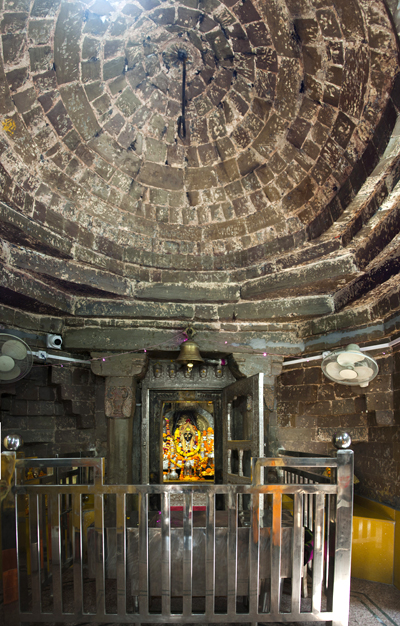


The Bajreshwari Mata Temple, also known as Vajreshwari Devi Temple, Vajreshwari Temple, or simply Kangra Temple / Kangra Devi Temple, is one of the most revered Shakti Peethas in India. Located in the historic town of Kangra (ancient Nagarkot), Kangra district, Himachal Pradesh, it is dedicated to Goddess Vajreshwari (a fierce form of Durga, meaning “Lady of the Thunderbolt”). It is counted among the 51 Shakti Peethas where the left breast of Goddess Sati is believed to have fallen.
As a Shakti Peetha, the temple’s origin ties to the legend of Goddess Sati’s self-immolation and Lord Shiva’s Tandava dance. To calm Shiva, Vishnu severed Sati’s body into 51 parts with his Sudarshana Chakra—the left breast fell here, manifesting divine feminine energy (Shakti). Another legend credits the Pandavas: During their exile, they dreamt of Goddess Durga, who instructed them to build a temple at Nagarkot for protection and victory in the Mahabharata war. The name “Vajreshwari” derives from her slaying a demon with a thunderbolt (vajra)
Once among India’s wealthiest temples (famed for diamonds, gold, and pearls), it was repeatedly looted. Plundered multiple times by Mahmud of Ghazni (1009 AD onward). Destroyed by Firoz Shah Tughlaq (1360 AD). Restored by Emperor Akbar. Completely razed by the devastating 1905 Kangra earthquake. Rebuilt in the 1920s with donations, including from Sikh devotees in Amritsar.
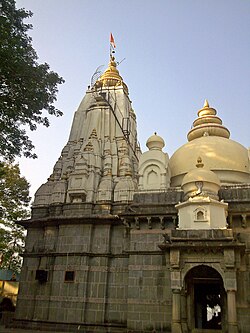
Navratri and Makar Sankranti draw massive crowds with fairs, langar, and special rituals. Daily aarti and offerings; the temple provides free langar twice a day.
Best time: October-March (pleasant weather) or during festivals.
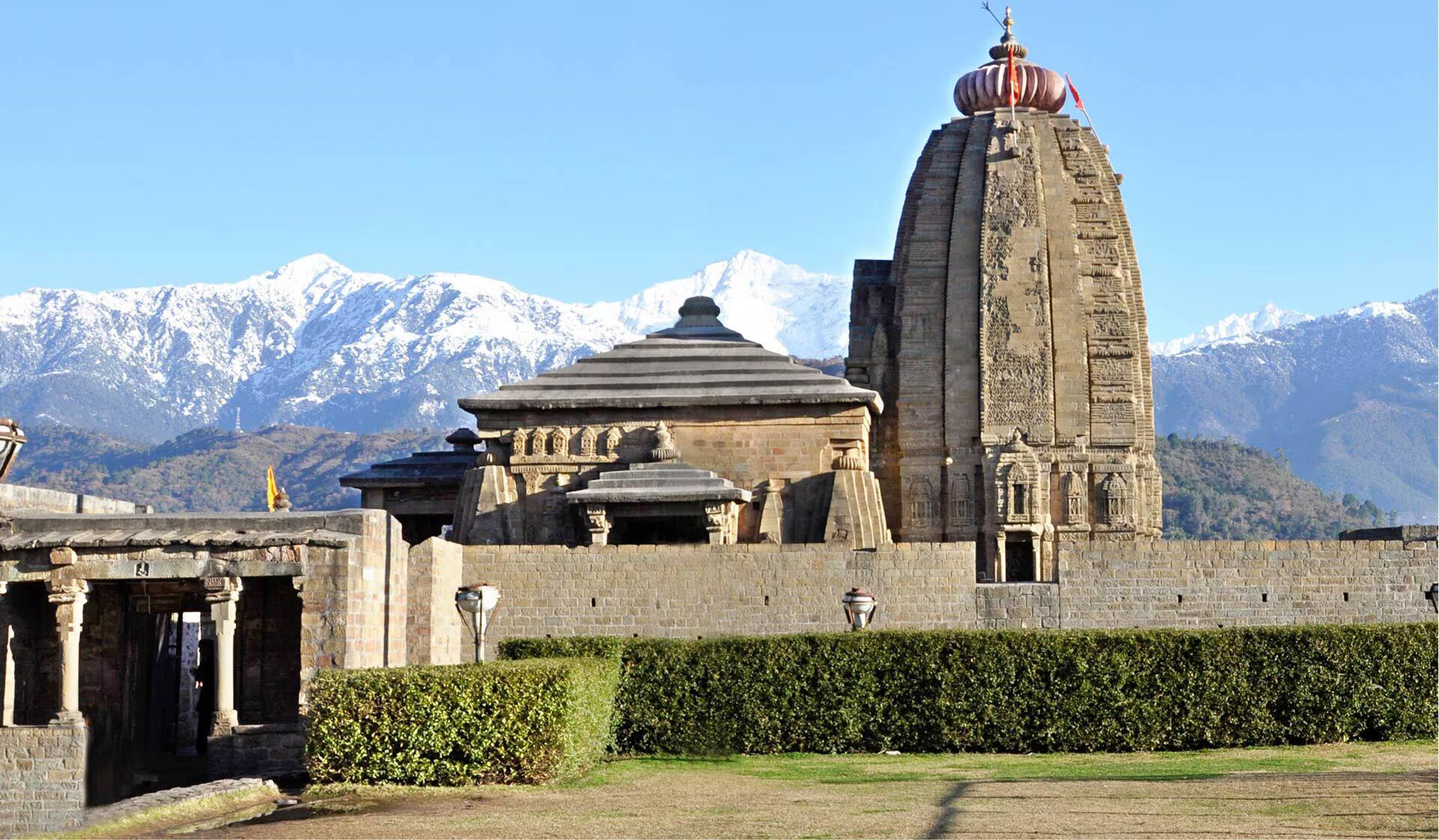
The Baijnath Temple, also known as Baijnath Shiv Temple or Vaidyanath Temple, is an ancient Hindu shrine dedicated to Lord Shiva as Vaidyanath (“Lord of Physicians”). It is located in the small town of Baijnath in Kangra district, Himachal Pradesh, India, nestled at the foothills of the majestic Dhauladhar mountain range along the banks of the Binwa River (a tributary of the Beas). The town was originally known as Kiragrama and derives its current name from the deity.
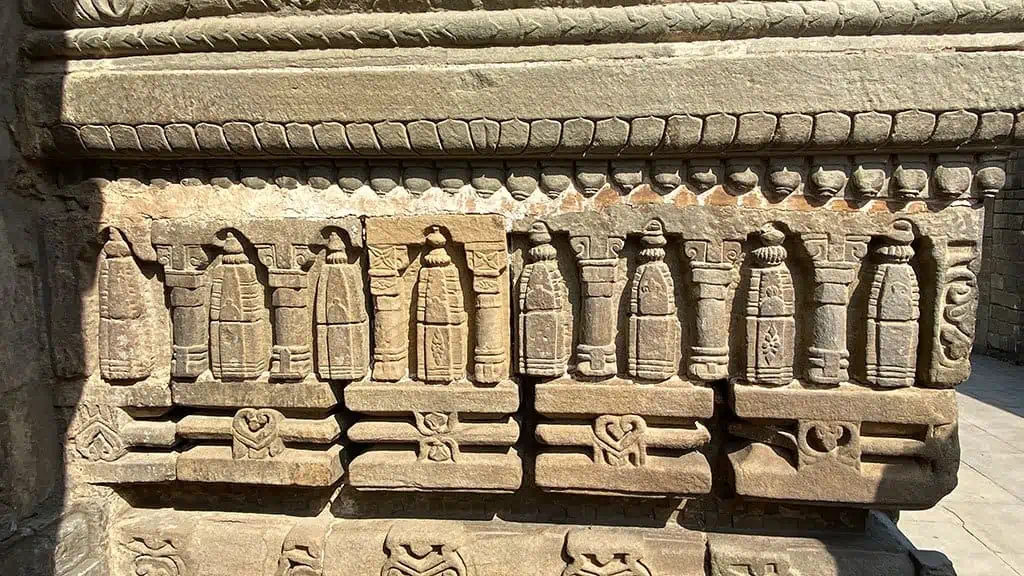
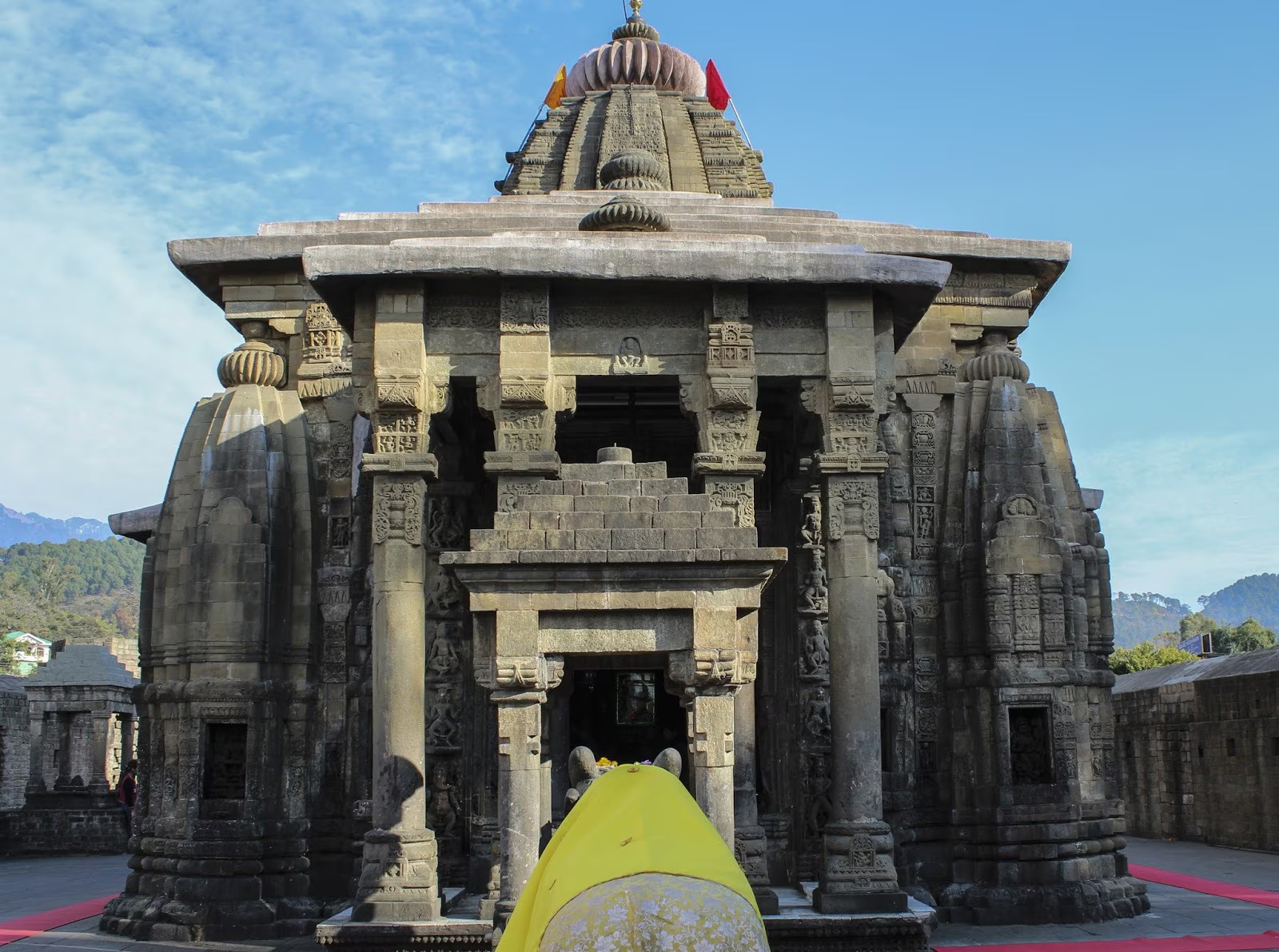
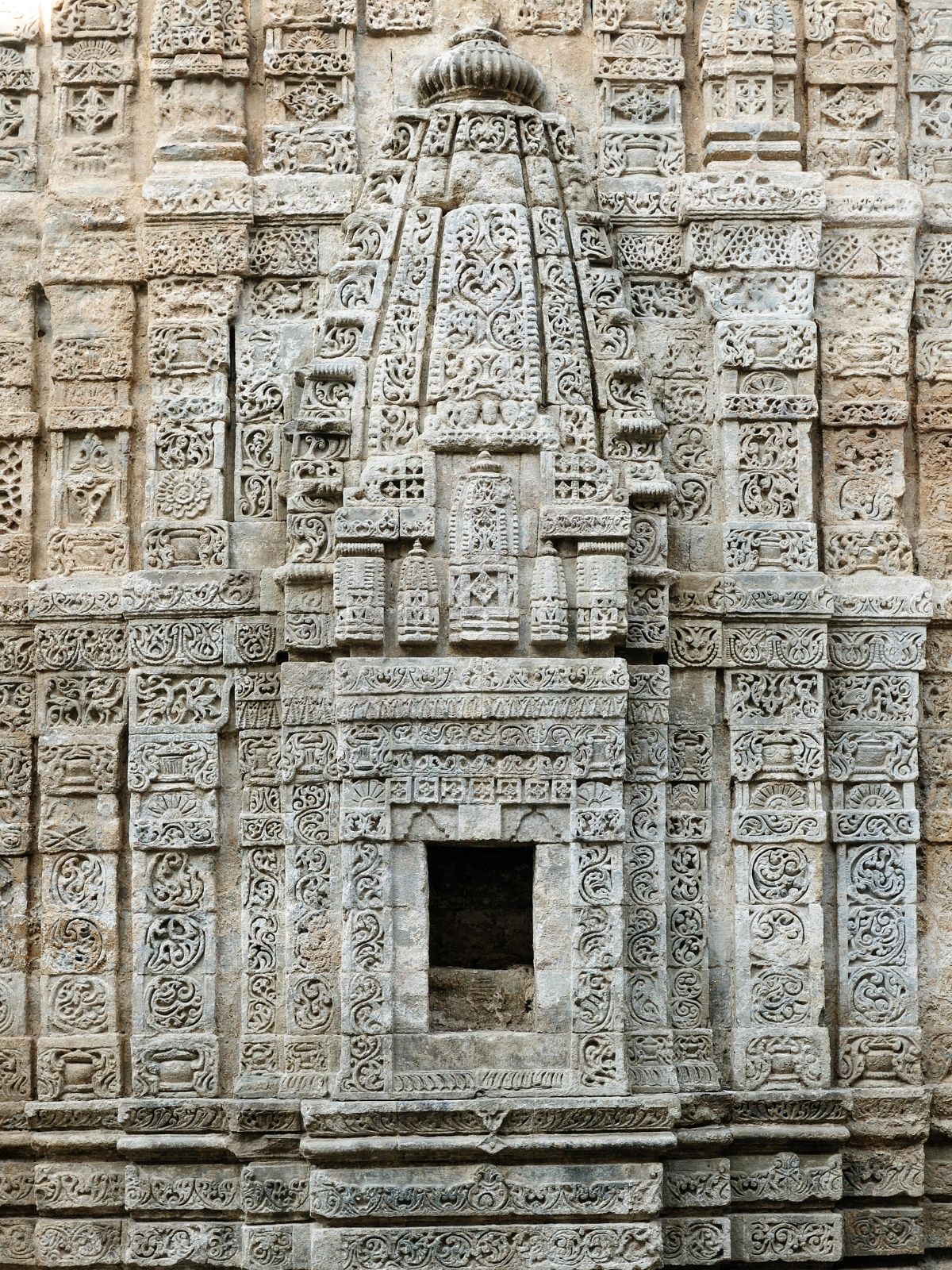
Built in 1204 AD by two local merchants named Ahuka and Manyuka (as confirmed by inscriptions on the temple walls), the structure replaced an earlier Shiva shrine that existed on the site. The temple is a fine example of medieval North Indian Nagara-style architecture, with intricate stone carvings on its exterior walls depicting various Hindu deities and mythological scenes.
A popular legend links the temple to Ravana, the demon king from the Ramayana. Ravana worshipped Shiva intensely at Kailash and was granted a powerful lingam to take to Lanka, on the condition that it not be placed on the ground. En route, near Baijnath, Ravana handed the lingam to a shepherd (or felt the need to relieve himself), and it became permanently established there when placed on the earth. In respect for Ravana’s devotion, the festival of Dussehra (celebrating Rama’s victory over Ravana) is traditionally not observed in Baijnath. The temple is believed to have healing properties—Lord Shiva here is revered as a healer, and the water from the nearby stream is considered medicinal by devotees.
The main sanctum houses a Shiva lingam. It features a mandapa (hall) with ornate pillars, a tall curved shikhara (spire), and an entrance porch often guarded by a statue of Nandi (Shiva’s bull). The complex includes smaller shrines dedicated to deities like Ganesha, Harihara, and others. Protected by the Archaeological Survey of India (ASI), it has survived earthquakes and renovations over centuries. The temple is a protected monument under the Archaeological Survey of India and exemplifies the Nagara style of North Indian temple architecture, with influences from Odishan styles—unique for Himachal Pradesh.
The Baijnath Temple’s origins are deeply intertwined with Hindu mythology, particularly legends from the Puranas involving Ravana, the demon king of Lanka from the Ramayana era (Treta Yuga). While the physical temple structure dates to the medieval period, local lore and traditions attribute the site’s sanctity to Ravana’s intense devotion to Lord Shiva.
Ravana, a learned scholar and ardent Shiva bhakt (devotee), performed severe penance at Mount Kailash. He sacrificed nine of his heads one by one in a yajna to please Shiva and gain invincible powers. Impressed, Lord Shiva appeared, restored Ravana’s heads (earning the epithet Vaidyanath, “Lord of Physicians”), and granted him immense strength. Ravana then requested Shiva to accompany him to Lanka. Shiva agreed but manifested as a Shiva lingam (Atmalinga in some versions), with a strict condition: Ravana must carry it without placing it on the ground en route, or it would become permanently fixed there. As Ravana journeyed southward through the Himalayas, the gods (fearing Ravana’s growing power) intervened. Lord Ganesha or Vishnu (in disguise as a shepherd/cowherd) tricked him:
Ravana felt an urgent need to relieve himself (or quench thirst in variants). He handed the lingam to a passing shepherd (often Vishnu/Ganesha in disguise), warning him not to place it down. The lingam grew unbearably heavy, and the shepherd set it on the ground at Kiragrama (ancient name of Baijnath). It rooted itself permanently, sometimes manifesting as Ardhanarishwara (half-Shiva, half-Parvati form).



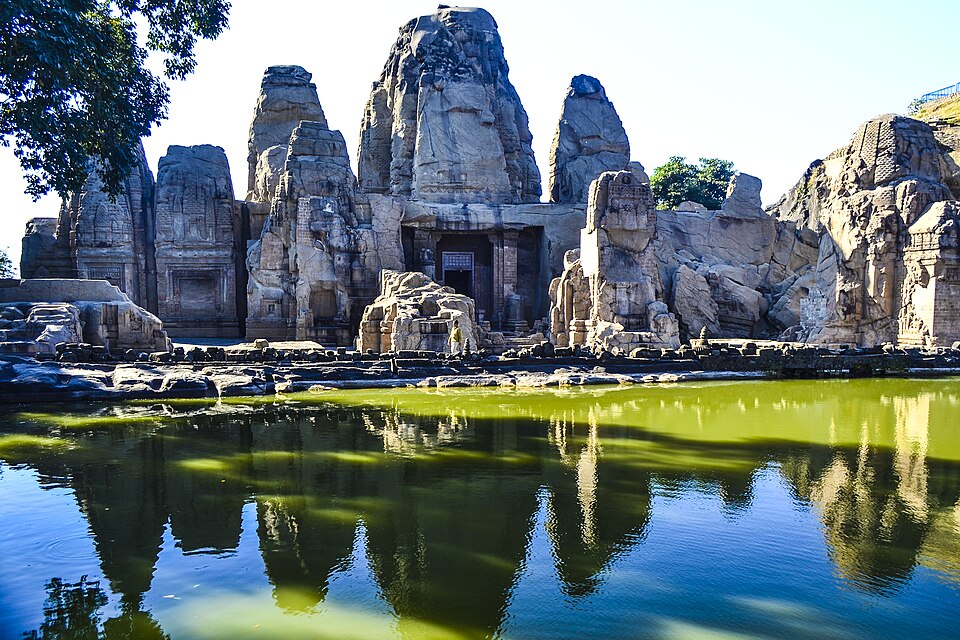
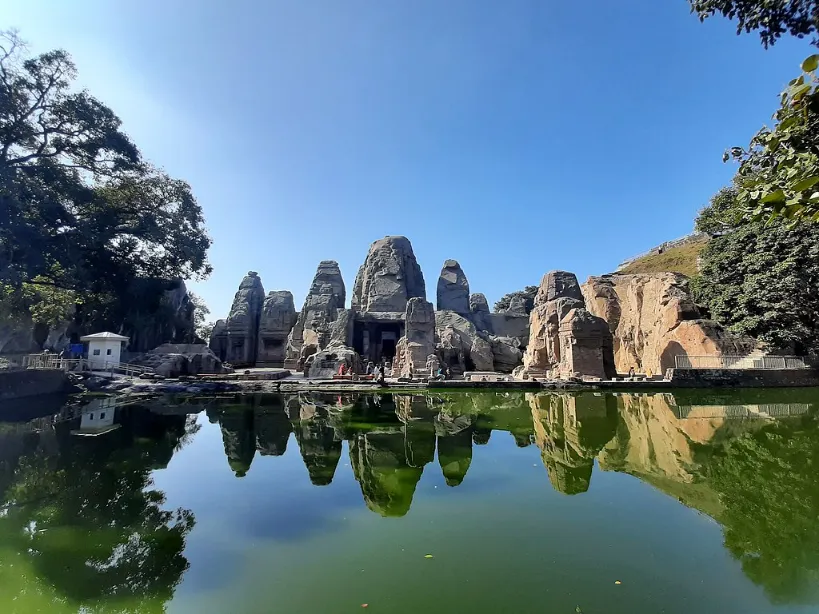
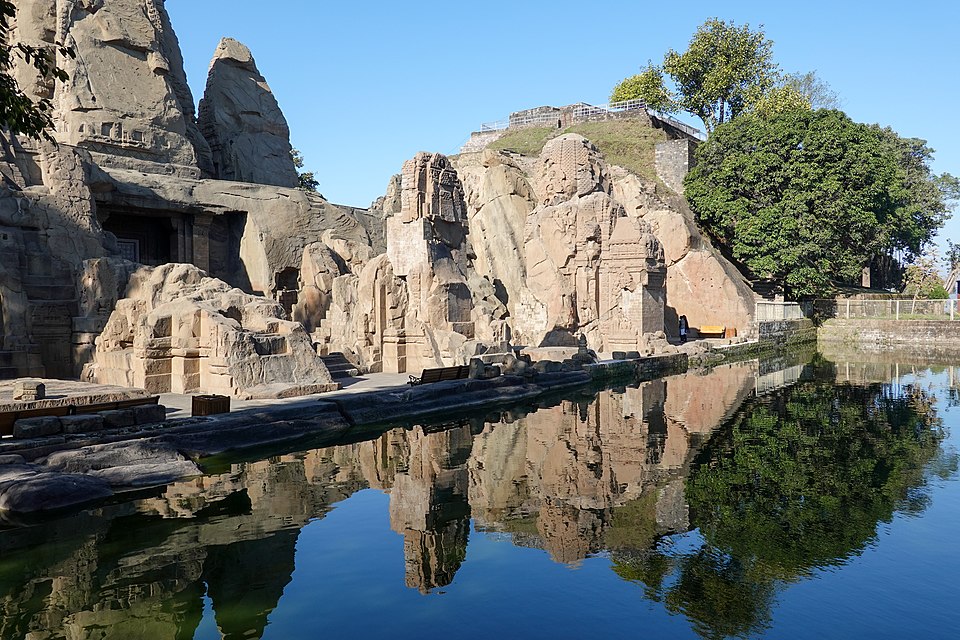
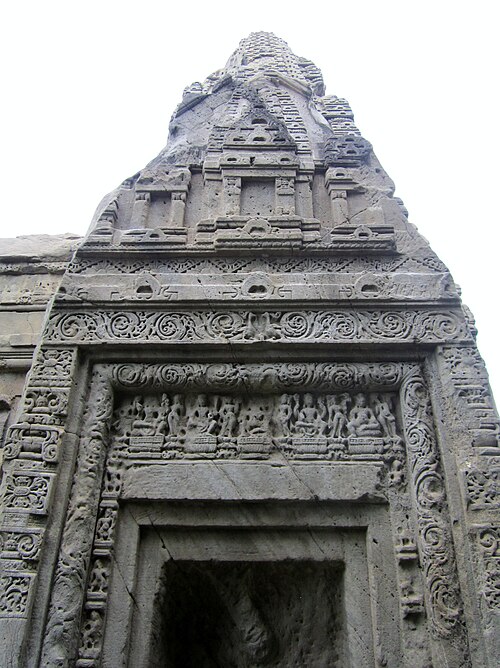
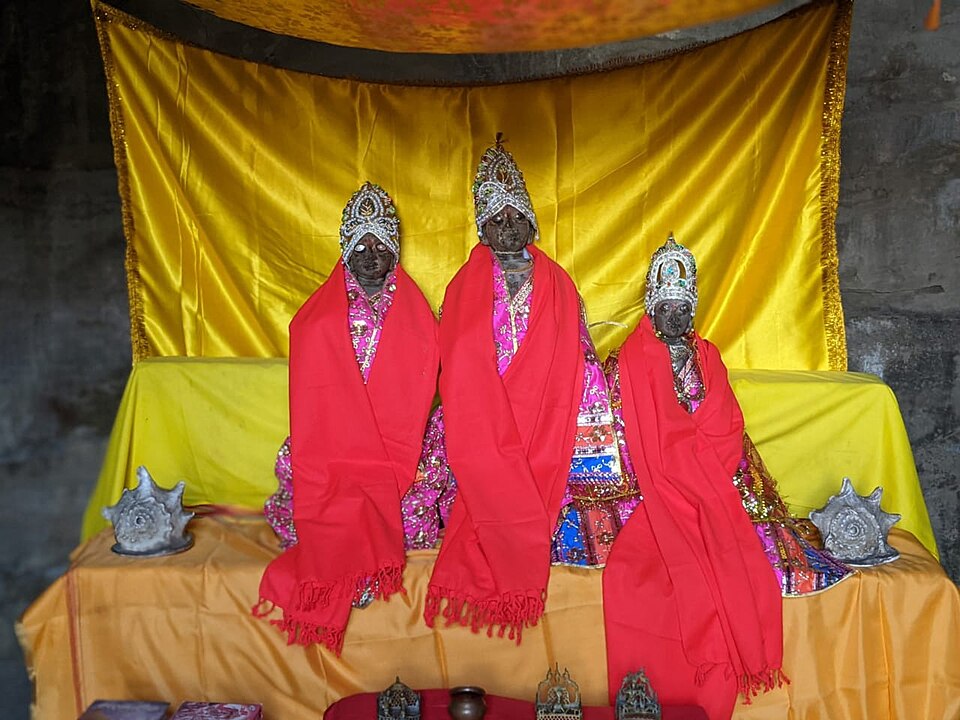
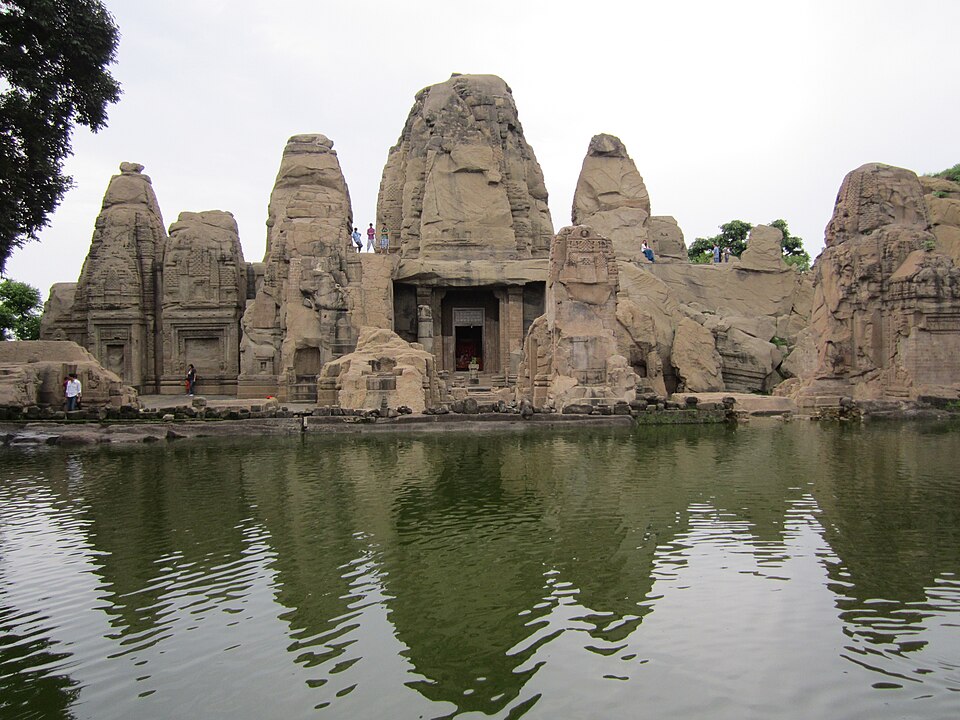
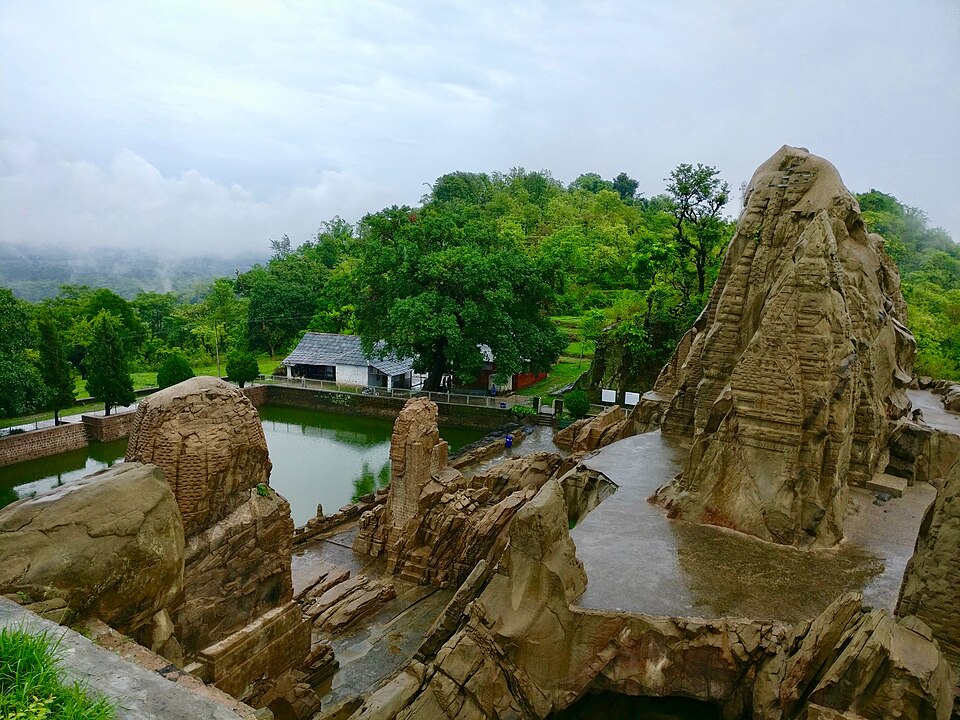
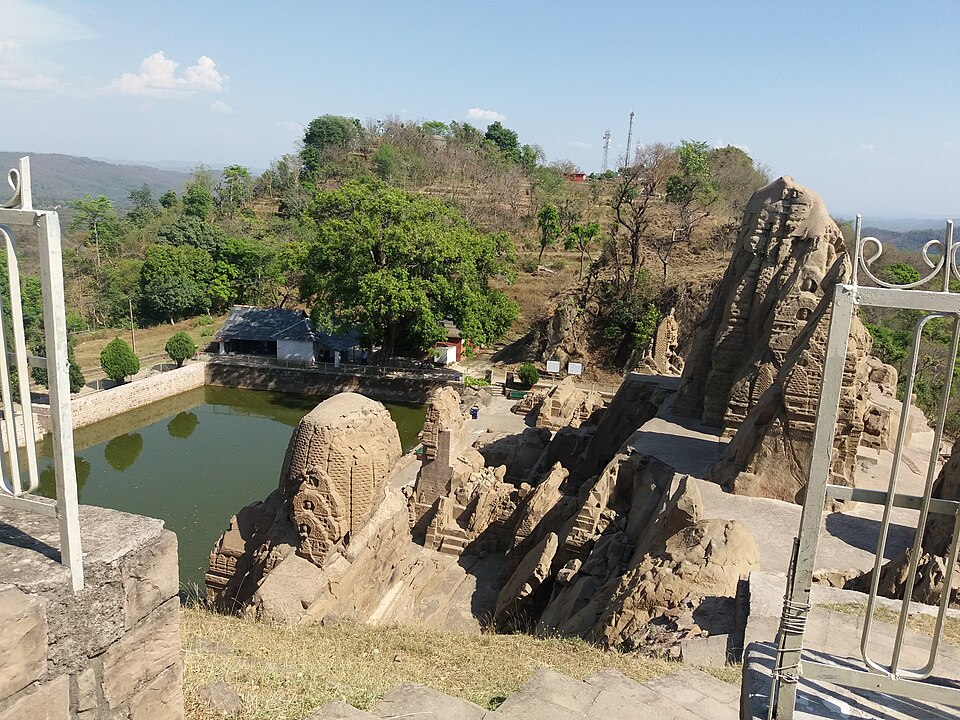
The Masroor Temples, also referred to as Masroor Temples or Rock-cut Temples at Masroor, is an early 8th-century complex of rock-cut Hindu temples in the Kangra Valley of Beas River in Himachal Pradesh, India. The temples face northeast, towards the Dhauladhar range of the Himalayas. They are a version of North Indian Nagara architecture style, dedicated to Shiva, Vishnu, Devi and Saura traditions of Hinduism, with its surviving iconography likely inspired by a monotheistic framework.
Though a major temples complex in the surviving form, the archaeological studies suggest that the artists and architects had a far more ambititious plan and the complex remains incomplete. Much of the Masroor’s temple’s sculpture and reliefs have been lost. They were also quite damaged, most likely from earthquakes
The temples were carved out of monolithic rock with a shikhara, and provided with a sacred pool of water as recommended by Hindu texts on temple architecture. The temple has three entrances on its northeast, southeast and northwest side, two of which are incomplete. Evidence suggests that a fourth entrance was planned and started but left mostly incomplete, something acknowledged by the early 20th-century colonial era archaeology teams but ignored leading to misidentification and erroneous reports. The entire complex is symmetrically laid out on a square grid, where the main temple is surrounded by smaller temples in a mandala pattern. The main sanctum of the temples complex has a square plan, as do other shrines and the mandapa. The temples complex features reliefs of major Vedic and Puranic gods and goddesses, and its friezes narrate legends from the Hindu texts.
The temple complex was first reported by Henry Shuttleworth in 1913 bringing it to the attention of archaeologists. They were independently surveyed by Harold Hargreaves of the Archaeological Survey of India in 1915. According to Michael Meister, an art historian and a professor specializing in Indian temple architecture, the Masroor temples are a surviving example of a temple mountain-style Hindu architecture which embodies the earth and mountains around it.

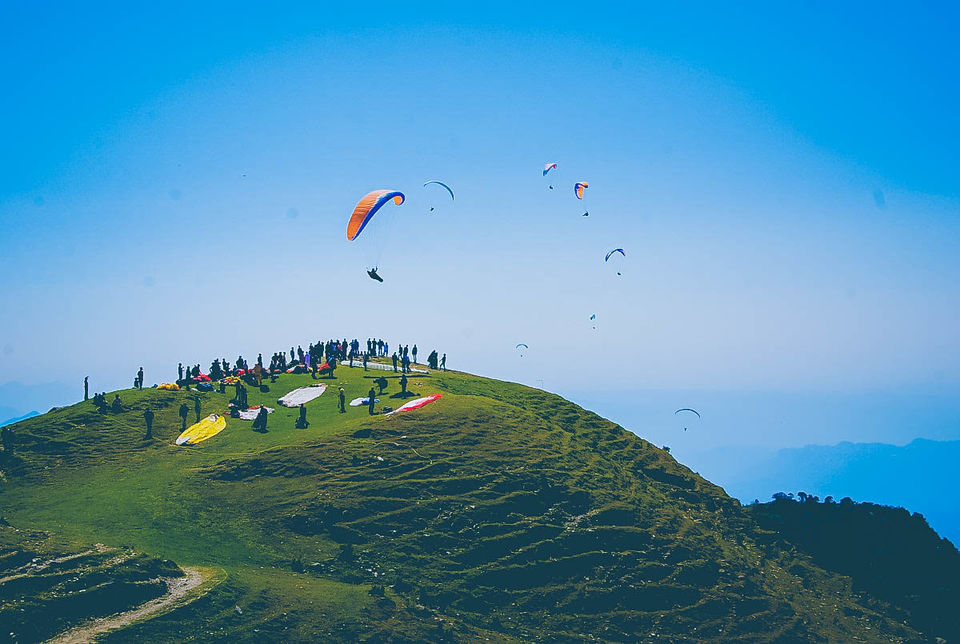
Bir is a village located in the west of Joginder Nagar Valley in the state of Himachal Pradesh in northern India. Mostly referred as “Paragliding Capital of India”, Bir is also a noted centre for ecotourism, spiritual studies and meditation. Bir is also home to a Tibetan refugee settlement with several Buddhist monasteries and a large stupa. While Billing is the takeoff site for paragliding and Bir village is for landing; collectively it is known “Bir Billing”.
Paragliding: Offers thrilling flights with scenic views, with the takeoff at Billing (2400m) and landing at Bir (1350m).
Adventure Sports: Beyond paragliding, activities include trekking, mountain biking, camping, and even bungee jumping.
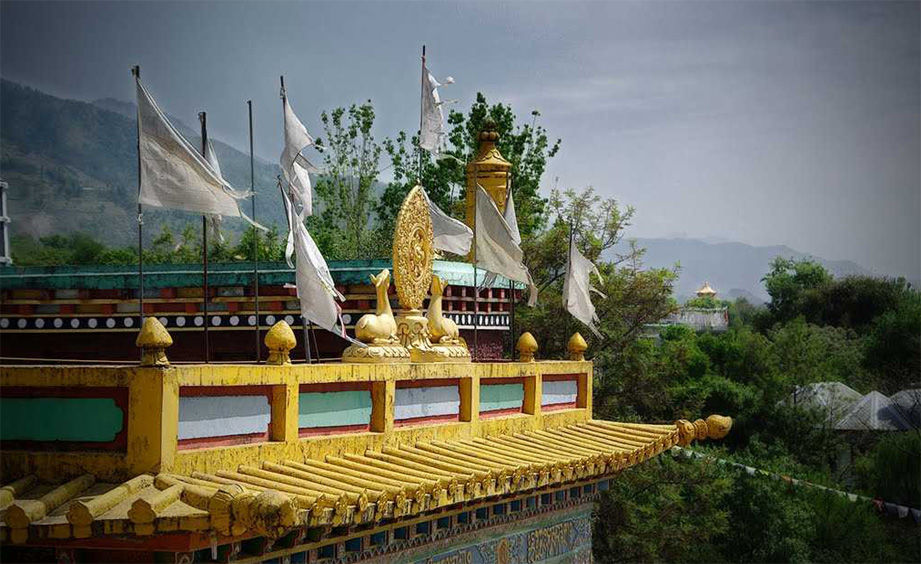
Culture & Spirituality: Home to beautiful monasteries like Chokling and Sherabling, attracting those interested in Tibetan Buddhism and peaceful retreats.
Nature: Known for tea plantations, lush valleys, and the majestic Dhauladhar mountain range.
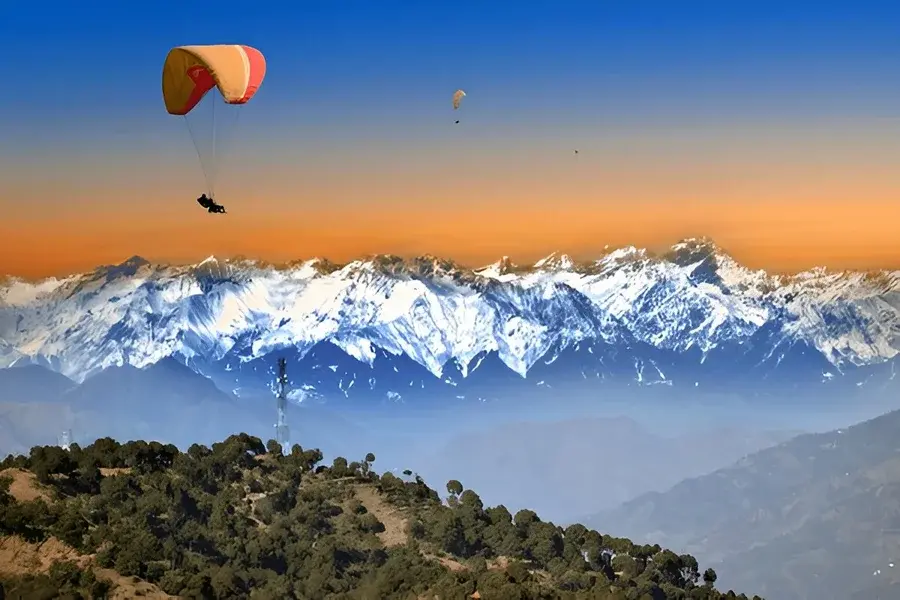


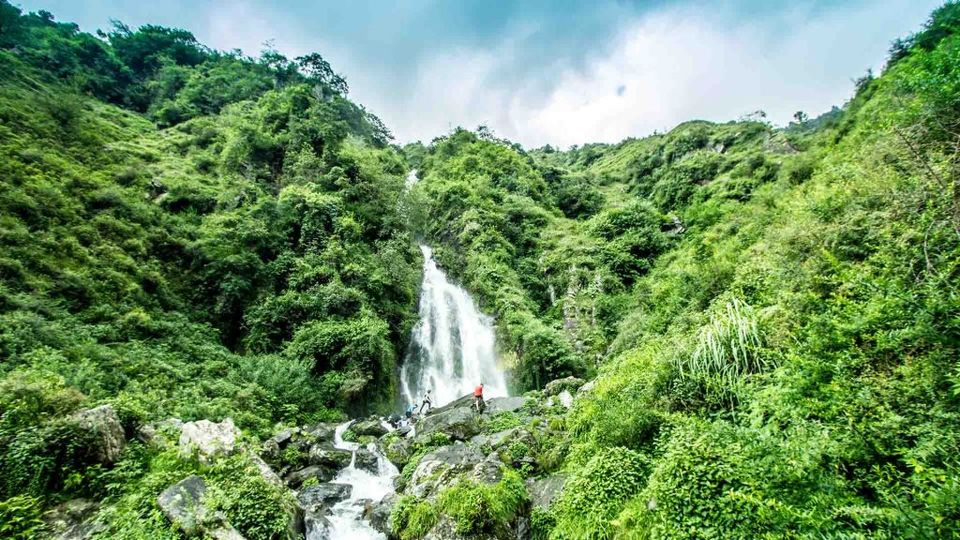
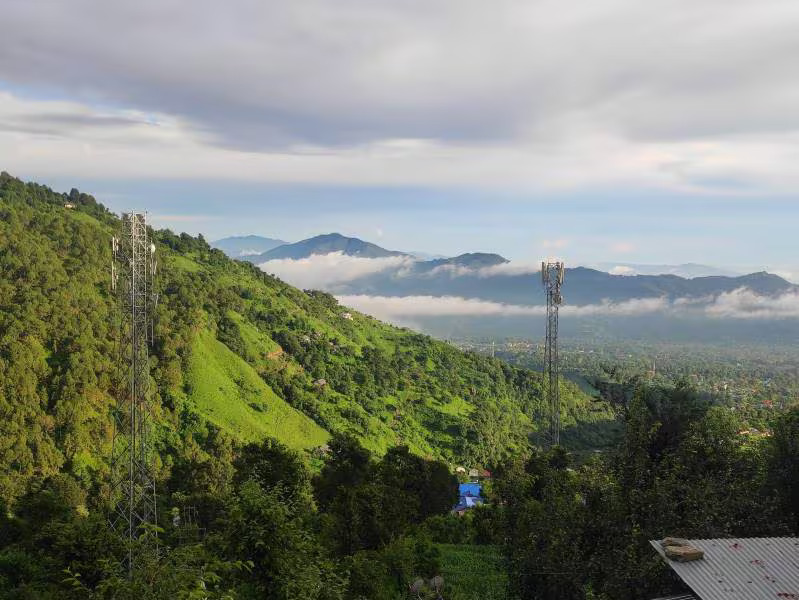
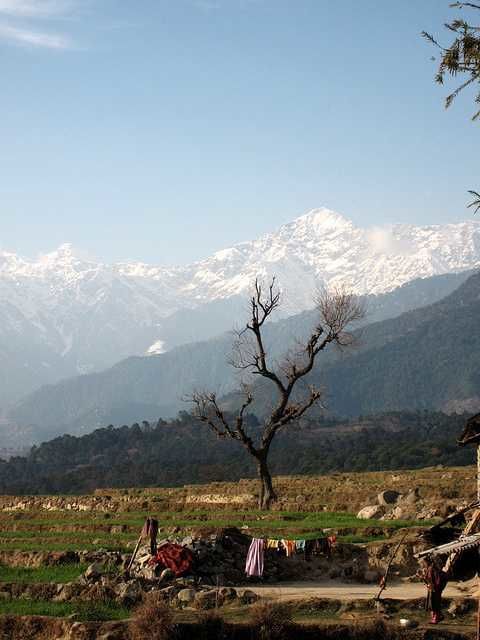
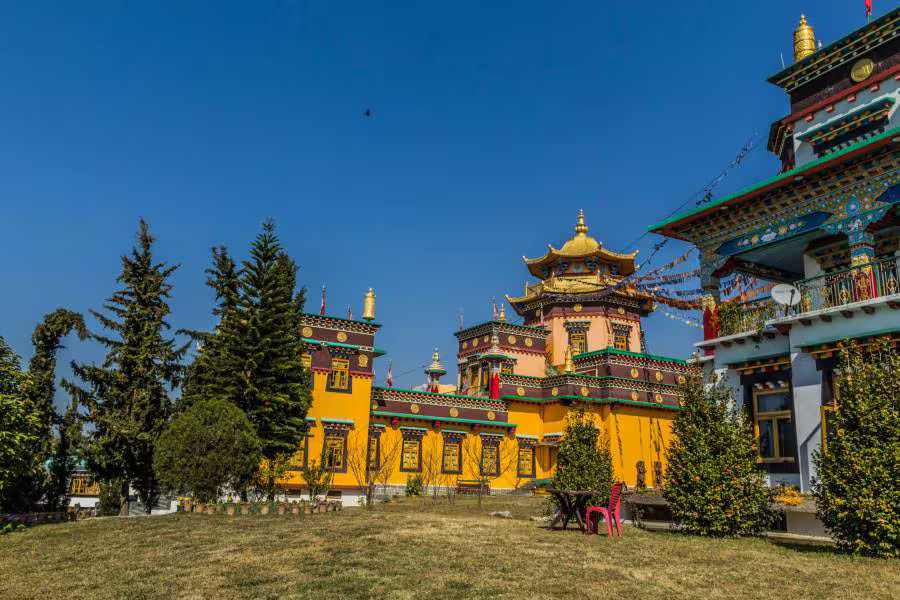
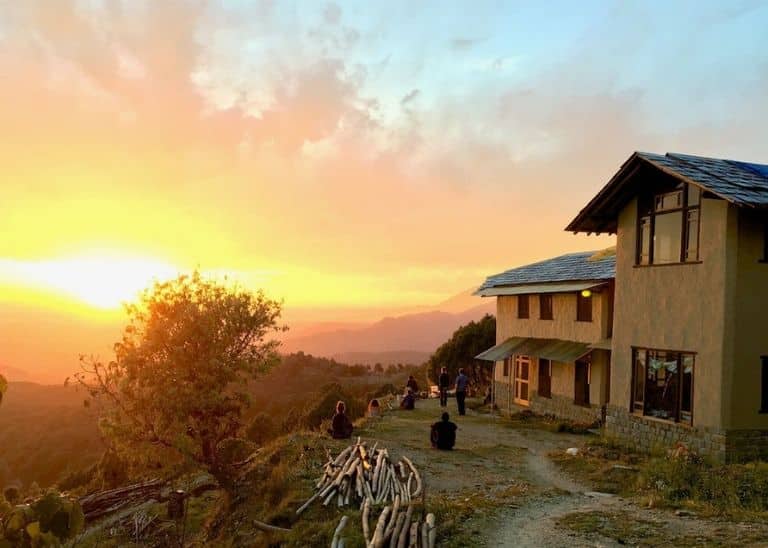
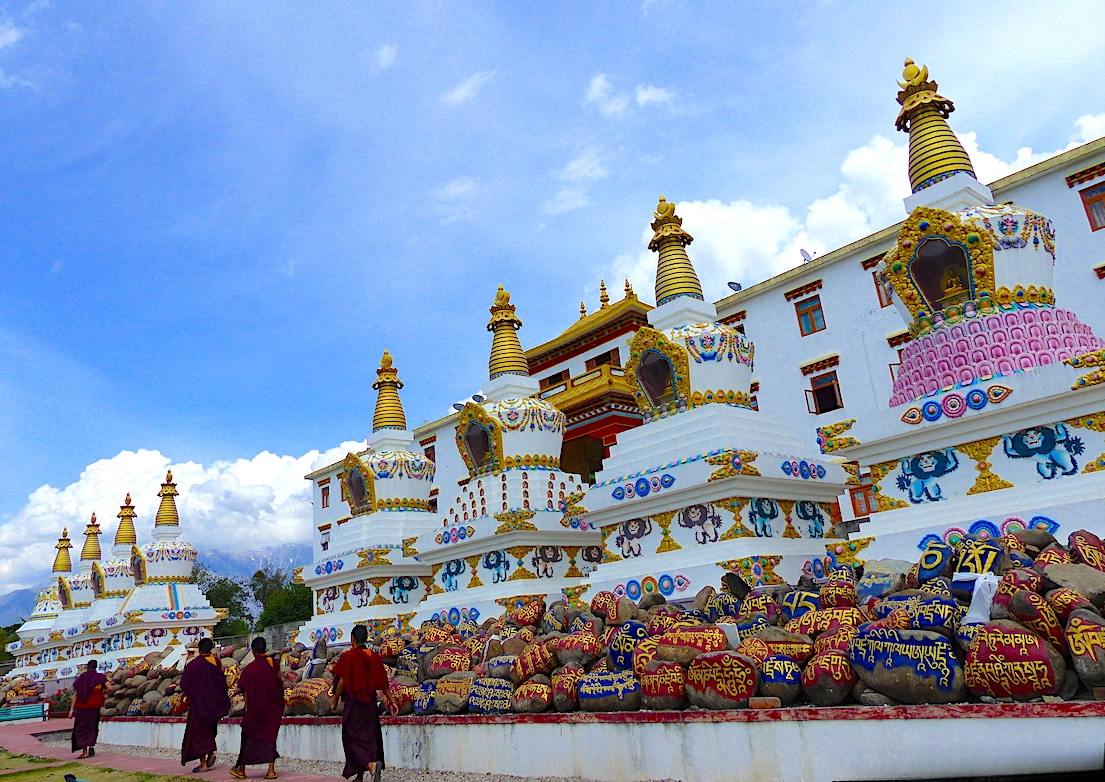
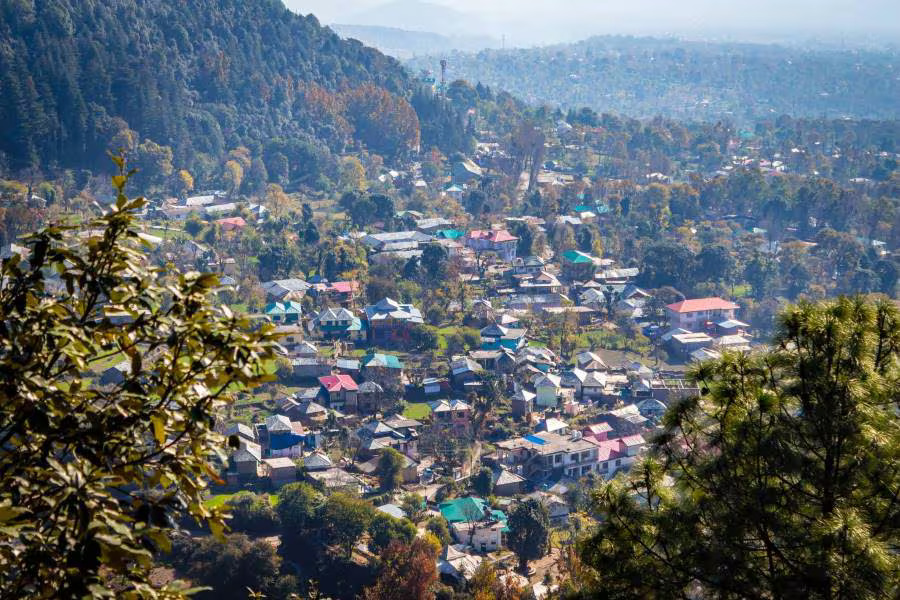
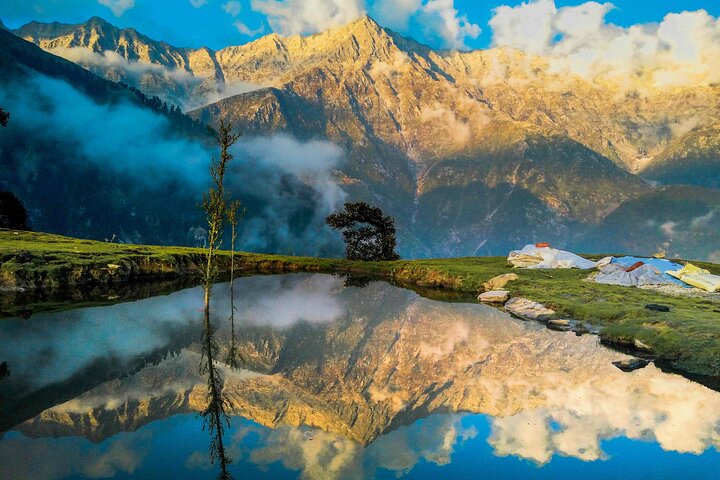
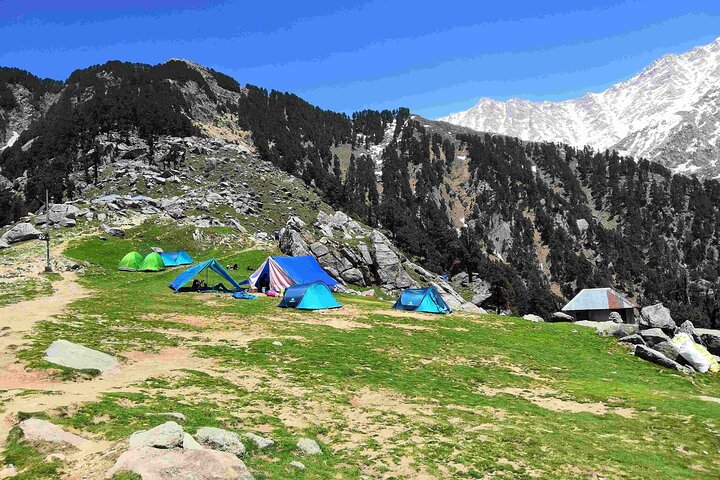
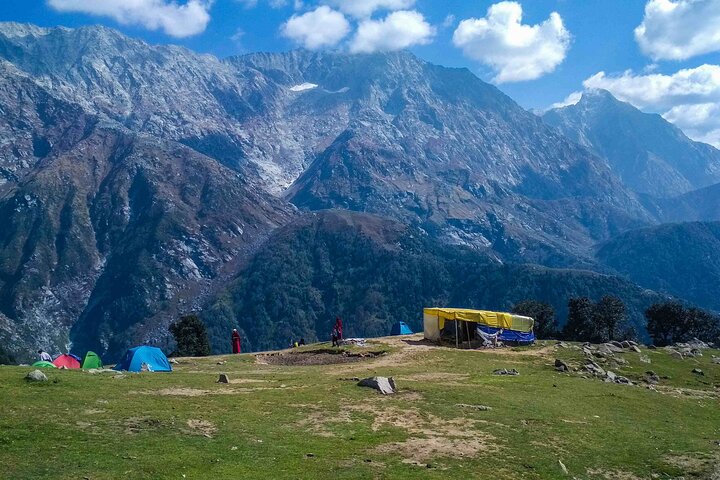
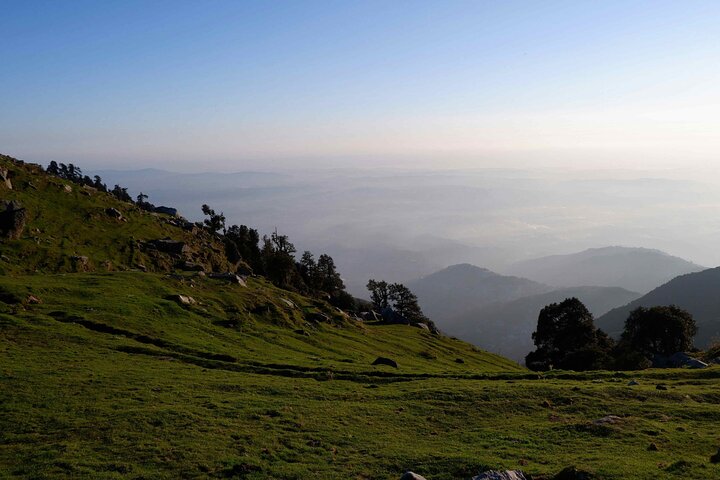
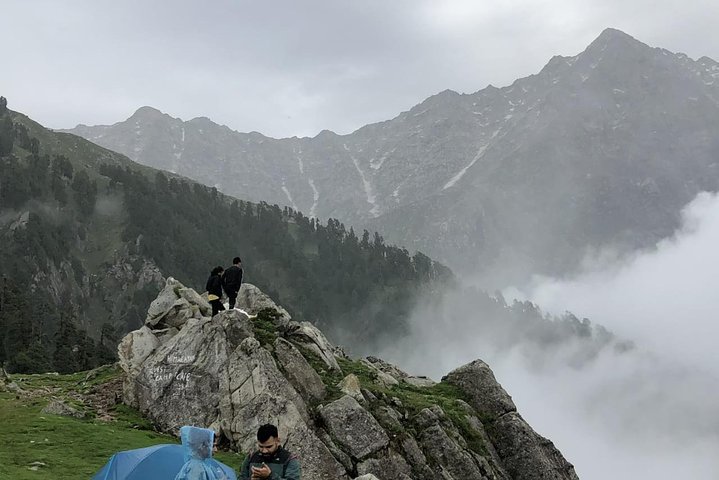
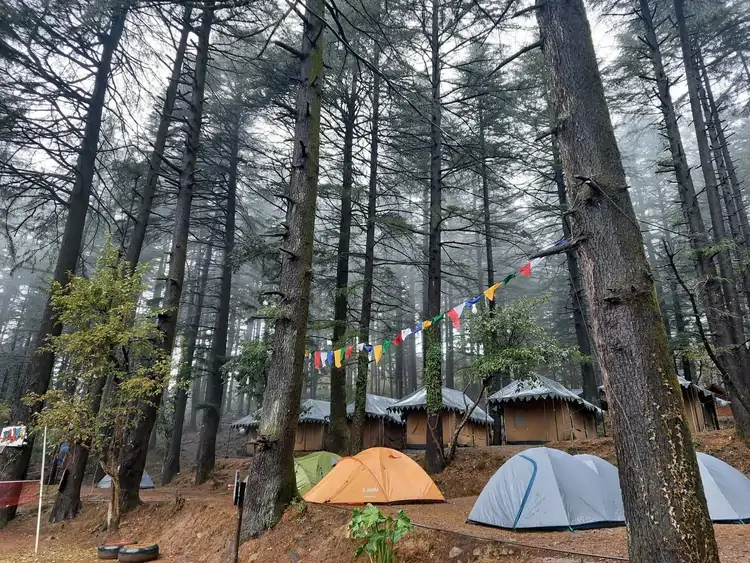
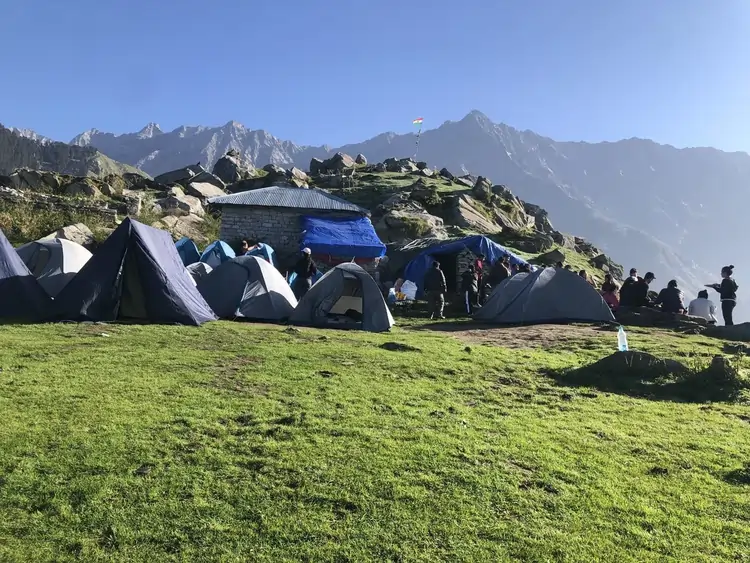
Triund: Triund is the crown jewel of dharamshala, situated in the laps of dhauladhar mountains, it has the perfect view of the dhauladhar mountains on one side and kangra valley on the other. Triund is a very popular trekking spot. Triund attracts a lot of tourist every year from India and all over the world. Triund trek can be described as a tranquil trek which can be easily accomplished by almost all age groups. Triund has an unambiguous by way which goes through a beautiful mixed forest of oak, deodar and rhododendron. Trek is fairly easy for the first five kilometers but the last one kilometer may require a bit of toil, the last one kilometer is popularly know as the “22 curves”. Along the way there are many small chai shops where one can refresh during the hike. The traipse is worth it as the panorama when you reach triund is awe-inspiring and exhilarating.
Altitude: Around 2,828 meters (9,350 feet).
Scenery: Panoramic views of snow-capped Dhauladhar peaks and Kangra Valley.
Trail: Passes through mixed forests of oak, deodar, and rhododendron.
Experience: Great for overnight camping, offering incredible stargazing.


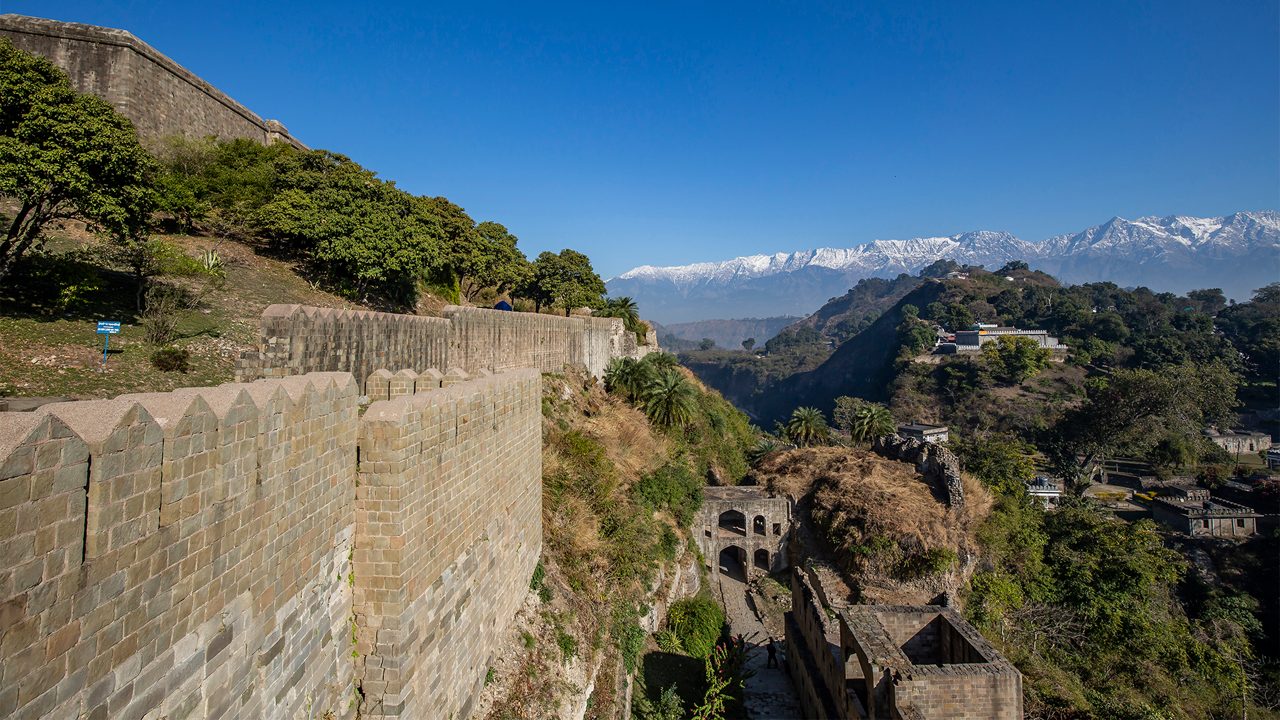
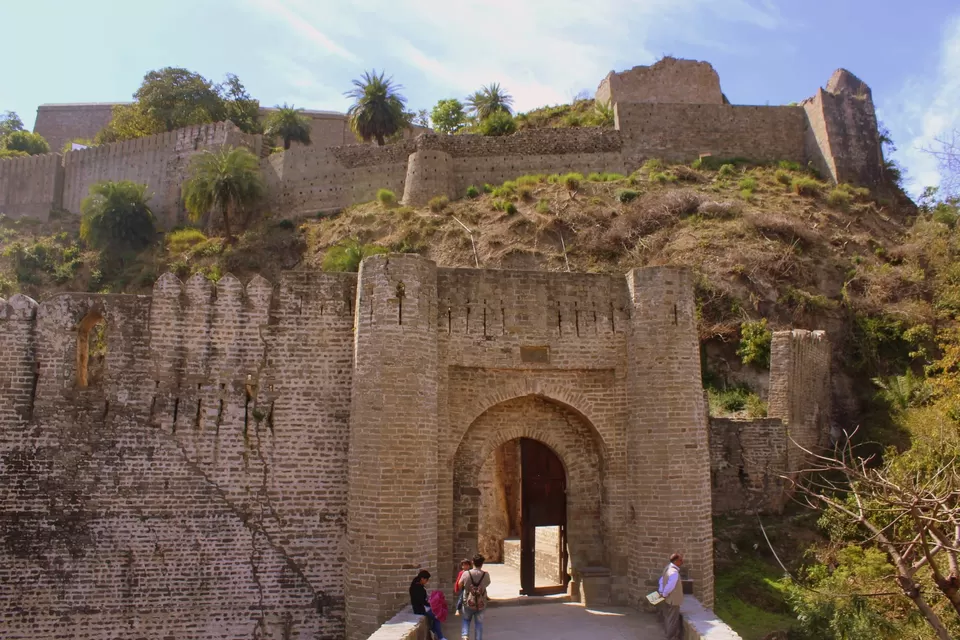
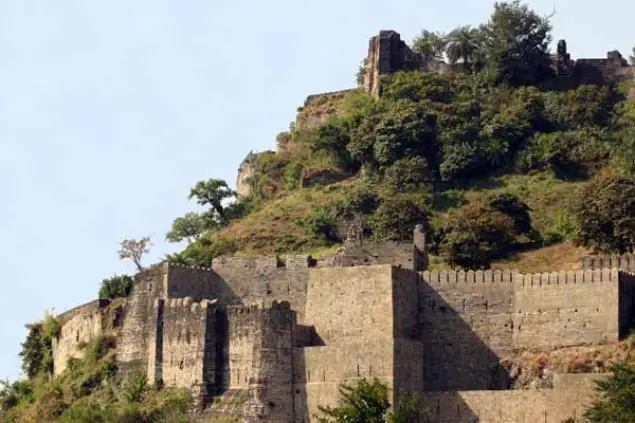
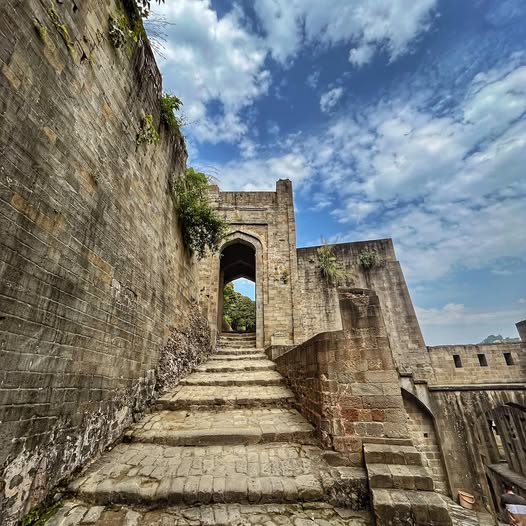
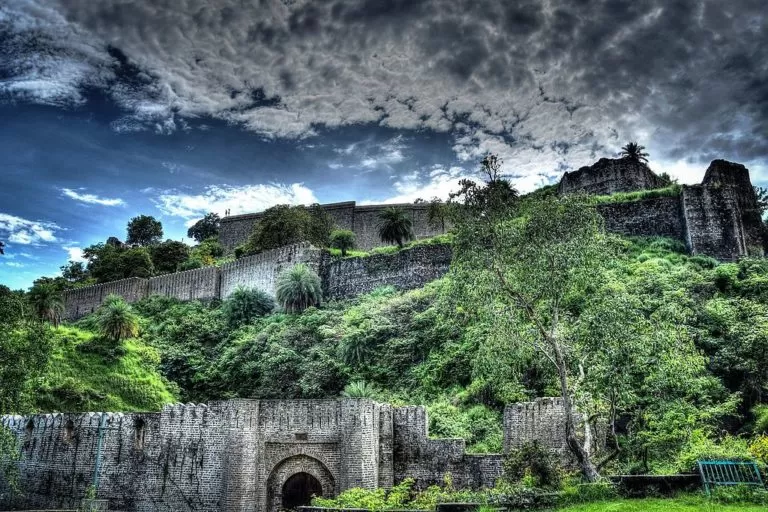
The Kangra Fort was built by the royal Rajput family of Kangra State (the Katoch dynasty), which traces its origins to the ancient Trigarta Kingdom, mentioned in the Mahabharata epic. It is the largest fort in the Himalayas and probably the oldest dated fort in India. The fort of Kangra resisted Akbar’s siege in 1615. However, Akbar’s son Jehangir successfully subdued the fort in 1620, forcing the submission of the Raja of Chamba, “the greatest of all the rajas in the region”.[1] Mughal Emperor Jahangir with the help of Suraj Mal garrisoned with his troops.
The Katoch Kings repeatedly looted Mughal controlled regions, weakening the Mughal control and with the decline of Mughal power, Raja Sansar Chand-II succeeded in recovering the ancient fort of his ancestors, in 1789. Maharaja Sansar Chand fought multiple battles with Gurkhas on one side and Sikh King Maharaja Ranjit Singh on the other. Sansar Chand used to keep his neighboring Kings jailed, and this led to conspiracies against him. During a battle between the Sikhs and Katochs, the gates of the fort had been kept open for supplies.
The Gurkha army entered the opened scarcely armed gates in 1806. This forced an alliance between Maharaja Sansar Chand and Maharaja Ranjit Singh. Subsequently in 1809 the Gurkha army was defeated and they had to retreat across Sutlej River. The Fort remained with the Katochs until 1828 when Ranjit Singh annexed it after Sansar Chand’s death. The fort was finally taken by the British after the Sikh war of 1846. A British garrison occupied the fort until it was heavily damaged in an earthquake on the 4th of April, 1905.



The Shri Bagalamukhi Mata Temple (also known as Maa Baglamukhi Temple) is a prominent Hindu shrine located in Bankhandi (near Dehra), Kangra district, Himachal Pradesh, India. It is dedicated to Goddess Bagalamukhi, one of the ten Mahavidyas (great wisdom goddesses) in Tantric Shaktism. The goddess is revered as Pitambara (clothed in yellow) and is associated with paralyzing enemies, granting victory in disputes, protection from evil, and fulfillment of wishes—especially in legal matters, competitions, and overcoming obstacles.
Exterior view of the temple nestled in the scenic Kangra valley.
The temple is considered a Siddha Peeth (accomplished spiritual site) and one of the three most significant Bagalamukhi shrines in India (along with those in Datia, Madhya Pradesh, and Nalkheda, Madhya Pradesh). It attracts devotees, including celebrities from politics, sports, and entertainment.
According to legends, The goddess emerged from a turmeric lake to calm a cosmic storm at Lord Vishnu’s request. The Pandavas are said to have built the temple overnight during their exile in the Dwapar Yuga. Lord Rama worshipped here (guided by Hanuman) to obtain the Brahmastra for victory over Ravana. The site is ancient, with references to its power in Tantric texts.
Yellow is the goddess’s favored color: The temple is painted yellow, devotees wear yellow clothes, offer yellow sweets (like besan laddoo), and adornments are golden/yellow.
Known for powerful havans (fire rituals) and yajnas believed to yield quick results—especially nighttime havans.
Devotees seek blessings for stambhana (paralyzing foes), victory in court cases, and protection.
Interior views showing the idol of Goddess Bagalamukhi, adorned in yellow.
The sanctum features the goddess in the center (sometimes flanked by Lakshmi and Saraswati), with nearby shrines for Lord Shiva, Bhairava, and Hanuman.
Festivals: Crowded during Navratri, Guru Purnima, and Vasant Panchami.
The Shri Bagalamukhi Mata Temple (also known as Maa Baglamukhi Temple) is a prominent Hindu shrine located in Bankhandi (near Dehra), Kangra district, Himachal Pradesh, India. It is dedicated to Goddess Bagalamukhi, one of the ten Mahavidyas (great wisdom goddesses) in Tantric Shaktism. The goddess is revered as Pitambara (clothed in yellow) and is associated with paralyzing enemies, granting victory in disputes, protection from evil, and fulfillment of wishes—especially in legal matters, competitions, and overcoming obstacles.
Exterior view of the temple nestled in the scenic Kangra valley.
The temple is considered a Siddha Peeth (accomplished spiritual site) and one of the three most significant Bagalamukhi shrines in India (along with those in Datia, Madhya Pradesh, and Nalkheda, Madhya Pradesh). It attracts devotees, including celebrities from politics, sports, and entertainment.
According to legends, The goddess emerged from a turmeric lake to calm a cosmic storm at Lord Vishnu’s request. The Pandavas are said to have built the temple overnight during their exile in the Dwapar Yuga. Lord Rama worshipped here (guided by Hanuman) to obtain the Brahmastra for victory over Ravana. The site is ancient, with references to its power in Tantric texts.
Yellow is the goddess’s favored color: The temple is painted yellow, devotees wear yellow clothes, offer yellow sweets (like besan laddoo), and adornments are golden/yellow.
Known for powerful havans (fire rituals) and yajnas believed to yield quick results—especially nighttime havans.
Devotees seek blessings for stambhana (paralyzing foes), victory in court cases, and protection.
Interior views showing the idol of Goddess Bagalamukhi, adorned in yellow.
The sanctum features the goddess in the center (sometimes flanked by Lakshmi and Saraswati), with nearby shrines for Lord Shiva, Bhairava, and Hanuman.
Festivals: Crowded during Navratri, Guru Purnima, and Vasant Panchami.
The Shri Bagalamukhi Mata Temple (also known as Maa Baglamukhi Temple) is a prominent Hindu shrine located in Bankhandi (near Dehra), Kangra district, Himachal Pradesh, India. It is dedicated to Goddess Bagalamukhi, one of the ten Mahavidyas (great wisdom goddesses) in Tantric Shaktism. The goddess is revered as Pitambara (clothed in yellow) and is associated with paralyzing enemies, granting victory in disputes, protection from evil, and fulfillment of wishes—especially in legal matters, competitions, and overcoming obstacles.
Exterior view of the temple nestled in the scenic Kangra valley.
The temple is considered a Siddha Peeth (accomplished spiritual site) and one of the three most significant Bagalamukhi shrines in India (along with those in Datia, Madhya Pradesh, and Nalkheda, Madhya Pradesh). It attracts devotees, including celebrities from politics, sports, and entertainment.
According to legends, The goddess emerged from a turmeric lake to calm a cosmic storm at Lord Vishnu’s request. The Pandavas are said to have built the temple overnight during their exile in the Dwapar Yuga. Lord Rama worshipped here (guided by Hanuman) to obtain the Brahmastra for victory over Ravana. The site is ancient, with references to its power in Tantric texts.
Yellow is the goddess’s favored color: The temple is painted yellow, devotees wear yellow clothes, offer yellow sweets (like besan laddoo), and adornments are golden/yellow.
Known for powerful havans (fire rituals) and yajnas believed to yield quick results—especially nighttime havans.
Devotees seek blessings for stambhana (paralyzing foes), victory in court cases, and protection.
Interior views showing the idol of Goddess Bagalamukhi, adorned in yellow.
The sanctum features the goddess in the center (sometimes flanked by Lakshmi and Saraswati), with nearby shrines for Lord Shiva, Bhairava, and Hanuman.
Festivals: Crowded during Navratri, Guru Purnima, and Vasant Panchami.
Whispers of love, strokes of tradition, and threads of devotion come together in the delicate artistry of the Chamba Rumal—a ceremonial cloth that tells tales of royalty, mythology, and resilience.
Legend whispered that the town’s very foundation was inspired by the loving gesture of a father towards his daughter. Raja Sahil Verman, the founder of Chamba, christened the town in honour of his beloved daughter, Champavati. It was her gentle touch, it is said, that pointed to the spot where the town would rise. Little did they know that this town would one day become the cradle of an enchanting art form — the Chamba Rumal